I bought my first weighted blanket in 2019 because I had not slept through a night in four months and I was willing to try anything that did not come with a prescription. Seven years later I am an occupational therapist in Chicago, I use weighted blankets with anxiety and sensory-processing clients, and I have watched the same pattern repeat in my own bedroom and in a lot of other people's: the blanket that gets used every single night is almost never the heaviest one on the market, and it is almost always the one whose shell fabric does not turn the bed into a sauna. This weighted blanket fabric comparison is the guide I wish someone had handed me before I spent money on a polyester shell that I abandoned in eleven days.
Related: Weighted Blanket Weight Chart: How To Read The 10% Guideline
The short answer: for most adults, the soft cotton queen at 15 pounds is the safer first buy, because its shell breathes through a Chicago summer and the weight class matches what I recommend most often. The sherpa fleece Topblan is the better blanket from November through March. And the mesh washing bag is not a throw-in, it is the reason either blanket is still on your bed in two years.
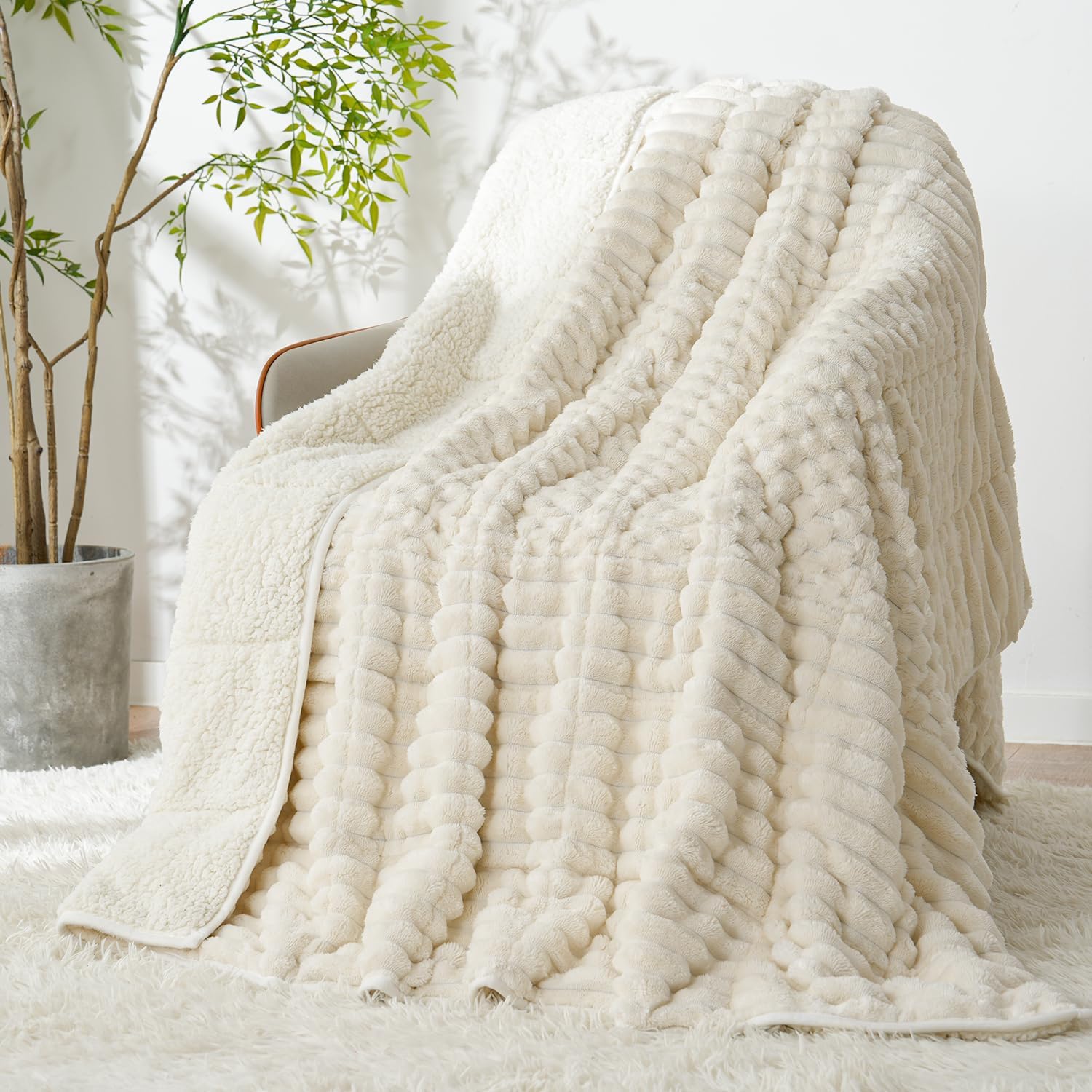
Topblan Weighted Blanket for Adults Queen Size 60 x 80 15lbs, Sherpa Fleece
Warmest shell in this group, and a 15 pound queen is the weight class I recommend most for adults
Sherpa traps heat and moisture, so it is a cold-weather blanket, not a year-round one
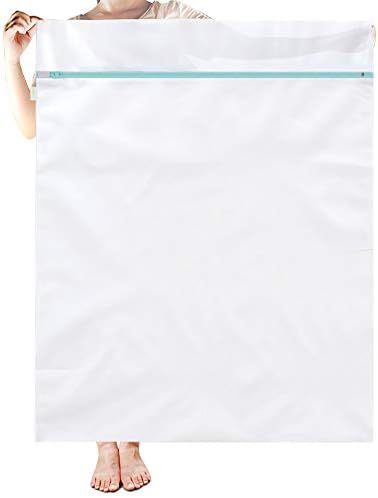
OTraki Large Mesh Washing Bag 43 x 35 Inch XXL Mesh Laundry Bag, Blue
Protects bead channels and corner stitching through a machine wash, which is what decides whether a blanket stays on the bed
It is an accessory, not a blanket, and it will not rescue a shell that already sleeps hot
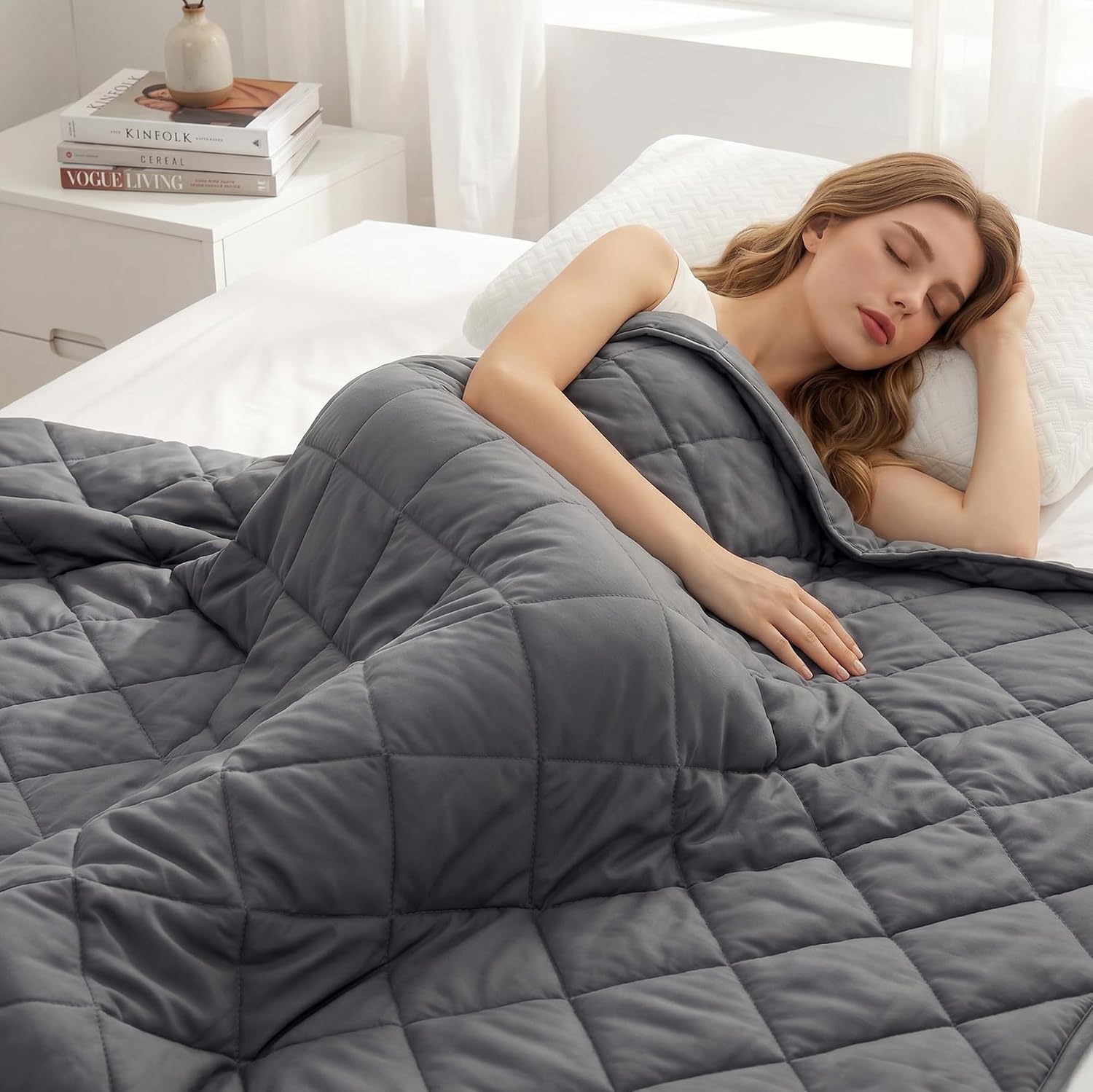
Weighted Blanket for Adults (15 lbs 60" x 80") Queen Size, Soft Cotton
Breathable cotton shell in the same 15 pound queen size, the combination I recommend for hot sleepers
Cotton wrinkles, it shows stains sooner, and it still needs the mesh bag and an air dry
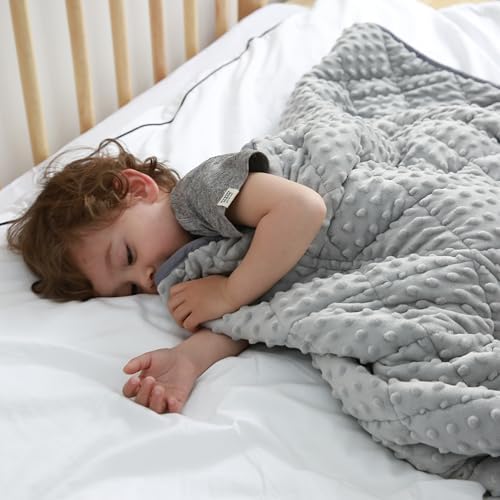
MAXTID Weighted Blanket for Kids 5lbs 36"x48" Cotton Blanket
Child-sized and light enough that a kid can push it off alone, with a cotton shell that breathes
It is a kids' size and weight, so adults should not buy it as a cheap queen substitute
Prices and availability were captured from Amazon Creators API and may change.
The three criteria I actually use
Shell fabric, bead distribution, and washability, in that order. I weigh every blanket that comes through my apartment on a kitchen scale, because the number on the label and the number on the scale are two different numbers, and I run a humidity sensor under the shell for twenty minutes to see how much moisture the fabric holds against skin. A blanket that reads high under there is a blanket that ends up on the floor by 2 a.m. I also track abandonment. At the six-week mark I ask every client whether the blanket is on the bed, folded at the foot, or in the closet, and I write the answer down. The closet answers teach me more than the success stories, because they tell me what to stop recommending.
Sherpa fleece: wins January, loses July
The Topblan queen in sherpa fleece is the warmest option here, and I mean that as both the compliment and the warning. Sherpa is a pile fabric, which means it traps air, and trapped air is insulation. In a 15 pound 60 by 80 queen, that warmth is real and so is the sweat. From November through March in a Chicago apartment with drafty windows, this is the blanket I would hand an adult who sleeps cold and wants the weight to feel like a hug rather than a sandbag.
The trade-offs are honest ones. Fleece holds moisture against skin, so if you run hot or your bedroom sits above 68 degrees, this becomes a three-month blanket that spends nine months folded. Pile fabrics pill, and they collect pet hair and lint like a lint roller you sleep under. Sherpa is also bulky, which matters more than people expect, because a bulky blanket is harder to get through a washing machine without the shell snagging. If you buy this one, buy the mesh bag with it. That is not an upsell, it is maintenance.
Soft cotton: the shell that survives summer
The soft cotton queen at 15 pounds is the blanket I recommend most often to adult clients, and the reason is the shell, not the weight. Cotton breathes. It moves moisture away from skin instead of holding it, and it stays cooler against the body than any fleece or microfiber shell I have handled. Same 15 pound fill, same 60 by 80 footprint as the Topblan, and it behaves completely differently in July.
Here is what I tell people before they order: cotton wrinkles, and it will look lived-in within a month. A light cotton shell also shows body oil and sweat marks sooner than fleece, so you will wash it more often, which is exactly why the mesh bag matters. The weight distribution on a cotton quilted shell is the part I check first, because cotton has more give than fleece and a poorly quilted cotton blanket lets beads drift toward the edges. If you notice the middle of the blanket getting thin and the corners getting heavy, that is bead migration, and it is the number one reason blankets get retired early.
If you sleep hot, share a bed with someone who sleeps hot, or you are buying in spring, cotton is the pick. If you want the sensory weight to feel heavier than it is, fleece gives you that illusion for free.
Why a washing bag belongs in a blanket comparison
Because a blanket you cannot wash is a blanket that ends up in the closet, and I have the client stories to prove it. Glass bead fills do not belong in a hot dryer, and most weighted blanket shells are not built to survive an aggressive agitator cycle on their own. That is where the OTraki XXL mesh laundry bag earns its place in a list about blankets. At 43 by 35 inches it takes a queen blanket folded in quarters, and the mesh lets water and detergent through while keeping the shell off the agitator and away from zippers and hooks in the same load.
What it protects is the two things that fail first: the quilting stitches that hold the bead channels, and the corner seams. A popped corner seam turns a 15 pound blanket into a 15 pound bag of loose glass beads, and there is no fixing that at home. The mesh bag also keeps the blanket from stretching, which is a subtler problem. A wet weighted blanket is heavy, and a machine spinning a wet weighted blanket can pull the shell out of shape even when the stitching holds.
The honest trade-off: this is an accessory, and it will not make a bad blanket good. If the shell fabric already sleeps hot, a mesh bag will not change that. It also does not remove the need to air dry flat, which is the step most people skip and then blame the blanket for. Wash cold, dry flat, and a cotton or fleece shell will last years instead of months.
The kids blanket and the 10% guideline
The MAXTID kids blanket at 5 pounds, 36 by 48 inches is the only child-sized option here, and it is built the way a kids blanket should be: cotton shell, light fill, and a footprint that fits a twin bed or a couch without swallowing a small sleeper. The safety rule I use with every family is simple. A child must be able to push the blanket off alone, every time, without help. If a kid has to wiggle out from under it, it is too heavy, full stop.
That is why I do not recommend weighted blankets for infants or toddlers, and why I do not hand a 5 pound blanket to a 40 pound six-year-old because the math says 10 percent. The 10 percent guideline is a starting point, not a prescription. I have seen a 200 pound adult do beautifully under 12 pounds and a 130 pound adult sleep best under 18. Start near 10 percent of body weight, live with it for two weeks, then adjust up or down. Most people overbuy because heavier feels more therapeutic, and it does not. It just feels heavier.
The other honest note about the kids size: children grow, and a 36 by 48 blanket that is perfect at seven can be too small at ten. Buy the child size for a child, and expect to replace it, rather than buying an adult queen and hoping it works out.
What the abandonment pattern tells me
I have tracked enough six-week check-ins now to say this with confidence: the weight of a blanket predicts almost nothing about whether it gets used, and the fabric predicts almost everything. The blankets that get folded at the foot of the bed are the ones whose shells hold heat. The ones in the closet are the ones that were too heavy to move, or too hot to stay under, or too much trouble to wash. Notice that none of those three reasons is about the beads themselves, even though bead distribution is the thing I check with a scale and my hands.
That is also why I am skeptical of the premium tier. In the 80 to 150 dollar range you get real shell fabric, decent quilting, and stitching that holds. Above that you are often paying for a brand name and a wellness pitch, and the fabric at half the price is frequently the same. The market is splitting into medical-adjacent blankets that are certified, washable, and honest about the evidence, and lifestyle blankets with fashion shells and a higher price tag. I know which side I would bet on for a client who actually needs to sleep.
What I am watching next
Two things. Phase-change cooling shells are the next premium tier, and I want to see whether they hold up past the first summer or just move the sweat around. And I expect rental or trial programs within a few years, because the abandonment problem is expensive enough that someone will finally monetize the fix. Until then, the practical move is the one at the top of this article: pick the shell fabric that matches your bedroom, start at roughly 10 percent of your body weight, buy the mesh bag, and air dry flat. It is not a cure for insomnia. It is a sleep aid that works for some people, and the ones it works for are usually the ones who got the fabric right.