Related: How to Wash a Weighted Blanket Without Ruining the Beads
I bought my first weighted blanket in 2019 on a night when I had been awake for three hours and had started negotiating with myself about whether sleep was even a thing I still did. Five years and 14 blankets later, I use them with clients who live with anxiety and sensory-processing differences, and I have watched exactly which blankets get used every single night and which ones end up folded on a closet shelf by February. The pattern has almost nothing to do with the number printed on the box.
Weighted blanket sizing gets sold as a math problem. Ten percent of your body weight, rounded to the nearest pound, done. That is a starting point, not a prescription. I have watched a 200-pound man sleep under 12 pounds and a 130-pound client ask me for something heavier than 20. The number that matters is the one you actually want to pull over yourself at 11 p.m., and that number is decided by fabric, bead distribution, and whether the thing can survive a washing machine.
So this is the version of the buying conversation I have with clients, written down. Four products, one of which is not a blanket at all, and a reference table you can screenshot before you shop.
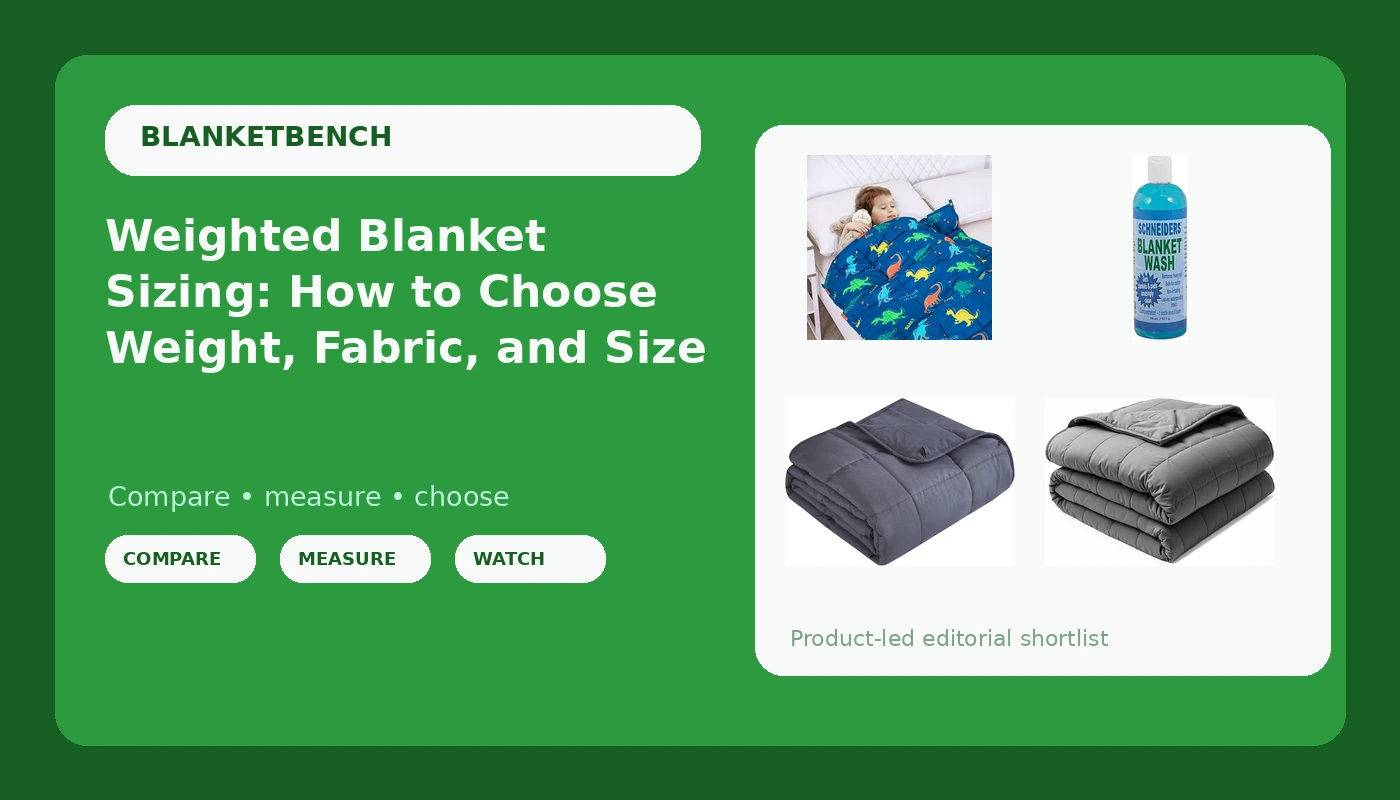
Best Overall: 15 lb Cotton Weighted Blanket, 48" x 72"
This is the one I would hand to most adults first. Cotton shell, glass bead fill, standard grid stitching, 15 pounds in a 48 by 72 inch twin footprint, in grey. Nothing about that description is exciting, and that is the point. Cotton is the shell fabric I trust most in a Chicago summer, because it moves moisture instead of trapping it, and the grid stitching is what keeps the fill where it belongs instead of sliding into the corners.
The 48 by 72 size is a throw for one adult, not a bedspread. It covers your torso and legs and leaves your feet free to escape, which is how most people actually sleep under one. Fifteen pounds lands in a range that suits a lot of bodies. The 10% guideline would put it at 150 pounds of body weight, but I have seen it work for people well outside that window in both directions.
Where it compromises is density. Fifteen pounds in a smaller footprint feels heavier than 15 pounds spread across a queen blanket, and a cotton shell wrinkles. If you want something you can shake out and drape over a sofa looking styled, this is not that. If you want a blanket that behaves like bedding, it is.
Best for Deep Pressure: Topcee 20 lb Weighted Blanket
Twenty pounds, same 48 by 72 twin footprint, glass bead fill, a soft cooling fabric, and a listing that suggests it for 130 to 160 pound sleepers. That last detail is worth reading twice, because it is the manufacturer telling you the 10% rule is not the whole story. Twenty pounds on a 140-pound body is well past 10%, and for the right person that is exactly what they want.
Here is my honest framing. Deep pressure is the mechanism behind the whole category, and some people only feel it click at a heavier number. Others put on 20 pounds and feel pinned. There is no way to know which one you are from a product page. If you have used a 12 or 15 pound blanket and found yourself wishing it pressed harder, this is the upgrade. If you have never used one, this is not where you start.
Two practical notes. Heavier blankets are harder to move, which matters for anyone with shoulder or hip issues, and harder to wash, because a wet 20-pound blanket is a genuinely heavy object. And the cooling language on any of these is mostly about the shell fabric and airflow, not a refrigeration effect. Set your expectations there.
Best for a Small Child or a Lap: Kivik 3 lb Dinosaur Blanket
Three pounds, 36 by 48 inches, blue with dinosaurs, cooling fabric. This is a small blanket for a small person, and it is also a genuinely useful lap blanket for an adult who wants weight while sitting at a desk rather than while sleeping.
The safety line here is not negotiable, and it is the same line I hold with every family I work with. A weighted blanket is only appropriate for a child who can move it off their own body without help, which in practice means a preschooler or older. It is not for infants, not for babies, and not for toddlers who cannot roll over or push a blanket away. That is not a caution I am adding to be careful. It is the reason I will not recommend weighted products for the crib stage at all.
For an older kid who likes the dinosaur print and can manage the blanket themselves, 3 pounds in a 36 by 48 footprint is proportionate and light enough to kick off. The cooling shell helps if your child runs hot, and the size means it works as a bed topper or a couch blanket rather than a full bed cover.
The Care Product: Schneiders Horse Blanket Wash
This is not a weighted blanket. It is a 16 ounce wash-in cleaner and waterproofer formulated for equine turnout blankets, and I am including it because the single biggest predictor of whether a heavy blanket gets used for years or abandoned in a month is whether it can be cleaned.
I will be direct about the fit. This product is built for horse blankets with waterproof coatings, and I would not put it on a human weighted blanket. You do not want to add waterproofing to a shell you sleep under, because waterproofing and breathability work against each other. What I do want you to take from it is the category logic: heavy blankets need a cleaning method that does not wreck the fill or the finish, and a wash-in product designed for a specific textile is a reminder that the wrong detergent can do real damage.
If you keep horses, this is the product for their turnout blankets. If you keep a weighted blanket, look for a gentle, residue-free wash and a front-loading machine, and read the care tag before anything else.
How I test weighted blankets
I weigh every blanket that comes into my house on a kitchen scale before it goes on a bed. Claimed weight and delivered weight are not always the same conversation, and a blanket that arrives light is a blanket that will feel light forever. I also track bead distribution by hand, corner to corner, looking for the tell-tale empty channel at the edges and the dense lump in the middle that turns a blanket into a sack of potatoes on your chest.
Breathability gets checked with a humidity sensor, because the shell fabric is what determines whether you wake up damp at 3 a.m. I map stitch density across the grid, since stitching is the only thing standing between you and a floor covered in glass beads. And then I do the thing no product page can do: I keep a list of which blankets my clients still use six months later and which ones they quietly stop mentioning.
That list is the reason I care more about shell fabric than weight. Every abandoned blanket I have documented was abandoned for a fabric or care reason, not because the number on the box was wrong.
What the pattern says about weight, fabric, and washability
Weight is a range. The 10% guideline is a useful place to start shopping and a terrible place to finish. Most people overbuy because heavier feels more therapeutic, when in fact heavier just feels heavier. If you are between two weights and you have never used one, take the lighter option. You can always add a second blanket later, and you cannot un-buy the one that made you feel trapped.
Fabric decides whether you use it. Cotton and bamboo shells breathe. Polyester shells run warm. Every "cooling" claim in this category should be read as a description of the shell weave, not a promise about your body temperature.
Bead distribution is the quiet quality marker. Glass beads in a well-stitched grid move as a sheet. Glass beads in a loose grid migrate to the perimeter within weeks, and once they pool at the edges the middle of the blanket is just fabric. Look at the grid pattern in the photos before you look at anything else.
Washability decides the outcome. A blanket you cannot wash is a blanket that ends up in the closet. I have the client stories to prove it, and I have thrown out a blanket myself because the care instructions were effectively "never get this dirty."
The weighted blanket reference table
This is the table I keep for client conversations. It is the honest version: what each product actually is, who it suits, and what I would want you to know before you buy. Prices move, so check the listing.
| Blanket | Claimed weight and size | Shell and fill | Who it suits | Link |
|---|---|---|---|---|
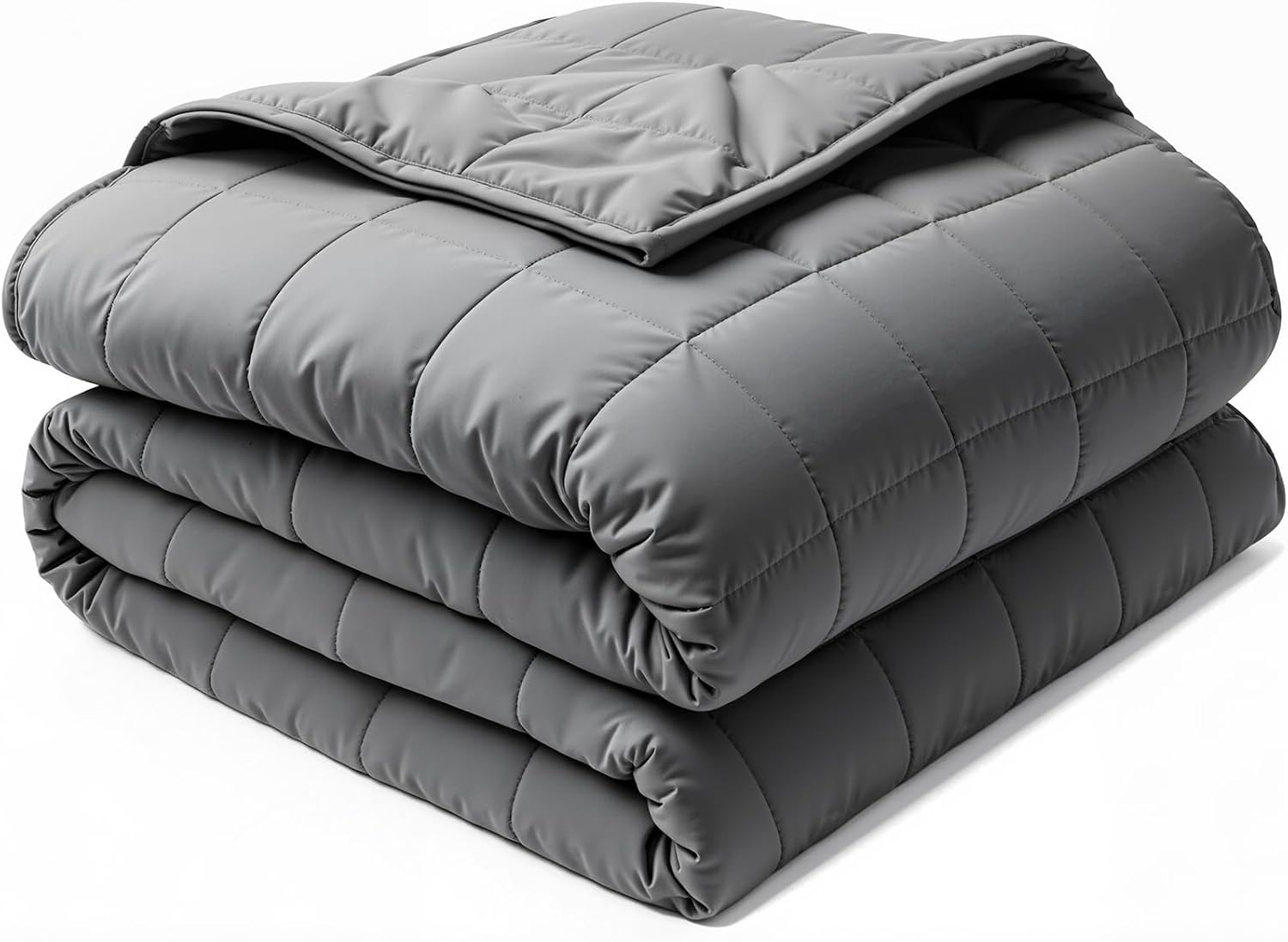 Visit on Amazon → Weighted Blanket 15 lbs, cotton, grey |
15 lbs, 48" x 72" twin | Cotton shell, glass beads, standard grid stitching | Most adults, first-time buyers, warm sleepers | Visit on Amazon → |
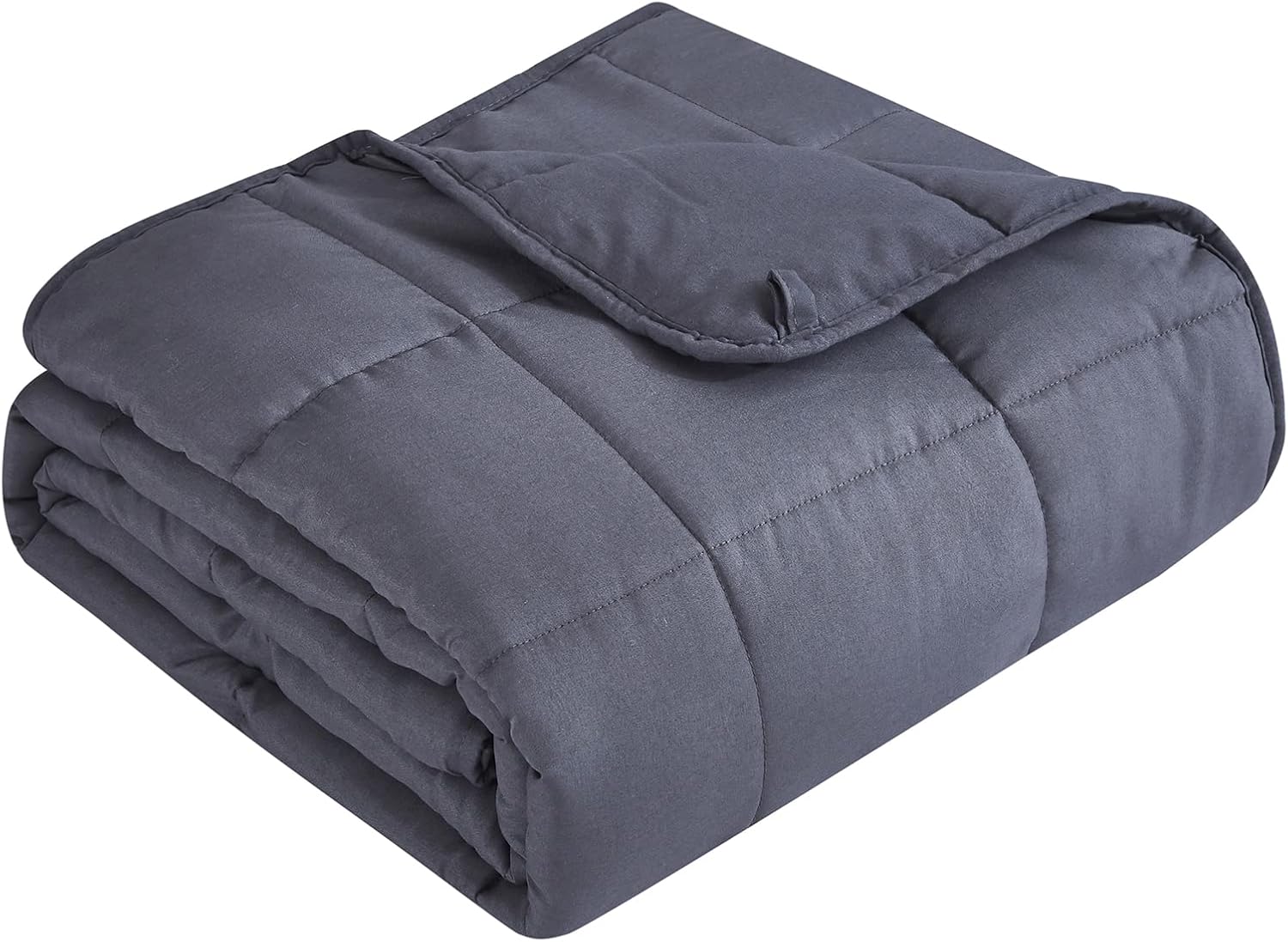 Visit on Amazon → Topcee Weighted Blanket for Adults |
20 lbs, 48" x 72" twin | Soft cooling fabric, glass bead fill | Sleepers who already know they want deep pressure, listed for 130-160 lb bodies | Visit on Amazon → |
 Visit on Amazon → Kivik Weighted Blanket 3 lbs, dinosaur |
3 lbs, 36" x 48" | Cooling fabric | Older children who can move it off themselves, and adults who want a lap blanket | Visit on Amazon → |
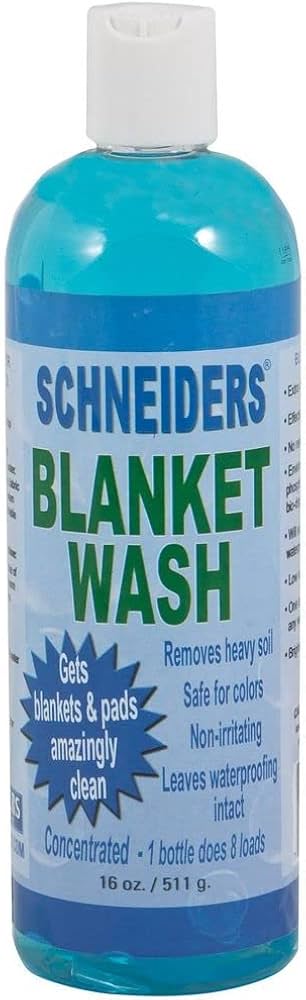 Visit on Amazon → Schneiders Horse Blanket Wash |
16 oz, wash-in cleaner and waterproofer | Eco-friendly formula for equine turnout blankets | Horse owners. Not for human weighted blankets | Visit on Amazon → |
A note on the "cooling" label
Three of these products use the word cooling. In this category that word means the shell fabric is smoother and moves heat a little better than a brushed polyester, and it means the blanket is less likely to feel clammy against bare skin. It does not mean the blanket chills you. If you sleep hot, the shell fabric is still the single most important specification on the page, and cotton remains the safest bet.
A note on sizes
A 48 by 72 twin is a personal blanket, not a bed cover. If two people are sharing, you want two blankets, not one bigger one, because the weight needs to sit on each person. A 36 by 48 is a child's blanket or a lap blanket. Buying a size up does not make a blanket more effective, it just makes it heavier to move and harder to wash.
Should you buy the 15 lb cotton weighted blanket?
Yes, for most adults. It is the blanket I would buy for a friend who asked me what to get, and it is the one I would suggest to someone who has never used weight before. The cotton shell breathes, the grid stitching holds the fill, and 15 pounds is heavy enough to feel like something without feeling like a constraint. Check current Amazon price, then give it a full week. The first two nights tell you almost nothing.
The honest downsides: cotton wrinkles, the throw size will not cover a queen bed, and if you run very cold you may want a warmer layer underneath. None of that changes the recommendation.
Should you buy the Topcee 20 lb weighted blanket?
Only if you already know. Twenty pounds is past the 10% guideline for most people, and the listing itself aims it at 130 to 160 pound sleepers. If you have used a lighter blanket and found yourself wanting more pressure, this is the logical next step and a reasonable one. If you are buying your first weighted blanket, start with the 15 pound cotton option instead. The heavier blanket is not the more therapeutic blanket. It is just heavier.
Who should skip all of these
Anyone shopping for an infant or a toddler who cannot remove a blanket independently. Anyone pregnant, where I would rather you talk to your own clinician than take a product page's word for it. And anyone hoping a blanket will treat a condition rather than support a routine. The evidence on weighted blankets is mixed, the placebo effect is real, and the honest pitch is that a good one makes falling asleep a little easier for some people. That is a modest claim, and it is the one I am willing to make.
If you get the fabric right, the weight in the right range, and a blanket you can actually wash, you will still be using it in three years. That is the whole test, and it has nothing to do with the percentage on the box.