I have watched more weighted blankets fail in laundry rooms than in bedrooms. After five years of recommending them to anxiety and sensory-processing clients, and after buying my first one in 2019 out of plain insomnia, I can tell you that the blanket people keep is rarely the heaviest or the most expensive one. It is the one they are not afraid to clean. That is why this comparison pairs two weighted blankets with the weighted blanket wash bags that keep them usable, because a blanket that cannot survive a washing machine is a blanket that ends up folded on a closet shelf by March.
I work in Chicago, where July humidity turns a heavy polyester shell into a sauna, and where a client will absolutely tell me at the three month check-in that they stopped using a blanket because they woke up sweaty. I weigh blankets on a kitchen scale. I ask about breathability and about how the weight sits across the body. Then I ask one blunt question: have you washed it yet? The answers have taught me more about which blankets survive than any weight chart.
For most adults, the practical pairing is the Cottonblue 15 pound queen for the bed and the Vivifying XXL mesh bags for laundry day, while the Bearaby hand-knit cotton blanket is the better call for hot sleepers who want a lighter, throw-sized option. The two mesh bag listings here are not interchangeable, and the difference matters more than the size of the price gap.
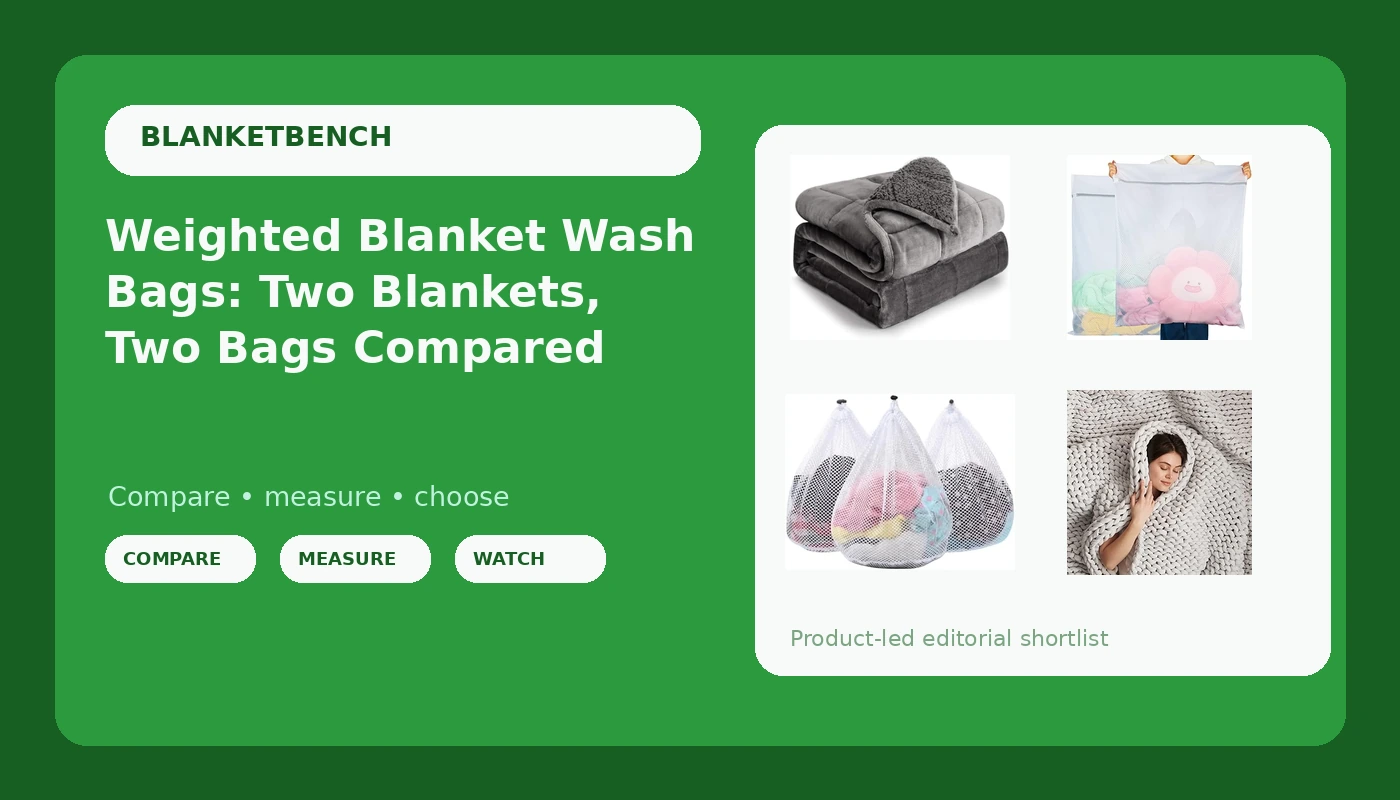
Cottonblue Weighted Blanket 15 lbs Queen Size for Adults 60x80 inches Soft
15 pounds is right around the 10 percent mark for a 150 pound sleeper, and the 60x80 footprint actually covers an adult instead of fighting them
A queen footprint spreads that same 15 pounds thinner than a throw does, so it reads lighter than the number suggests
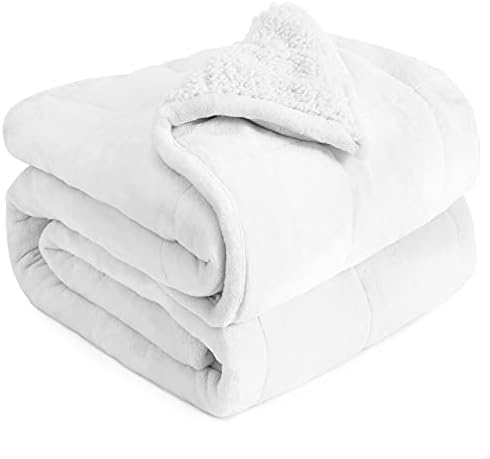
Vivifying Extra Large Mesh Laundry Bag, 2 Pack XXL Oversize Honeycomb Mesh Wash Bags for Washing Machine, Coats, Stuffed Toys, Blanket, Bedding, Sweater, Delicates Clothes (27 x 35 Inches)
The 35 inch length is the number that matters, and the honeycomb mesh lets water and detergent move instead of trapping a heavy wet blanket
Only two bags, and no drawstring closure mentioned in the listing
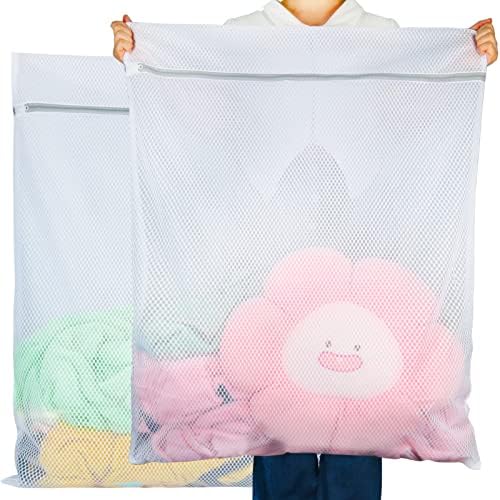
3 Pack XXL Mesh Laundry Bags for Delicates, Extra Large Laundry Wash Bags for Clothes,Bed Linen,Toys with Drawstring Closure Sturdy(3 XXLarge 28 x 26 Inches)
Three bags with a drawstring closure, which is what you want when a folded blanket is trying to escape mid-cycle
At 28 x 26 inches it is squarer and shorter, so a 60x80 blanket has to be folded more aggressively
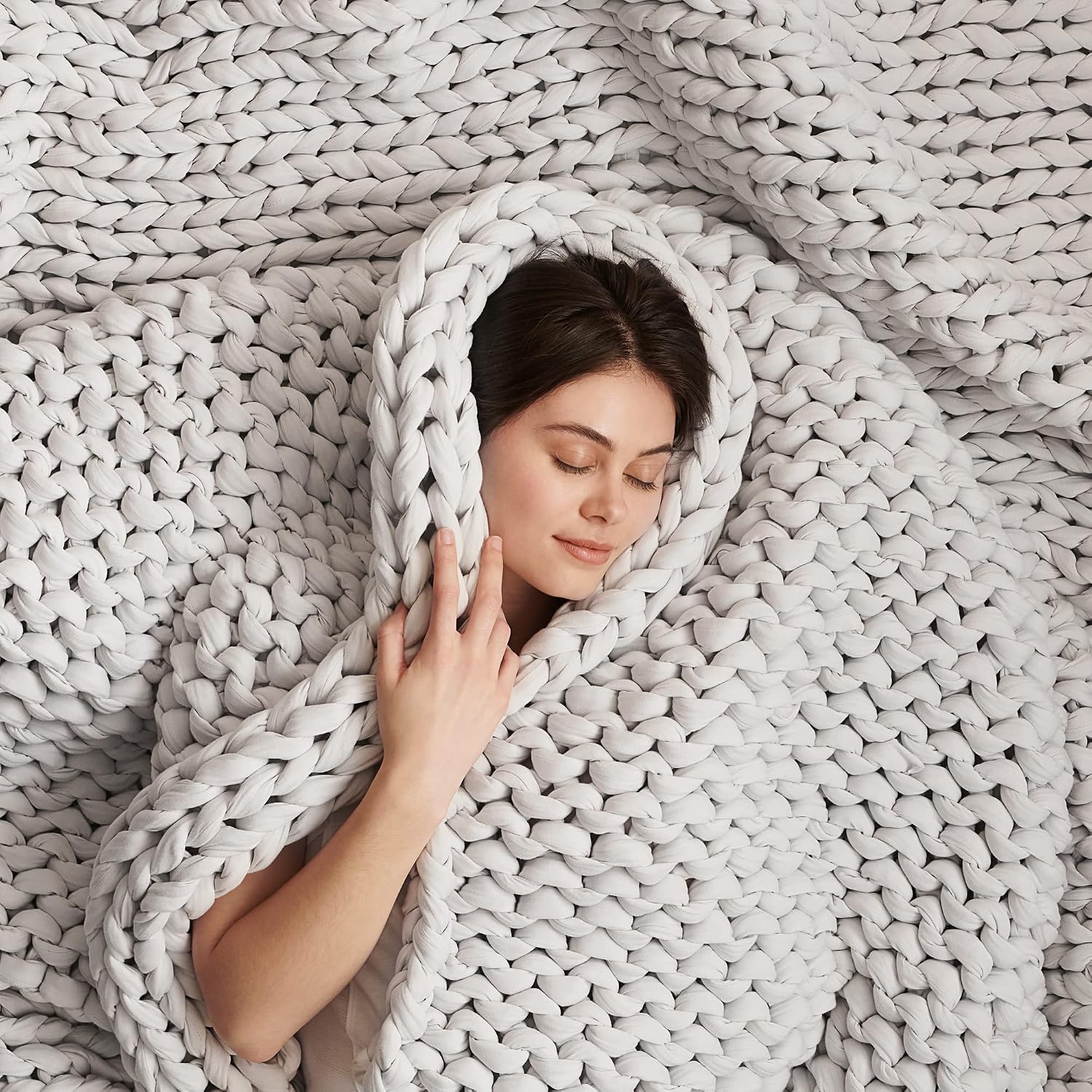
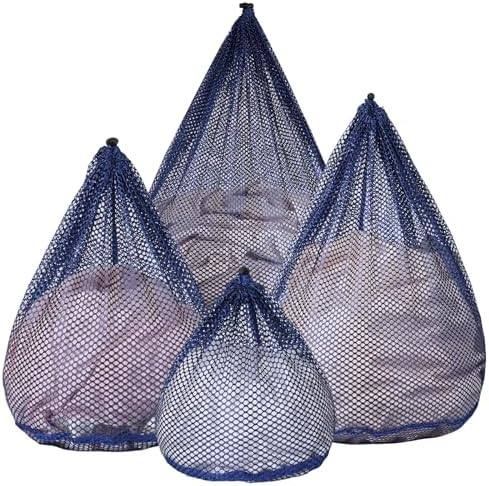
Bearaby Cotton Hand-Knit Weighted Blankets for Adults - Chunky Knit Blanket - Sustainable, Breathable, Organic, Cooling Weighted Blanket - Machine Washable (Moonstone Grey, 10 lbs, 40"x64")
Hand-knit cotton construction breathes in a way quilted channel blankets rarely do, and the listing states it is machine washable
10 pounds is under the 10 percent guideline for a lot of adults, and 40x64 is a personal throw, not a bed-sized blanket
Prices and availability were captured from Amazon Creators API and may change.
What I actually look at
Four things decide whether a blanket gets used or abandoned. The first is weight on a kitchen scale, because claimed weight and real weight are not always the same thing. The second is bead distribution. A blanket that pools its mass in the middle is a sack of potatoes on your chest, and you will feel it by night three. The third is shell fabric, which is where most of the market still fails. The fourth is washability, and it outranks the other three, because a blanket you cannot clean is a blanket you will stop using.
Notice what is not on that list: marketing language. "Therapeutic," "grounding," and "medical grade" are words, not specifications. I have never once had a client come back and say the reason they kept a blanket was the certification badge on the box.
The 15 pound queen option: Cottonblue
This is the blanket I would hand to a 150 pound adult who wants to cover a bed rather than a lap. Fifteen pounds sits right at the 10 percent starting point for that body weight, the 60x80 dimensions are a genuine queen footprint, and a cotton-forward shell is a far better bet in a Chicago summer than the polyester shells I complain about constantly.
The honest trade-off is surface area. Weight spread across a queen blanket distributes across a much larger area than the same weight in a throw, so 15 pounds in 60x80 feels lighter against the body than 15 pounds in a 40x64 throw. If you have tried a friend's smaller blanket and loved the pressure, a queen version of the same weight will feel milder. That is physics, not a defect, and it is the single most common mismatch I see.
Two things to check before you commit. Look at the care instructions on the listing rather than assuming, and look at the channel stitching in the photos. Stitching that pops at the corners is the failure mode I hear about most, and it almost always shows up after the first machine wash, which is exactly why the wash bags below matter.
The hand-knit 10 pound option: Bearaby
The Bearaby listing describes a hand-knit chunky cotton blanket in moonstone grey at 10 pounds and 40x64 inches, listed as breathable, cooling, organic, and machine washable. The construction is the point here. A hand-knit blanket has an open structure rather than the closed, quilted channels most weighted blankets use, and that openness is what lets heat escape instead of sitting on your skin. For a client who runs hot, this is the first thing I would try.
The catch is the weight and the size. At 10 pounds, this is below the 10 percent starting point for many adults, so it will feel like a light, even pressure rather than deep pressure. The 40x64 footprint is a personal throw: it covers one adult from shoulders to feet, and it will not cover two people or a queen mattress. If you want the sensation of being held, that combination of lower weight and smaller size can actually deliver it, because the weight is concentrated over a smaller area. If you want a bed blanket, it is the wrong shape.
Hand-knit cotton also deserves more care than a quilted shell. Treat it as a gentle cycle item, expect some snagging risk if you share a bed with a cat, and do not assume it will tolerate the same wash routine as a tightly woven blanket.
The two mesh bag options, and why they are not the same product
Both of these are oversized mesh laundry bags, and both are aimed at exactly the problem I care about: washing a heavy blanket without wrecking the seams. They differ in ways that matter.
The Vivifying set is a 2 pack of XXL honeycomb mesh bags at 27 x 35 inches. That 35 inch length is the spec I would circle, because a long bag means fewer folds on a 60x80 blanket, and fewer folds means less stress on the same few inches of fabric. Honeycomb mesh is also a good sign for airflow. A heavy wet blanket needs water and detergent to move through it, and a fine, tight mesh can hold a wet mass against itself.
The three-pack listing gives you XXLarge bags at 28 x 26 inches with a drawstring closure, described as sturdy. It is the squarer, shorter option, so a queen blanket has to be folded more times to fit. What it buys you in return is the drawstring, which is the detail that stops a folded blanket from working its way out of the bag mid-cycle, and the count. Three bags means one for the blanket, one for bedding, and one for delicates, which in a household with two blankets is genuinely useful.
My rule of thumb: if you are washing one large blanket and nothing else, the longer bag wins. If you are washing a blanket plus sheets plus sweaters, the three-pack with drawstrings is the more practical purchase.
Sizing a wash bag to a 60x80 blanket
A 60x80 queen blanket does not go into any bag flat, and it should not. Fold it in thirds lengthwise first, then fold or loosely roll it until it fits. You want the bundle to sit loose inside the bag, not stuffed. A tightly packed bag defeats the purpose, because the fabric cannot move against the mesh, and you end up with a heavy wet brick tumbling against itself.
One more thing worth saying out loud: the bag protects the blanket, but it does not change what the blanket is. If a listing says the blanket needs a duvet cover to survive washing, that is a blanket with a design problem, and a mesh bag is not a fix for it.
Weight and the 10 percent guideline
The 10 percent of body weight guideline is a starting point, not a prescription, and treating it as gospel is one of my pet peeves. I have seen a 200 pound man sleep beautifully under 12 pounds and a 130 pound client find 20 pounds intolerable. Most people overbuy, because heavier feels more "therapeutic," when in reality it just feels heavier.
My advice: start near 10 percent, then adjust. If you wake up feeling pinned or you are fighting the blanket off at 3 a.m., go lighter. If it feels like nothing, go heavier. And keep the boundaries in mind. No weighted blankets for infants, and no pregnancy recommendations. That is not caution for its own sake, it is basic safety.
Fabric, breathability, and the trade-offs nobody mentions
Cotton and bamboo shells breathe. Polyester shells are a sauna. That single distinction predicts abandonment better than any other variable I track, and it is why the two blankets here both lean on cotton.
Then there is bead distribution. Weighted blankets hold their mass in channels, and the quality of that channel stitching is what keeps the weight where it belongs. A blanket with sparse stitching will migrate its beads to the edges within a month, and once that happens the middle of the blanket feels like a sheet while the border feels like a sandbag. The hand-knit construction in the Bearaby avoids channels entirely, which sidesteps the migration problem, but it also means you are relying on the knit itself to hold shape over years of use.
Neither approach is universally better. Quilted channels give you predictable, even weight. A knit gives you breathability and a softer drape. Pick based on whether you sleep hot or you sleep cold.
Who should buy which
If you are a roughly 150 pound adult who wants one blanket for a queen bed and you sleep at a normal temperature, the Cottonblue 15 pound queen plus the Vivifying XXL bags is the combination I would start with.
If you run hot, sleep alone, and want a blanket that doubles as a couch throw, the Bearaby hand-knit 10 pound option in moonstone grey is the more sensible pick, with the longer Vivifying bag for laundry day.
If you already own a weighted blanket and your only problem is that washing it feels risky, buy the three-pack with drawstrings. It covers the blanket plus the rest of the household laundry, and it is the cheapest way to extend the life of a blanket you already like.
If you are buying for two people or for a household with multiple blankets, the three-pack plus one long bag covers almost every scenario.
What the evidence says, and what I tell clients
I recommend weighted blankets, and I am honest that the evidence is mixed. The research on sleep is promising but not overwhelming, and the placebo effect is real. What I can tell you from practice is narrower and more useful: people who use their blanket consistently tend to report that falling asleep feels easier, and people who stop using theirs almost always cite heat, weight, or laundry rather than a lack of benefit.
I do not claim a blanket treats ADHD or autism. I work with those populations, and the blanket is a sensory tool at best, not a therapy. It is one part of sleep hygiene alongside light, timing, and a consistent routine.
Bottom line
The blanket that survives is the blanket you can wash. A mid-weight cotton queen for the bed and a pair of oversized mesh bags for laundry day will outlast a heavier, fancier blanket that never leaves the closet. Start near 10 percent of your body weight, respect the fabric, and treat the wash bag as part of the purchase rather than an afterthought. That is the whole formula, and it has held up across five years and a lot of client check-ins.