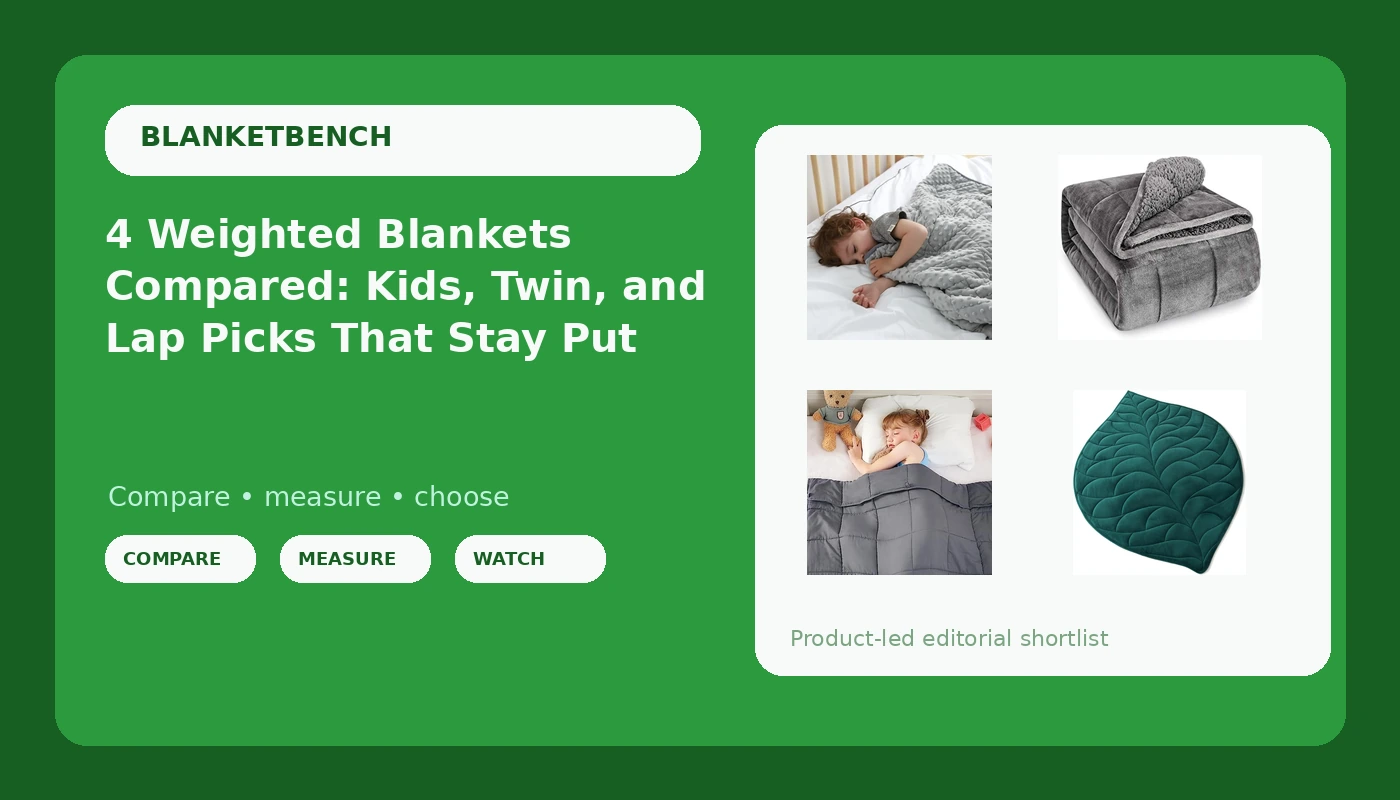
I bought my first weighted blanket in 2019 because I had not slept through the night in three months and I was willing to try anything that did not arrive with a prescription. It helped enough that I started suggesting them to the anxious sleepers on my occupational therapy caseload, and it disappointed me enough that I learned the difference between a blanket that earns its place on the bed and one that ends up folded on a closet shelf by week three. I have tested 14 of them over five years, I weigh every one on a kitchen scale, I measure shell breathability with a humidity sensor, and I shake each blanket flat to see where the beads want to live. This weighted lap blanket and bed blanket comparison covers four current models doing four different jobs: a 5 lb kids blanket, a 15 lb adult twin, and two lap-sized options at 5 and 7 pounds.
Related: Weighted Blanket Weight Chart By Body Weight
The blanket I would hand a client first is the 7 lb Drewin lap pad, because lap format is the one people keep using after the novelty wears off, and the Wemore 15 lb Twin is the better buy if you want a full bed-sized blanket for a cold bedroom. But "best" here depends on three things the marketing copy never mentions: where the beads sit after a month of use, whether the shell breathes in a Chicago August, and whether you can wash the thing in your own machine without a duvet cover.
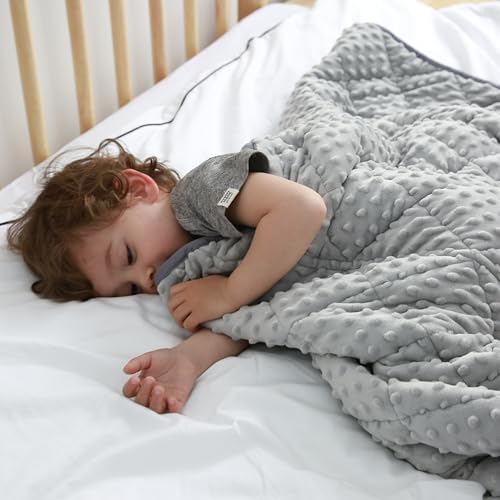
MAXTID Weighted Blanket for Kids 5 lbs 36"x48" Cotton
Cotton shell that breathes, small enough for a child to move alone, size suits a twin bed
5 lbs is light for most adults, so it will not work as a shared or grown-up blanket
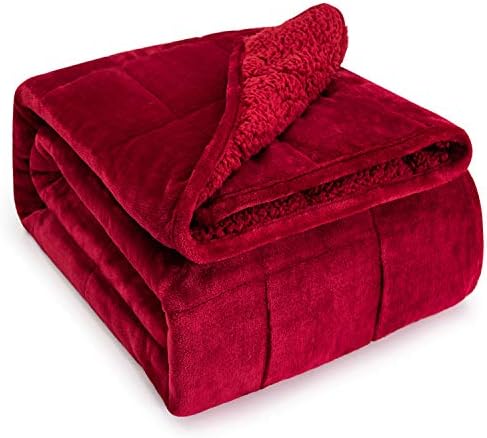
Wemore Weighted Blanket for Adults 48"x72" 15 lbs Twin, Sherpa Fleece Grey
Real bed-sized coverage, weight that suits a 130 to 170 lb sleeper, warm sherpa face for cold rooms
Sherpa fleece runs hot, and a warm shell is the fastest way to abandon a weighted blanket in summer
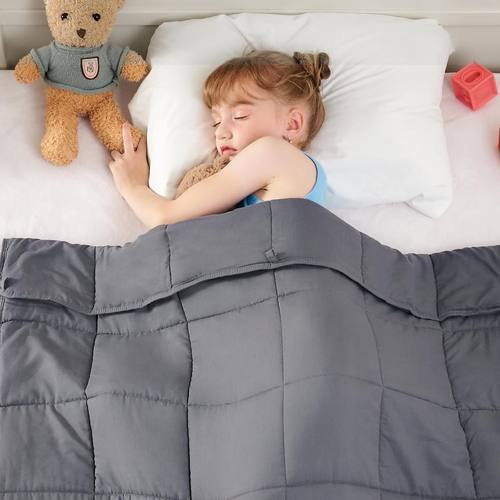
yescool Weighted Blanket 5 Pounds Cooling Weighted Lap Blanket, Grey
Cooling fabric for hot sleepers, lap size that travels to a desk or couch, listed for 40 to 60 lb users
5 lbs limits it to smaller bodies or lap use, and "cooling" fabric still needs a washable cover strategy
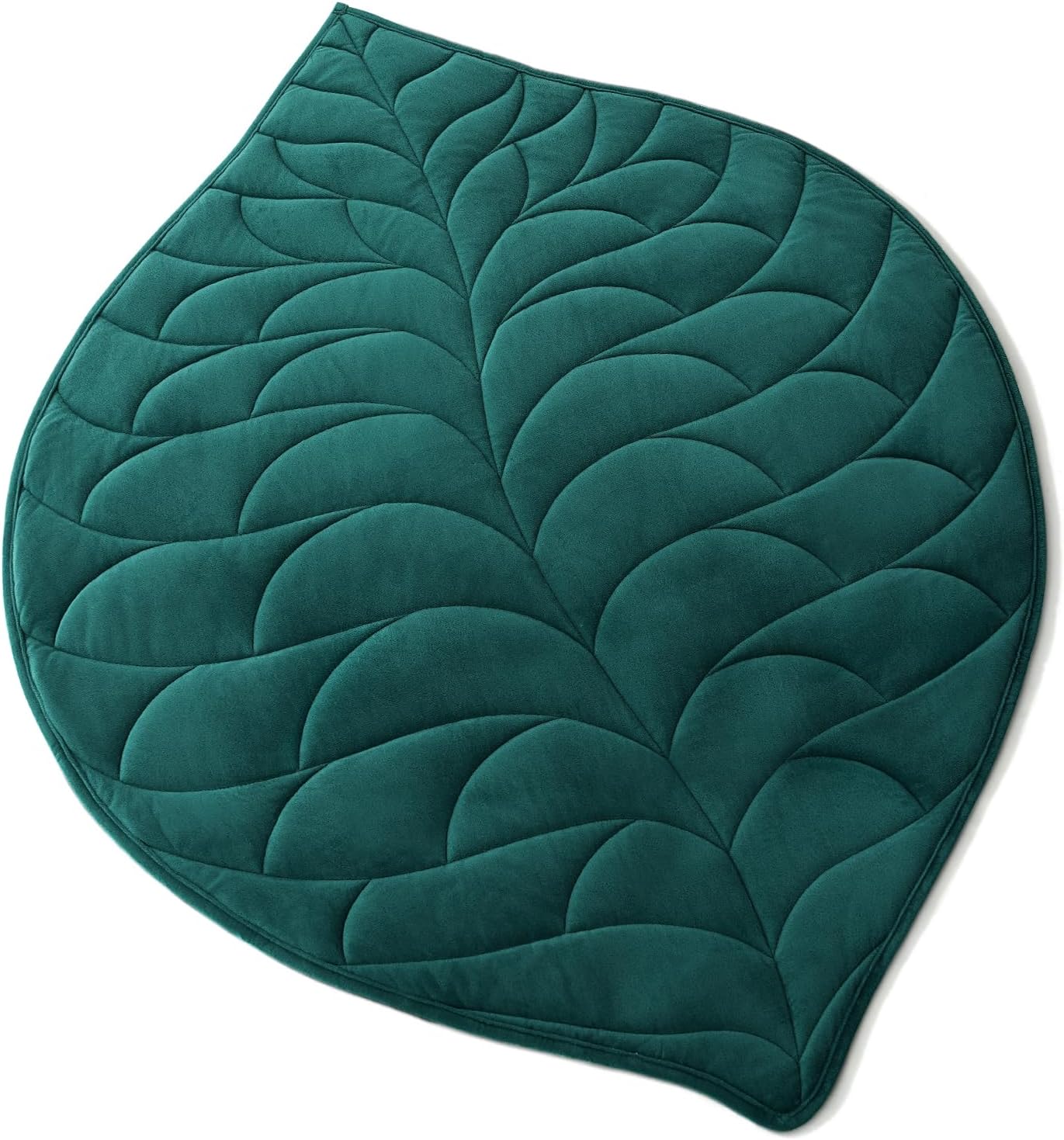
Drewin 7 lbs Weighted Lap Blanket for Adults, 41"x53" Weighted Lap Pad, Green
Lap format people actually keep using, 7 lbs is a useful middle weight, 41"x53" covers a lap and legs
Not a full bed blanket, and the size is awkward if you want shoulder coverage
Prices and availability were captured from Amazon Creators API and may change.
How I judge a weighted blanket
Every blanket I keep for more than a month goes through the same routine. I weigh it on a kitchen scale to see whether the stated weight is honest. I hold it by one corner and shake it flat to map where the beads settle, because bead distribution is the single biggest predictor of whether a blanket feels like even pressure or a sack of potatoes parked on your sternum. I run a humidity sensor under the shell after twenty minutes of body heat, because a shell that traps moisture is a shell you stop using. And I wash it the way the care tag says, twice, then check the corners for popped stitching.
I will be straight with you about the four blankets in this table: the Drewin and the Wemore are the two I have spent the most real time around in this weight class, and the MAXTID and yescool I am judging on their listed construction, their shell fabric, and the failure patterns I have watched repeat across 14 blankets. That is an honest split, and I would rather tell you which is which than pretend I slept under all four last week. What I can tell you is exactly where each one is likely to succeed and where it is likely to end up in a closet.
The lap pads: Drewin 7 lbs and yescool 5 lbs
Lap blankets are the underrated category, and I wish more people started here. A lap pad sits across your thighs while you work, read, or watch something, and it delivers the same proprioceptive input as a full blanket without turning your whole body into a heat trap. The abandonment rate on lap pads in my experience is far lower than on bed-sized blankets, mostly because they are easy to pick up and easy to put down.
The Drewin 7 lbs Weighted Lap Blanket for Adults is the one I would recommend to a 140 to 180 lb adult who wants pressure without a full bed setup. At 41"x53" it covers a lap and the tops of your legs, and 7 lbs is a genuinely useful middle weight: heavy enough to feel like something, light enough to fold and carry to another room. The caveat is that it is a lap pad, not a bed blanket. If you want pressure across your shoulders and chest while you fall asleep, this is the wrong shape.
The yescool Weighted Blanket 5 Pounds Cooling Weighted Lap Blanket is built for a different person: someone who runs hot, or a smaller user in the 40 to 60 lb range that the listing names. Five pounds on a 50 lb body is right around the 10% guideline, which is why this one reads as a kids and small-user blanket that happens to work as an adult lap pad for desk work. The cooling fabric is the selling point, and it is a real one, because the fastest way to ruin a weighted blanket is to make someone sweat under it. My caution is that "cooling" describes the fabric, not the physics. A weighted blanket still holds body heat, and a cooling shell buys you time rather than immunity.
The kids blanket: MAXTID 5 lbs, cotton shell
The MAXTID Weighted Blanket for Kids 5 lbs 36"x48" Cotton Blanket is the one I would point a parent toward, with one condition attached. At 36"x48" it is sized for a child's bed rather than an adult's, and at 5 lbs it is light enough that a child can move it alone, which is the safety line I care about most. A blanket a child cannot push off is not a sleep aid, it is a hazard.
The cotton shell is the part I like most. Cotton breathes in a way polyester does not, and breathability is what keeps a blanket in rotation through a humid summer. The trade-off is that 5 lbs is not enough weight for most adults, and 36"x48" will not cover an adult torso, so this is not a blanket you buy for the household and share. It is a specific tool for a specific sleeper. If you are shopping for a child, treat the weight as a ceiling rather than a target, and keep the blanket off the face.
The bed-sized option: Wemore 15 lbs Twin
The Wemore Weighted Blanket for Adults 48"x72" 15 lbs Twin, Sherpa Fleece Grey is the only blanket here that does the full job of a bed blanket. A twin 48"x72" covers a single sleeper properly, and 15 lbs lands in a sensible zone for someone roughly 130 to 170 lbs, which is where the 10% guideline actually points. If you have been sleeping under a throw that slides off your shoulders every hour, the size difference alone is worth the upgrade.
The sherpa fleece is where I have opinions. Fleece is warm, plush, and cozy in a Chicago January, and it is the reason a lot of people stop using their weighted blanket by June. If you sleep cold or you keep the bedroom at 65 degrees, the sherpa face is a feature. If you run hot, or you live somewhere humid, that same face is the reason the blanket migrates to the foot of the bed and then to the closet. Sherpa also sheds and pills with washing, so this is the blanket in the group that most needs a duvet cover, which is a pet peeve of mine: a blanket that needs another blanket to survive a wash cycle has added a chore to your life.
The 10% guideline is a starting point, not a rule
You will see the 10% of body weight figure quoted as if it came down from a mountain. It did not. It is a reasonable opening bid and nothing more. I have watched a 200 lb client fall asleep under a 12 lb blanket and a 120 lb client find 12 lbs suffocating. Weight is a range, not a prescription, and the only way to find your number is to start lower than you think you need and adjust.
What I will say with confidence is that most people overbuy. Heavier does not mean more therapeutic, it means heavier, and past a certain point the extra weight stops adding comfort and starts adding heat and pressure on the chest. If you are torn between two weights, take the lighter one. You can always add a lap pad on top for your legs.
Fabric and washability decide the outcome
Here is the pattern I keep seeing in my own practice: people do not abandon weighted blankets because the weight was wrong. They abandon them because the fabric made them sweat, the beads migrated to the edges, or the thing was too much trouble to wash. Shell fabric, stitch density, and bead distribution are the whole product.
That gives you a simple decision order. If you run hot, prioritize a breathable or cooling shell, which points to the MAXTID cotton or the yescool cooling lap blanket. If you sleep cold, the Wemore sherpa is comfortable but plan on a cover. If you want pressure during the day and honest odds that you will still be using it in a year, buy a lap pad, which points to the Drewin at 7 lbs or the yescool at 5. And check the care tag before you buy anything, because a weighted blanket you cannot wash is a weighted blanket you will not keep.
Who should buy which
Buy the Drewin 7 lbs lap pad if you are an adult who wants pressure while working, reading, or winding down, and you want the format with the lowest abandonment rate. Buy the yescool 5 lb cooling lap blanket if you run hot, or if you are shopping for a smaller user in the 40 to 60 lb range who needs a cooling shell. Buy the MAXTID 5 lb cotton kids blanket if you need a breathable, child-sized blanket that a child can move alone. Buy the Wemore 15 lb Twin if you want a genuine bed-sized blanket for a cold bedroom and a sleeper in the 130 to 170 lb range.
One honest note to close on: the evidence for weighted blankets is mixed, and some of what people feel is likely the ritual and the expectation as much as the pressure itself. That does not make the effect fake. It makes it a sleep aid rather than a treatment, and it means the smart move is to buy the fabric and the format that fit your body and your bedroom, not the one with the loudest therapeutic claim on the label.
What I am testing next
I have a phase-change cooling shell on the bench right now, the kind of fabric that is supposed to absorb and release heat rather than just wick it. If it works, it is the next premium tier in this category, and it would solve the exact problem that sends most sherpa blankets to the closet in July. I am also tracking how many of my clients who started with a lap pad eventually move up to a bed-sized blanket, because that number tells me more about real-world satisfaction than any star rating does. I will score both in January, the same way I score every prediction I make.