Most weighted blankets do not die in the bedroom. They die in the hallway outside the laundry room, where someone stands holding a 25-pound bundle of glass beads and wonders whether the machine will survive it. I have watched that happen to clients more times than I can count, and it almost never comes down to the weight they chose. It comes down to the shell fabric and to whether they know how to wash a weighted blanket without turning the filling into a lump at one end.
I am an occupational therapist in Chicago. I work with anxiety and sensory-processing clients, I hand out weighted blankets the way other clinicians hand out sleep-hygiene worksheets, and I bought my first one in 2019 out of plain desperation. I have put 14 blankets through my own life since then, and I keep a kitchen scale and a humidity sensor in the same drawer, because both of them answer questions product listings never do.
This guide is about the part nobody sells you: what to do when the blanket needs cleaning, and what to buy so that cleaning is possible in the first place.
Why you should trust me
I have recommended weighted blankets to clients for five years and taken a few of them back when the blanket did not work out. The evidence for weighted blankets is genuinely mixed. Some of my clients fall asleep faster with proprioceptive input, some feel nothing at all, and a few find the pressure irritating after twenty minutes. I say that up front because the wellness industry will not.
What I can tell you with confidence is which blankets get abandoned and why. The ones that last have dense quilting, double-stitched channels, and a shell the owner can actually clean. The ones that end up on a closet shelf are the ones that need a duvet cover to survive a wash, the ones where beads migrate to the corners within a month, and the ones whose stitching pops the first time they meet a spin cycle.
How I chose what belongs in this guide
This is not a blanket roundup. It is a washing guide, so I included two things: a blanket that fits the profile I look for in a heavy adult size, and the laundry accessory that makes cleaning the rest of the bedding realistic.
When I evaluate a blanket I look at four things. Stitch density, because the quilting pattern is what keeps bead distribution even. Shell fabric, because cotton and bamboo breathe while polyester shells turn into a sauna by August. Weight against the person, starting from the 10% guideline and adjusting from there instead of treating it as a rule. And washability, which is the one that decides whether you still own the blanket in two years.
I also weigh blankets on a kitchen scale when a client insists theirs "feels heavier than it should." I have yet to find one that weighed more than its label. What people feel is pooling, not extra weight, and pooling is a stitching problem.
Why the wash matters more than the weight
Here is the pattern I keep seeing. Someone buys a heavy blanket, loves it for three weeks, spills coffee on it or notices it smells like a dog, then faces a choice: wash it and risk ruining it, or stop using it. Most people stop using it.
A 25-pound blanket you cannot clean has a useful life measured in weeks. A 15-pound blanket you can wash has a useful life measured in years. That trade almost never comes up in the marketing, because "machine washable" is a boring feature and "therapeutic" is a fun one.
The catch is that washing a weighted blanket is not the same as washing a duvet. Glass beads are heavy when wet, the shell is under more stress in the drum than it ever is on your bed, and heat is the enemy of most fill. Get the sequence right and the blanket comes out fine. Get it wrong and you own a sack of beads with a torn corner.
The two things you need before you start
The blanket matters. The laundry gear matters almost as much.
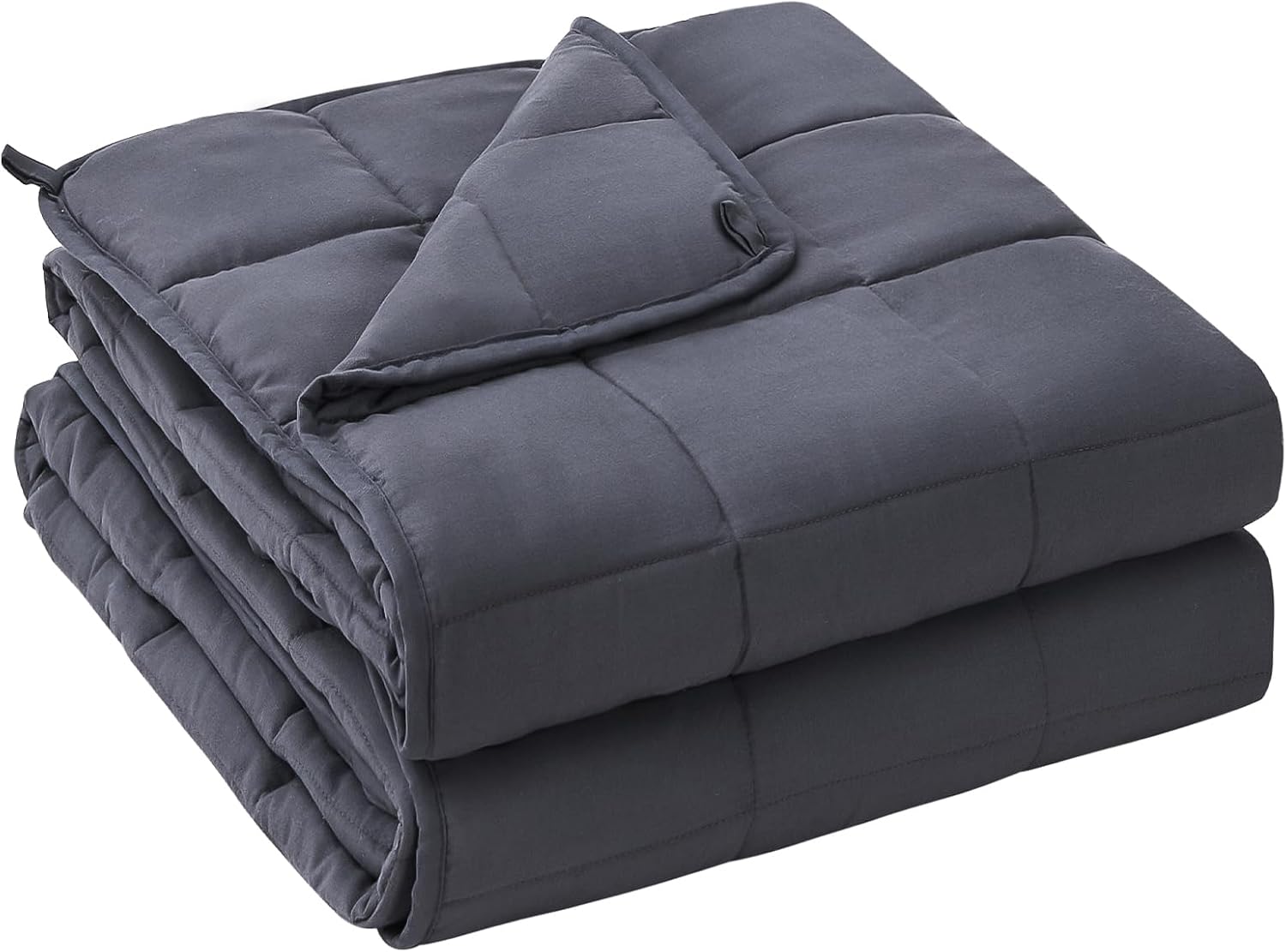
Our pick: yescool Weighted Blanket for Adults 25lbs Queen Size, 60" x 80", Grey
 Visit on Amazon →
This is a 25-pound queen in grey, which puts it in the category I call heavy adult. Twenty-five pounds sits past the 10% starting point for most people under 200 pounds, so treat it as a blanket for a larger sleeper, a couple sharing one bed, or someone who has already used a lighter blanket and wants more pressure. If you weigh 130 pounds and sleep hot, a 25-pound queen will feel less like a hug and more like a chore to move.
The queen dimensions matter on laundry day. A 60 by 80 blanket is the largest size most home machines handle without fighting back, and it is the size where a front loader earns its keep. If you own a top loader with a center agitator, read the workflow below before you commit this blanket to a wash.
Flaws but not dealbreakers: at 25 pounds this blanket is heavy when wet, which is exactly why the drying step takes patience. Plan the wash for a morning when you will be home.
Anyone who wants a genuinely heavy queen blanket for an adult bed, and who will wash it on a schedule instead of in a panic, can get years out of it.
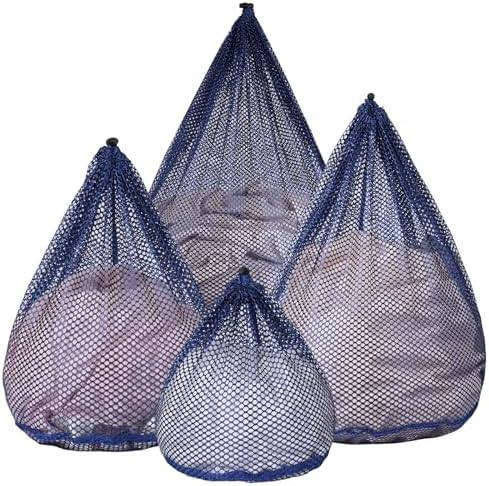
The support item: 3 Pack XXL Mesh Laundry Bags for Delicates, Extra Large Laundry Wash Bags for Clothes,Bed Linen,Toys with Drawstring Closure Sturdy(3 XXLarge 28 x 26 Inches)
 Visit on Amazon →
I want to be honest about what this is and what it is not. A 28 by 26 inch mesh bag will not hold a 60 by 80 queen blanket. Anyone who buys it expecting to bag the whole thing will be disappointed. What these bags are for is everything around the blanket: the duvet cover you drag out in January, the pillowcases, a throw, and the ties and zipper pulls that snag the shell in the same load.
The drawstring closure is the detail that matters. Zippers scratch, velcro grabs, and a sturdy drawstring keeps hardware away from the shell fabric while still letting water and detergent through. Three bags means you can sort by color and still have one free for the odd small load.
Flaws but not dealbreakers: the mesh is fine, not heavy duty. Do not overstuff a bag, and do not treat it as a blanket bag, because at this size it cannot be one.
Anyone who washes bedding regularly and wants the blanket load to stop snagging will use these constantly.
The washing workflow
This sequence works on any machine-washable weighted blanket. If the care tag says dry clean only or spot clean only, skip to the next section.
Step one: Read the tag and identify the shell. Cotton and bamboo shells tolerate cold water and low heat. Polyester shells tolerate water but trap heat, so they dry faster and sweat more in use. If the tag says spot clean only, believe it.
Step two: Inspect the stitching before water touches it. Run your hands along every seam and channel. A loose thread or an open corner means stop. A small repair now costs nothing. A wash cycle on a compromised seam turns your blanket into loose glass beads and a date with the vacuum.
Step three: Spot clean the small stuff first. Most weighted blanket cleaning is one spilled cup of coffee, not a full wash. Blot with cold water and a drop of mild detergent, work from the outside of the stain inward, and air dry. Do this before you decide the whole blanket needs the machine.
Step four: Choose the right machine. Front loaders are the right answer. Top loaders with a center agitator are the wrong one, because the agitator grabs wet fabric and your wet fabric weighs 25 pounds. If you do not have a front loader, use a commercial machine at a laundromat and stay with it.
Step five: Wash cold, gentle, low spin. Cold water, delicate cycle, extra rinse, and the lowest spin setting your machine offers. High spin is what pulls beads into the corners. Use a small amount of mild detergent and skip fabric softener entirely, because it coats the shell and kills breathability.
Step six: Bag the accessories, not the blanket. Load the duvet cover, pillowcases, and anything with a zipper into the mesh bags. Keep the blanket itself loose in the drum so water moves through it. A tightly stuffed bag around a 25-pound blanket keeps detergent from rinsing out.
Step seven: Dry flat or on low, never on high. Heat damages glass-bead fill and shrinks cotton shells. Lay the blanket flat over two drying racks or a pair of chairs, or run the lowest heat setting with a couple of dry towels and check it every twenty minutes. If you have a humidity sensor, the blanket is dry when the air coming off it stops climbing. In a Chicago winter, a dry apartment and a flat rack finish the job overnight.
Step eight: Redistribute the beads while it is still damp. This is the step people skip and the reason their blanket feels like a sack of potatoes a month later. Hold the blanket by one end and shake so the beads fall back into the quilted channels, then knead each channel by hand from the edges toward the center. Do it once while damp and once when fully dry. If you are worried, weigh the blanket on a bathroom scale before and after. If it stays several pounds heavier two days later, the fill is still holding moisture and needs more air.
When the blanket should not go in the machine
Some shells cannot take it. Duvet-cover-only designs, silk blends, and anything with a hand-stitched or glued seam are spot clean at best. A blanket that requires a duvet cover to survive washing is a design failure, because the cover gets washed while the blanket quietly absorbs body oil underneath it.
If your blanket falls into that category, your options are spot cleaning, a laundromat with a large front loader, or replacing it with something you can actually clean. That last option is not the answer anyone wants, but it is the honest one.
When a weighted blanket is the wrong tool
A weighted blanket is a sleep aid, not a treatment. The research is mixed and the placebo effect is real, which is fine, because a placebo that helps you sleep is still a better night. What I will not do is tell you a blanket treats ADHD, autism, or an anxiety disorder. It does not. It provides pressure, and pressure helps some people settle.
Do not use a weighted blanket with an infant or a toddler, and check with your clinician before using one during pregnancy. For older children the rule is simple: if a child cannot move the blanket off themselves alone, it is too heavy. A blanket a child cannot escape is a safety problem, not a sleep tool.
What this costs
Check current Amazon price on both items, then do the math over the life of the blanket instead of the day you buy it. A washable blanket that lasts three years costs less per night than a cheaper one you replace every winter, and it usually costs less than the $80 to $150 band where I find the real quality.
The laundry bags are the cheap half of the equation and the half that keeps the expensive half alive.
The short version
Wash cold, wash rarely, dry flat, and redistribute the beads by hand while the blanket is still damp. Buy a blanket with dense quilting and a shell you can clean, and buy mesh bags for everything around it. Then put the blanket back on the bed and stop thinking about it.
That is the whole job. The weight is the easy part.