I bought my first weighted blanket in 2019 because I had gone three months without a full night of sleep and had run out of sensible ideas. I am an occupational therapist in Chicago. I work with anxiety and sensory-processing clients, I have put 14 blankets on my own bed and on clients' couches since then, and I have watched a depressing number of them end up folded on a closet shelf by week three. This weighted blanket comparison is the version of that experience I wish someone had handed me: a 15-pound queen, a 15-pound throw, a 5-pound cotton blanket for kids, and the mesh wash bag that quietly decides whether any of them stay in rotation.
The short answer: for one adult sleeper, the L'AGRATY 15-pound throw in navy is where I would start. If you share a bed, the Waowoo queen is the size that actually covers two people. The MAXTID 5-pound cotton blanket is the only product here built for a child. And the OTraki mesh wash bag is not an upsell. It is the difference between a blanket you wash and a blanket you abandon.
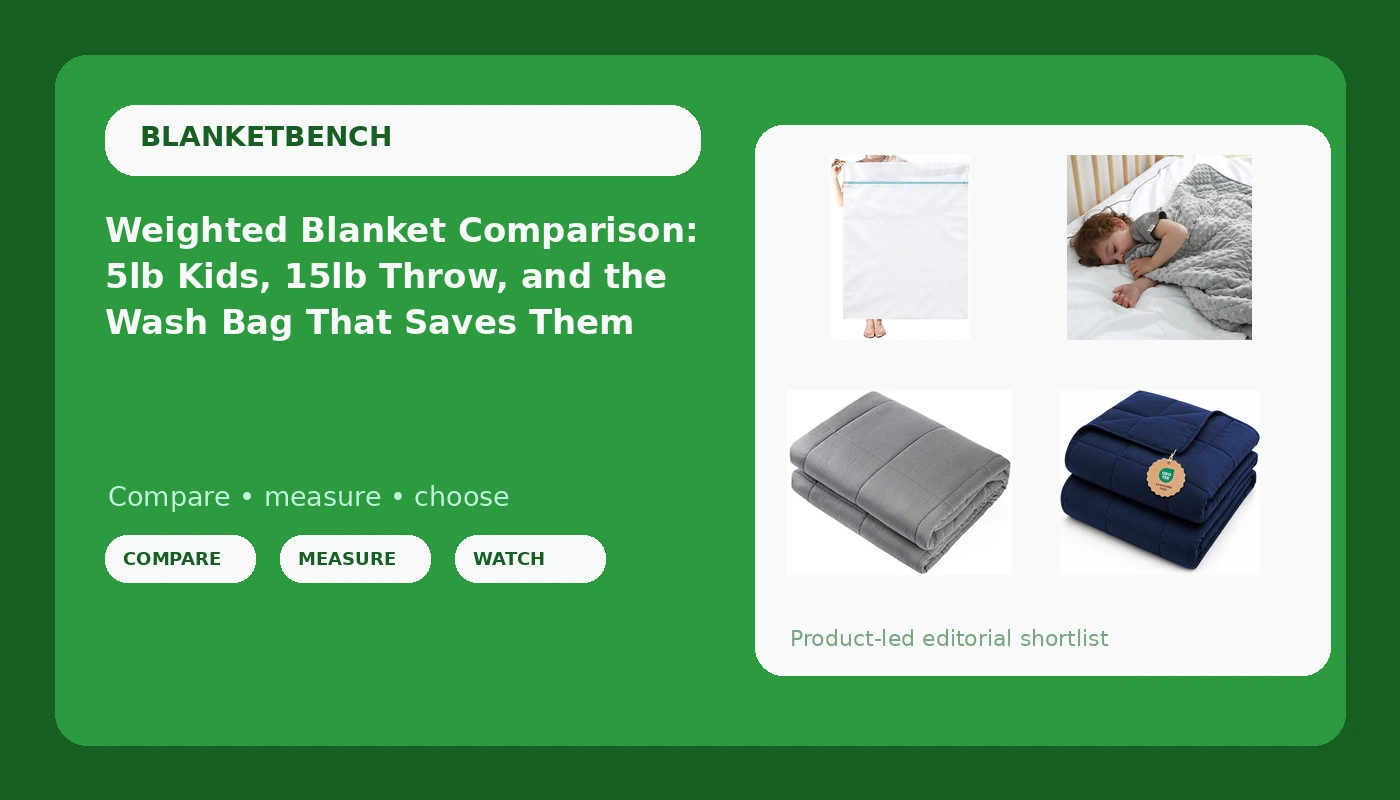
L'AGRATY Weighted Blanket for Adults 15lbs, 48"x72", Navy Twin Full Size Heavy Throw Blanket, Cooling, Breathable, Microfiber with Glass Beads, Washable, All-Season
Throw proportions that fit a twin or full bed without swallowing it, a washable microfiber shell, and an all-season claim that at least acknowledges summer exists
Microfiber rather than cotton, so it sleeps warmer than a breathable shell, and 15 pounds is more than a small adult needs
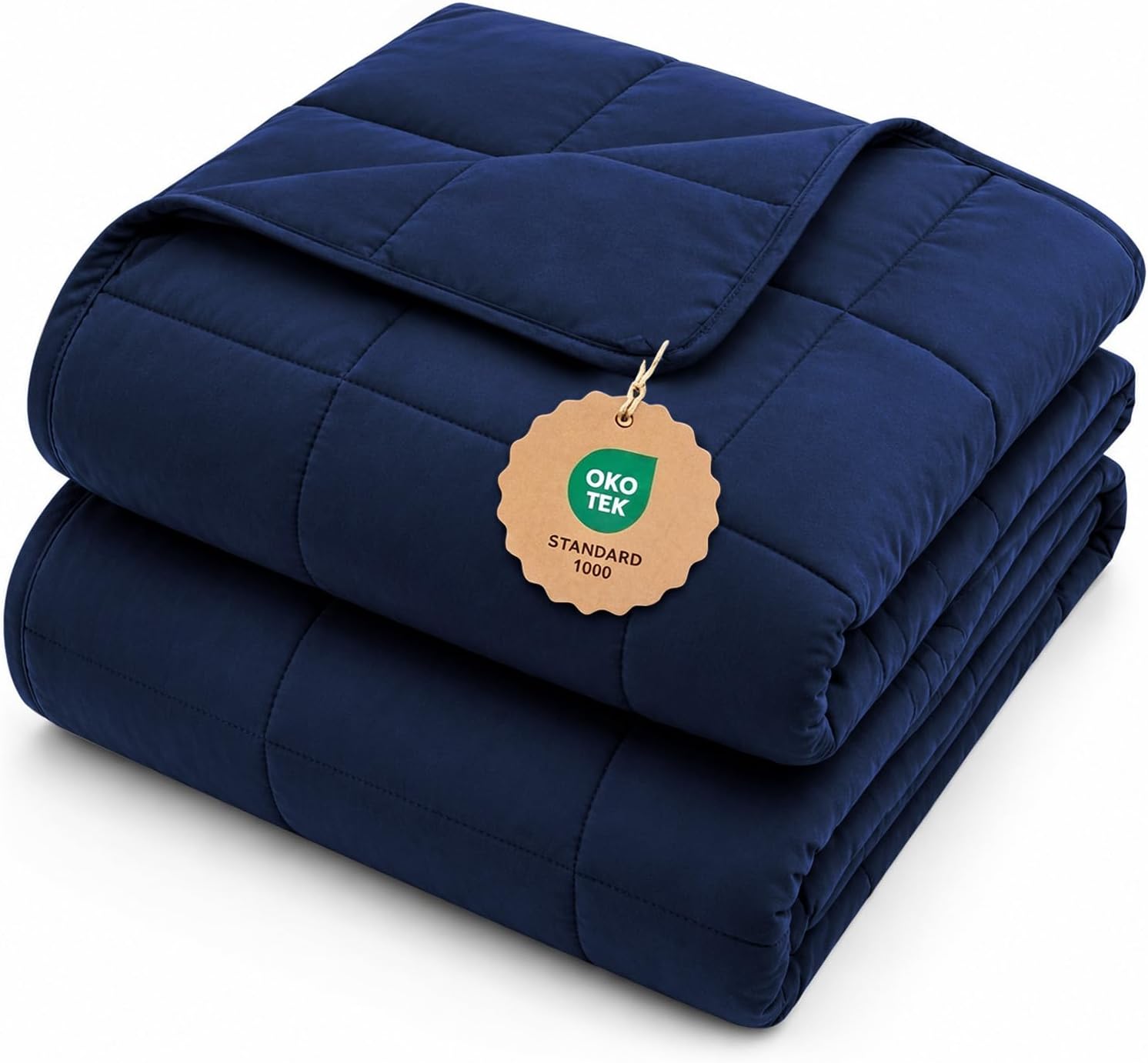
OTraki Large Mesh Washing Bag 43 x 35 Inch XXL Mesh Laundry Bag, Blue
Big enough to carry a throw or a kid's blanket through a full wash cycle and take the strain off the stitching instead of the blanket
It is not a blanket, and if you never wash what you sleep under, it does nothing for you
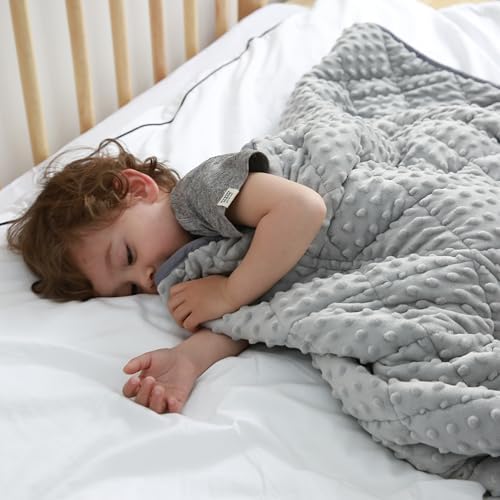
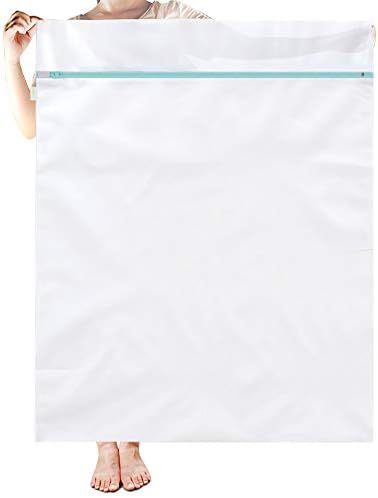
MAXTID Weighted Blanket for Kids 5lbs 36"x48" Cotton Blanket
A cotton shell, which is the fabric I want on a child's bed, in a size and weight a child can move alone
Useless for an adult sleeper, and only appropriate for kids past the age where a blanket is a safety question
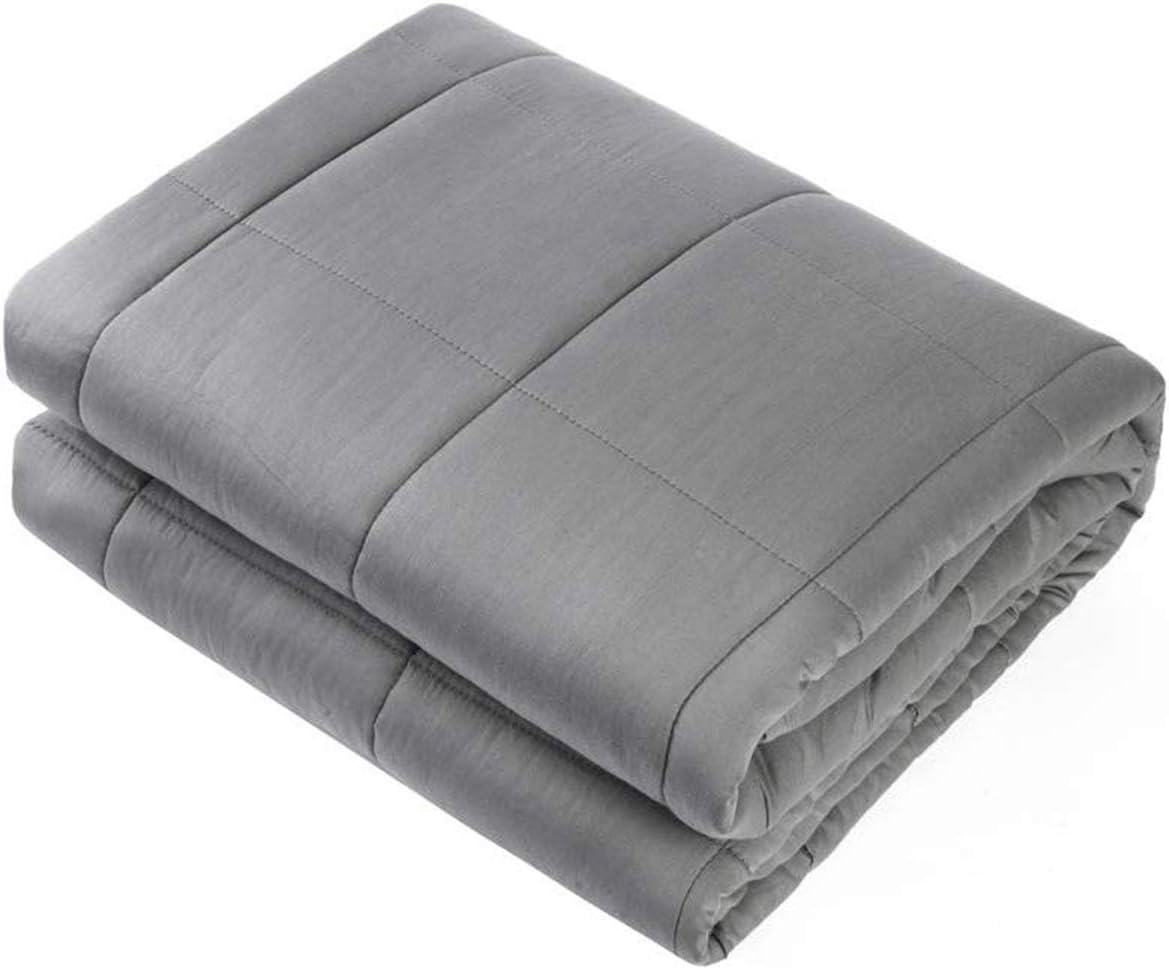
Waowoo Adult Weighted Blanket Queen Size (15lbs 60"x80") Heavy Blanket with Premium Glass Beads, (Dark Grey
Queen coverage with glass beads, the one here that reaches the edges of a shared bed instead of leaving a cold strip down the middle
A 60 by 80 blanket is a genuine laundering project at home, and the dark grey microfiber shell runs warm
Prices and availability were captured from Amazon Creators API and may change.
How I judge these four
I do not start with weight. I start with the shell fabric, because that is what you touch and what decides whether you are comfortable at 2 a.m. in July. Then bead distribution, because a blanket that pools its fill in the center is a sack of potatoes on your chest and nothing like the even pressure that makes proprioceptive input feel calming. Then stitch density, especially at the corners, because that is where cheap blankets fail first. Then washability. A blanket you cannot clean is a blanket that ends up in a closet, and I have the client stories to prove it.
One thing I will not do is call any of this therapeutic. The evidence for weighted blankets is mixed, the placebo effect is real, and I say that to clients before I say anything about brands. What I can tell you is which of these four is likely to still be on your bed in a year, and that has more to do with fabric and laundry than with pounds.
The 10% guideline is a starting point, not a rule
Two of these blankets are 15 pounds, one is 5 pounds, and that gap is the entire decision. The familiar guideline says to start near 10% of body weight, which puts a 15-pound blanket with roughly a 150-pound sleeper and a 5-pound blanket with a child around 50 pounds. Treat that as a starting point. I have seen a 200-pound man sleep beautifully under 12 pounds and a 130-pound client who wanted nothing lighter than 20.
The failure mode I see most often is overbuying. Heavier feels more serious, more medical, more like something is happening, so people order 20 or 25 pounds when 15 would have worked. Then they cannot roll over, they wake up pinned, and the blanket goes in the closet. If you are between two weights, take the lighter one. You can always add a second blanket on top. You cannot subtract beads.
Fabric decides whether you use it in August
Chicago summers are humid enough that a polyester shell becomes a sauna, which is why I keep saying cotton and bamboo breathe and microfiber does not. The L'AGRATY throw claims a cooling, breathable microfiber build, and I read that claim the way I read every cooling claim: as a modest improvement over standard microfiber, not as a cotton shell. It is still the one I would hand a single adult, because 48 by 72 inches is a throw that fits a twin or full bed, and the navy cover looks like bedding rather than medical equipment.
The MAXTID is the only cotton shell in this group, and that matters, but it only comes in a kids size. The Waowoo queen is a dark grey microfiber, which is fine in October and less fine in a Chicago July. If your bedroom runs hot, budget for the fact that a microfiber shell will feel warmer than the weight number suggests.
Washability is the whole ballgame, and the mesh bag earns its place
Here is the pattern I have watched for five years. The blankets that survive are the ones that get washed. The ones that get abandoned are the ones whose owners are afraid to wash them, usually because a care label says spot clean or because the blanket needs a duvet cover to survive a machine. A blanket you are nervous about is a blanket you stop using.
This is why the OTraki mesh bag belongs in a comparison about blankets. At 43 by 35 inches it will hold the MAXTID kids blanket and the L'AGRATY throw with room to spare, and it keeps the shell from getting twisted and yanked against the drum, which is what pulls stitching loose at the corners. It will not hold the Waowoo queen. A 60 by 80 blanket does not fit in a 43 by 35 bag, and a queen sized weighted blanket is usually a laundromat trip or a professional cleaning, which is exactly why I hesitate to recommend queen sizes to people who know they will not make that trip.
The kids blanket, and the lines I do not cross
The MAXTID is 5 pounds at 36 by 48 inches with a cotton shell, and it is the only one of these four I would put on a child's bed. The size is right for a small child, the weight is in the range the 10% guideline suggests for a 50-pound kid, and cotton is the fabric I want against a child's skin.
The safety rules matter more than the product. No weighted blanket for an infant, ever. No blanket for a child who cannot lift it and push it off by themselves, which is a question about the child, not the blanket. And no pregnancy recommendations from me, because that is not my call to make. I also do not sell these as treatment for ADHD or autism. I work with those populations and I will not pretend a blanket is the therapy.
Who should buy which
If you are a single adult, around 130 to 170 pounds, sleeping in a twin or full bed, and you want one blanket that covers you and fits in your own washing machine, the L'AGRATY throw is the pick. The 15 pounds lands near the guideline for that body range, the throw size keeps it manageable, and the washable microfiber shell means it has a chance of staying in use.
If you share a bed, or you are a larger adult who has tried a throw and found it too narrow, the Waowoo queen is the one that actually covers the mattress. The trade-off is real: it is heavier to handle, harder to wash, and warmer. Buy it knowing you will need a laundromat plan.
If you are buying for a child, the MAXTID cotton blanket is the choice, with the caveat that the child has to be able to move it alone.
And if you are buying any of the three blankets, add the OTraki mesh bag to the order. It is the cheapest item here and the one most likely to determine whether you are still using your blanket next spring.
Trade-offs I will not pretend away
None of these four is perfect. The microfiber shells will run warmer than cotton, and the two 15-pound blankets are more weight than a smaller adult needs. The queen is a laundering commitment. The kids blanket has no adult use at all. The mesh bag only helps if you actually wash things.
What I will say is that this group covers the realistic cases well: one adult, one shared bed, one child, and one accessory that addresses the failure mode I see most often. That is a better spread than most buying decisions get.
What I am watching next
I keep a dated list of predictions and score it every January. Mine says the market splits into medical-adjacent blankets that are certified, washable, and honest about the evidence, and wellness-lifestyle blankets that are prettier and more expensive. The interesting variable is shell technology, because cooling fabrics are where the next real improvement will come from, not from another two pounds of glass beads. And I expect rental or trial programs within a few years, because the abandonment problem is too obvious for the industry to keep ignoring.
Until then, buy the fabric you will actually live with, buy the weight you can roll over under, and buy the bag that keeps it clean. That is most of the decision.