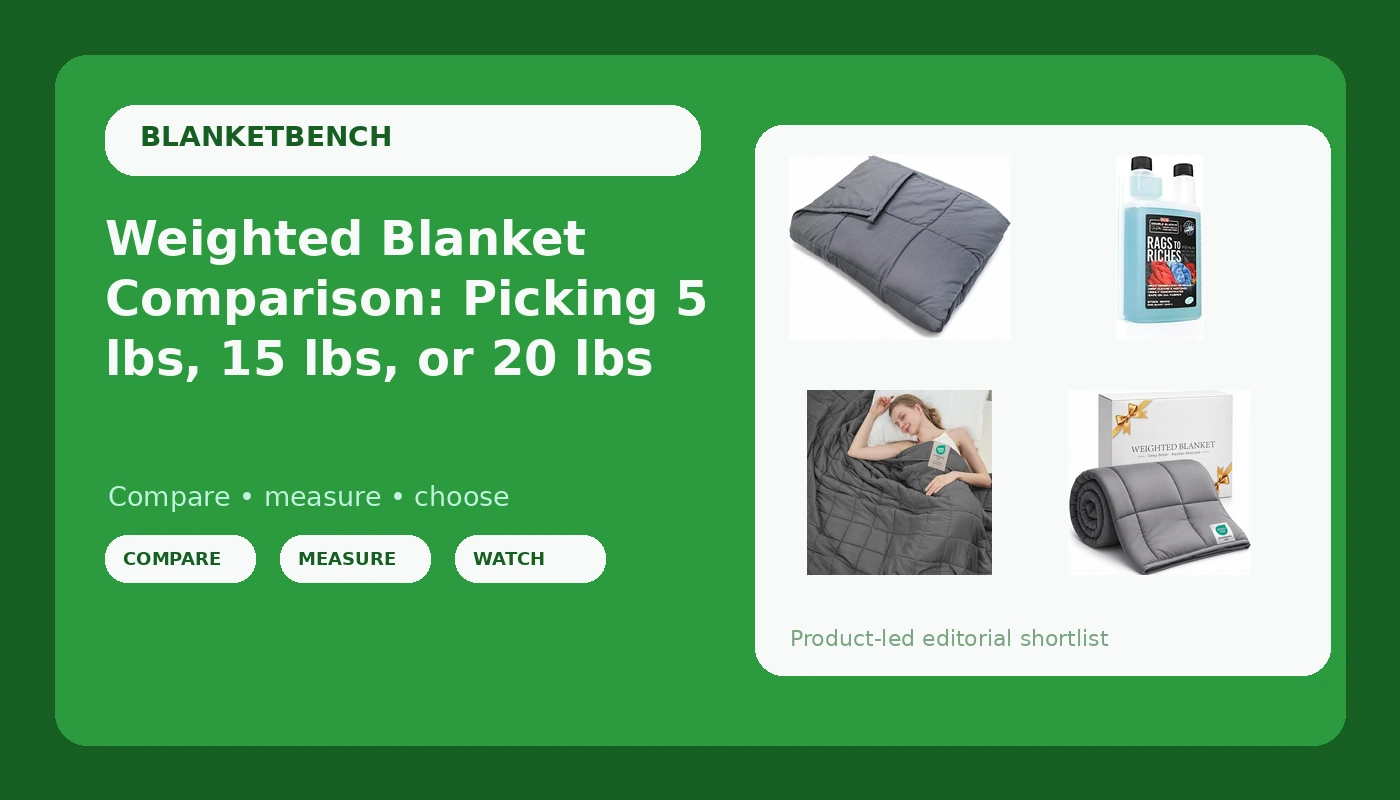
I bought my first weighted blanket in 2019 out of desperation, during a stretch when I was sleeping maybe four hours a night and had already tried every sleep hygiene habit I hand out to clients. Five years and fourteen blankets later, I work with anxiety and sensory processing clients as an occupational therapist, and the question is always the same: which one do I buy? This weighted blanket comparison is my answer for four specific options, and it starts with the warning I give everyone. The blanket is not the therapy. It is a sleep aid, the evidence behind it is mixed, and the reason most blankets end up in a closet has almost nothing to do with the weight printed on the label.
Related: Weighted Blanket Weight Chart By Body Weight
If you want the safest first purchase, the 15-pound queen size cotton blanket is the one I would put in most adult bedrooms, and the 5-pound throw is the cheapest way to find out whether deep pressure helps you at all before you spend more. The 20-pound option is for a specific sleeper rather than a stronger version of the same thing, and the fourth product in this comparison is not a blanket at all, which I will explain below.
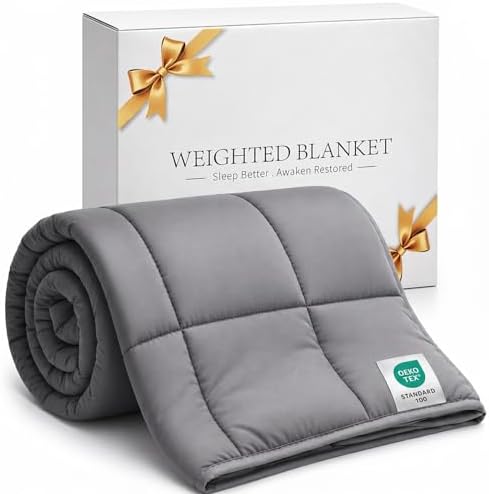
Smart Queen Weighted Blanket 5 lbs (41 x 60, Grey)
Lowest-commitment entry point, machine washable, glass beads, throw size travels and stores easily
5 lbs is lighter than most adults want for sleep pressure, and a throw will not cover a bed or two people
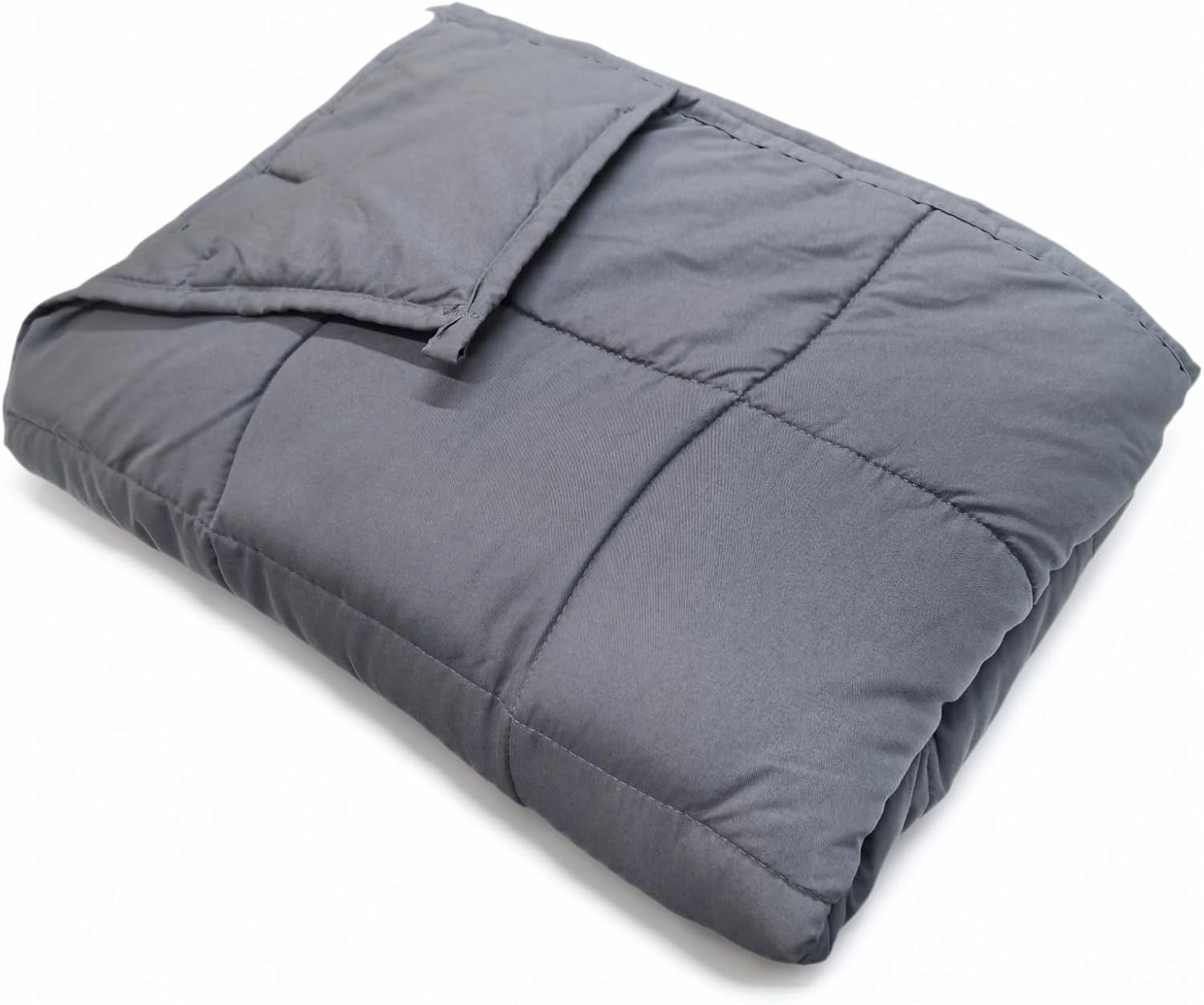
AN Adult Weighted Blankets (15 lbs, 60 x 80, Queen Size)
The middle weight most adults actually land on, organic cotton shell breathes, natural glass beads, queen size drapes without fighting for the comforter
15 lbs is heavy to reposition and heavy on laundry day, and machine washability is not advertised the way it is on the throw
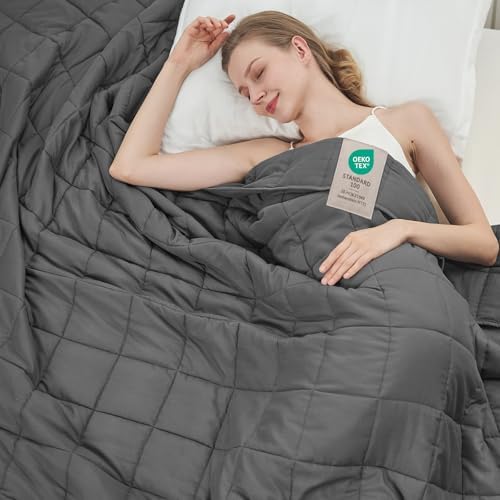
Weighted Blanket for Adults 20 lbs, 48 x 72, Twin Full Size, Grey
Heaviest option here, sized for twin and full beds, microfiber face feels soft, cooling and breathable language in the build
20 lbs is more than many people need and more than some can move alone, microfiber shells run warm, single-sleeper sizing only
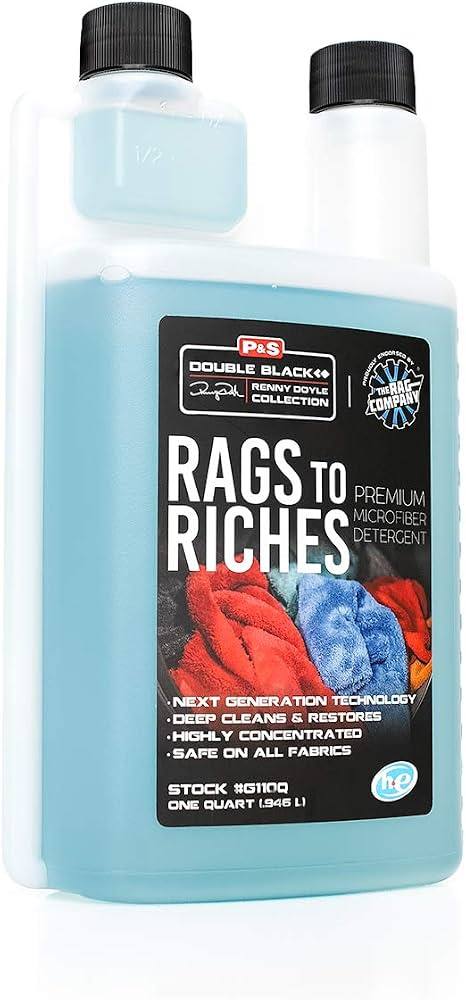
P & S PROFESSIONAL DETAIL PRODUCTS Rags to Riches Microfiber Detergent
Formulated for microfiber textiles, which is the shell material on two of these blankets, and a clean rinse keeps a shell usable instead of stiff
It is a detergent, not bedding care, so it does nothing about a blanket that was too heavy or too warm to begin with
Prices and availability were captured from Amazon Creators API and may change.
How I evaluate a weighted blanket
My process is boring and repetitive. I weigh every blanket on a kitchen scale, because claimed weight and delivered weight are two different numbers. I check breathability with a humidity sensor, because a shell that traps moisture is a shell you stop using in July. I run my hands across the whole surface to map where the beads sit, and I press the corners to see how the stitching holds. Then I ask the only question that matters long term: can this thing be washed, and will it survive it?
That last one comes from client stories, not from spec sheets. I have watched people keep a blanket for four years and I have watched people give up in three weeks, and the split is almost never about weight. It is about heat, washing, and whether the beads stayed where they were sewn.
The 5-pound throw: Smart Queen Weighted Blanket 5 lbs
The 41 x 60 throw is the option I recommend to someone who has never used a weighted blanket and is not sure they will like it. Five pounds is light enough that a hot sleeper can leave it on all night, small enough to fold on a couch, and the listing describes glass beads and a machine washable build, which matters more than most buyers realize at this weight.
Where it loses: five pounds is not much pressure, and for a 180-pound adult chasing the feeling people describe as calming, it may read as a heavy lap blanket rather than a sleep blanket. It is also a throw. If you share a bed, it covers you and not the bed, and it will slide off a restless sleeper.
The 15-pound queen: AN Adult Weighted Blankets
This is the one I would buy for most adults. Fifteen pounds, 60 x 80, queen size, organic cotton shell, natural glass beads. The cotton shell is the part I care about most, because cotton breathes in a way that microfiber does not, and in a Chicago summer the shell fabric decides whether a blanket gets used or gets folded at the foot of the bed.
The queen footprint is a real advantage if you sleep with a partner: it drapes across your side instead of competing with the shared comforter, so nobody is fighting over covers at 2 a.m.
What it costs you: fifteen pounds is genuinely heavy to move. Making the bed becomes a small workout, and laundry day is a two-person job unless you have a front loader with room to spare. The listing does not advertise machine washability the way the throw does, so before you buy, treat washing as the question to answer. A blanket you cannot clean is a blanket that ends up in the closet, and I say that with a decade of client evidence behind it.
The 20-pound twin/full: Weighted Blanket for Adults 20 lbs
The 48 x 72 option at 20 pounds is the heaviest blanket in this comparison, and the listing sizes it for sleepers in the 180 to 220 pound range on a twin or full bed. It uses a microfiber face and leans into cooling and breathable language, which is smart, because microfiber has a reputation for sleeping warm and this build is clearly trying to answer that.
My honest read: 20 pounds is a lot. I have clients who love that much pressure, and I have clients who describe it as a sack of potatoes on their chest and stop using it within two weeks. If you weigh 200 pounds and sleep hot, the fabric is going to matter more to your outcome than the extra five pounds of beads.
Where it loses: it is single-sleeper sizing, it is heavy to lift and reposition, and a microfiber shell is the material I trust least for breathability. If you run warm at night, this is not the blanket I would hand you first.
The fourth product: a microfiber detergent, and why it is in a comparison
P & S PROFESSIONAL DETAIL PRODUCTS Rags to Riches Microfiber Detergent is not a blanket, and I am not going to pretend it is. It is a detergent formulated for microfiber textiles, and I included it because two of the blankets above use microfiber in the shell, and shell care is the single biggest predictor of whether a weighted blanket survives past the first year.
Here is the reasoning. Weighted blanket shells collect body oil, sweat, and whatever your sheets collect. Ordinary detergent leaves residue in microfiber, residue stiffens the fabric, stiff fabric stops draping, and a blanket that stops draping stops working as pressure. A detergent built for microfiber rinses cleaner, which keeps the shell soft and keeps the blanket in rotation.
What it cannot do: it will not rescue a blanket that was too heavy for you, and it is not marketed as bedding care. If you own a cotton-shell blanket, this is less relevant to you. If you own a microfiber-shell blanket and you have already noticed it getting stiff after a few washes, this is the product I would look at first.
Weight is a range, not a rule
The 10% guideline is the most repeated number in this category, and I want to take it apart. Ten percent of body weight is a starting point, not a prescription. I have watched a 200-pound man sleep beautifully under 12 pounds and a 130-pound client settle on 20. The label ranges you see, like the 180 to 220 pound sizing on the 20-pound blanket, are marketing shorthand for a range that runs wider and narrower than the number suggests.
The real variables are how much pressure you find calming, how much weight you can move without help, and how hot you sleep. Most people overbuy because heavier feels more serious. It just feels heavier. If you are uncertain, start light. The 5-pound throw is not a lesser blanket, it is a cheaper experiment.
Fabric and breathability
Cotton and bamboo shells breathe. Microfiber and polyester shells hold heat. That is the whole argument, and it explains why an organic cotton queen at 15 pounds can feel more comfortable in summer than a microfiber blanket at 20 pounds.
The humidity sensor in my kit tells me what my hands already suspect: the shell decides whether moisture moves away from you or sits on your skin. In a hot bedroom, a warm shell means you throw the blanket off at 3 a.m., and a blanket that gets thrown off does not help you sleep. If you sleep hot and you are choosing between these four, weight down and cotton up.
Bead distribution and stitch density
Beads are the reason these blankets work, and bead migration is the reason they stop working. A blanket that pools its weight in the middle is a lump. A blanket with beads settled along the edges does nothing for your chest, where the proprioceptive input actually registers.
You can check this before you buy by looking at the quilting pattern in the listing photos. Smaller compartments mean less migration. I also press the seams, because popped stitching at the corners is the most common failure I see, and it happens at the stress points where you grab the blanket to pull it up.
Washability decides the outcome
This is the section I would tattoo on the inside of every weighted blanket listing. A blanket you cannot wash is a blanket that ends up in the closet. Body oil builds up, the shell gets stiff, and then the blanket smells like a gym bag and you quietly stop using it.
My pet peeve is blankets that require a duvet cover to survive washing. That is a product asking you to buy a second product so the first one can be cleaned, and it adds a layer of fabric that changes how the blanket drapes. Machine washable, as advertised on the 5-pound throw, is the spec I want to see. For the cotton queen and the 20-pound microfiber blanket, confirm the care instructions before you commit, and budget for a laundromat trip if your machine is small.
Which one for which sleeper
- You have never tried a weighted blanket and you want to know if pressure helps: the 5-pound Smart Queen throw.
- You are an average-sized adult who sleeps cool to neutral and wants one blanket for the bed: the 15-pound AN Adult queen in organic cotton.
- You weigh in the 180 to 220 pound range, sleep on a twin or full, and already know you like heavy pressure: the 20-pound microfiber option.
- You own a microfiber-shell blanket that has gone stiff: the Rags to Riches microfiber detergent, as a care product rather than a sleep product.
- You sleep hot, share a bed, and hate wrestling laundry: none of the heavy options. Buy the throw or skip weighted blankets entirely.
The trade-offs I would tell a client about
Every blanket here asks you to give something up. The throw gives up coverage and pressure. The cotton queen gives up easy laundry and easy movement. The 20-pound microfiber blanket gives up breathability and portability. The detergent gives up nothing except the idea that it is a blanket.
The honest framing is that this is a sleep aid with mixed evidence, and the placebo effect is real. What I can tell you from watching people live with these things is that the fabric and the washing routine predict long-term use far better than the number of pounds. Buy for the fabric, buy for the wash, then pick your weight.
What I am testing next
I have been watching the shell technology side of this market, and my prediction from January still stands: cooling shell fabrics will become the premium tier, and the abandonment problem will push brands toward trial and rental programs within a few years. When a blanket costs real money and a third of buyers quit in a month, the industry has a retention problem it cannot market its way out of.
For now, the practical version of that prediction is simple. Start lighter than you think you need, check the shell fabric before the weight, and confirm you can wash it. If you do those three things in that order, you are already ahead of most buyers.