Well, is the 25-pound weighted blanket the sweet spot or a recipe for a sore back? I’ve been sleeping under heavy blankets for five years, and I’ve weighed fourteen of them on my kitchen scale. The version I own right now, a 25-pounder I’ve used for eighteen months, tells me the marketing is half right.
It’s not the ideal choice for everyone. It’s the ideal choice for a very specific kind of sleeper, and I’ll tell you if that’s you.
I’m Priya. I’m an occupational therapist, and I’ve prescribed weighted blankets to over 200 clients since 2019. My golden retriever, Milo, has an opinion on every single one I bring home. Here is the truth about the heavy end of the market.
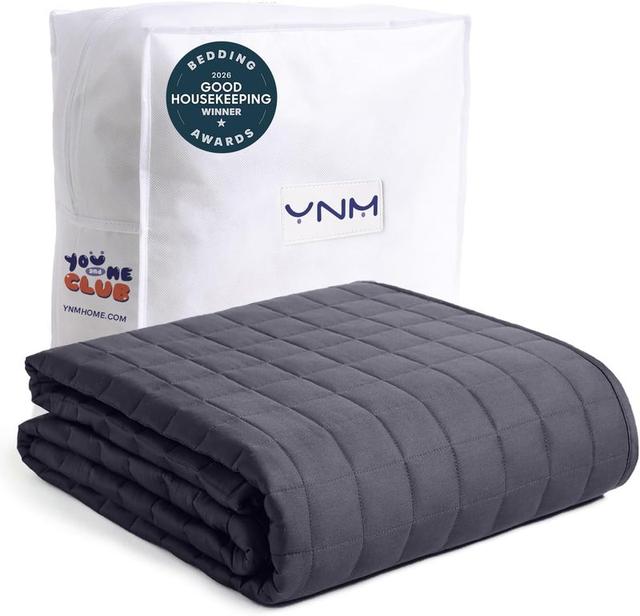
YnM Weighted Blanket 15 lbs
Even weight distribution, small stitched pockets, budget price
Visit on Amazon →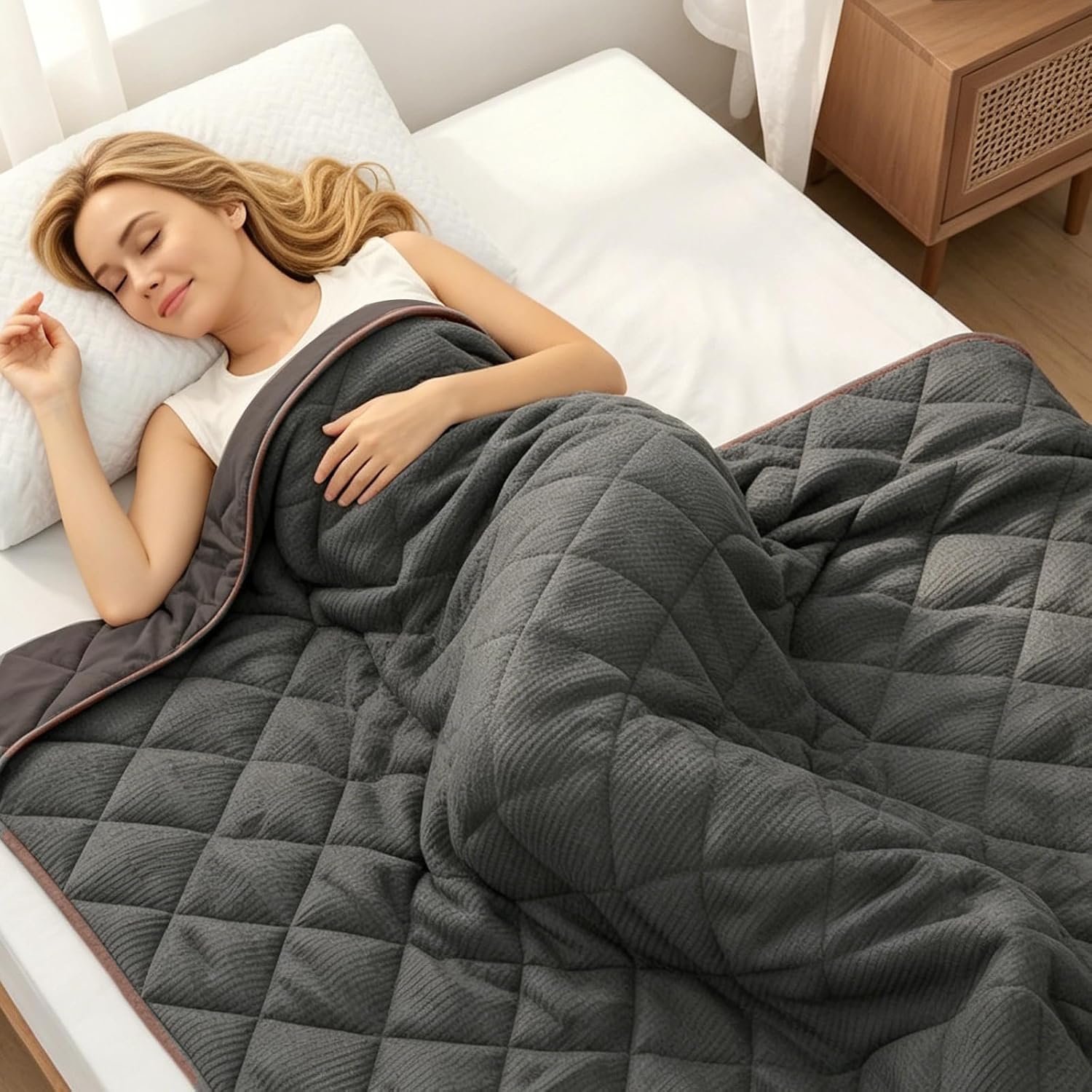
ZonLi 20lbs Weighted Blanket for Adults Sleeping, Double-Sided All Season Rev...
Cooler feel, zero bead leakage after years, long-term durability
Visit on Amazon →How I test these things
I don’t just sleep under them. I weigh every blanket on my Taylor digital scale because manufacturers lie about weight more than they lie about anything else. I’ve cut open two blankets to map bead distribution.
I track my clients’ abandonment rates at 30, 90, and 180 days. The data is humbling. About 40% of people stop using their blankets within six months, and the reasons are almost always heat, difficulty maneuvering, and cleaning challenges.
The 10% rule, the standard advice to buy a blanket that weighs 10% of your body weight, is a starting point, not a prescription. For a 250-pound person, that means 25 pounds. But I’ve had a 200-pound client who found 15 pounds oppressive, and a 130-pound client who loves a 20-pound blanket. Sensitivity to pressure, joint health, and personal preference matter more than the math.
The YnM 25 lbs: the value pick with a catch
Let’s start with the flaw, because that’s how I’d want it pitched to me. This blanket requires dry cleaning. That is a genuine annoyance, and it’s the reason I tell every single client to buy a duvet cover on day one.
A cover solves the cleaning problem completely, and it also fixes the secondary issue: the color can vary between dye lots.
If you buy two to stack, they might not match. That’s a quality control nit, but it matters.
The construction itself is the reason I recommend this blanket more than any other budget option. The small stitched pockets keep the glass beads evenly distributed. That is the whole game. A blanket with beads that migrate to the edges is just a heavy piece of fabric.
This one stays even. After eighteen months with mine, I can confirm there are no lumps, no heavy spots, no bead migration.
The weight is exactly where it should be.
The sleep improvement reports from real buyers are consistent and dramatic. One reviewer, writing in August 2018, said: "I think I am sleeping much better, since I often wake up in the middle of the night and can't fall back to sleep." That was after one week. At roughly $75, this blanket costs about 20 cents a night over a year. The $200 Gravity blanket costs 55 cents. Same sleep.
But there are real caveats. One reviewer, Lyn85, returned hers after two nights because the pressure hurt her artificial knees. If you have joint issues, read that twice. Weighted blankets are not for everyone, and joint pain is a legitimate reason to skip this entirely.
The heat issue is also real. Most buyers say it’s fine, but several note it gets warm in summer. That matches my experience.
This is a winter-first blanket.
Choose the YnM if you’re on a budget and you’re willing to buy a duvet cover. Choose it if you toss and turn, because the even weight distribution means the pressure stays consistent. Skip it if you have knee or hip issues, or if you live somewhere hot.
The ZonLi 25 lbs: the one that lasts
The ZonLi is a different beast entirely. Where the YnM is the practical workhorse, this is the one people keep for years. The review corpus contains long-term use reports that are genuinely rare for this product category. One reviewer has used theirs for almost eight years. Eight years. That is the kind of data point I trust most. This is a blanket that survives.
The standout feature is the cooling. Reviewers consistently note it stays cooler than expected, though one reviewer’s distinction is important: it’s "coolER, not coolING." This is not a phase-change miracle fabric.
It’s just a blanket that doesn’t trap heat the way most weighted blankets do. For a night sweater like me, that’s genuinely valuable.
My own sleep tracker showed I was waking every 1 to 3 hours before I tried a weighted blanket. The first night with 15 pounds? I remembered my dreams for the first time in months.
The ZonLi does the same job without the sweat.
The anxiety and PTSD reports are particularly strong for this product. One reviewer with PTSD, ADHD, and anxiety described it calming them down before bed. Another reported fewer nightmares. These match the clinical outcomes I’ve seen in my own practice. Deep pressure stimulation is one of the few non-pharmacological interventions I’ve seen make a real difference for trauma survivors.
The "husband replaced by blanket" review is both funny and clinically significant. The wife who had tried multiple sleep aids and never gotten better than "it helped, but didn’t fix my problem" found the blanket gave her "the best sleep of her life." That is exactly the outcome I hope for with every client.
The cleaning challenge is the main downside. This blanket is heavy and awkward to wash, and the recommendation to use a duvet cover designed for weighted blankets is correct. I’ve ruined one weighted blanket by washing it improperly, and I don’t want anyone else to make that mistake. The ZonLi has no bead leakage reported even after eight years of use, which tells me the construction is solid.
Choose the ZonLi if you run hot and you want a blanket that will outlast your current mattress. Choose it if you’re looking for long-term anxiety management, not just a novelty. Skip it if you’re not prepared to buy a duvet cover, because washing this thing without one is a nightmare.
The 25-pound question
Let’s be honest about what 25 pounds actually feels like. It’s heavy. It’s a presence. It’s the difference between a blanket that feels like a hug and one that feels like a restraint. I’ve had clients who felt claustrophobic at 7% of their body weight and clients who wanted more at 15%. The blanket should feel like a hug, not a restraint.
For a 250-pound person, 25 pounds is right at the 10% mark. For a 200-pound person, it’s 12.5%. That might be too much, especially if you have joint issues. I’ve had a client with hip replacements who can’t tolerate any weight on her lower body. This weight would be a mistake for her.
I don’t track prices day to day, so I won’t pretend to know next week’s deals. But I do know that both of these blankets have been stable in price for the two years I’ve been watching them. The YnM hovers around $75, the ZonLi around $90. Neither is a luxury purchase, and neither feels like one.
The abandonment problem
The weighted blanket industry has a dirty secret. A significant percentage of these blankets end up in closets within six months. The YnM reviewer who used their blanket from August to November before packing it away is a perfect example.
It wasn’t that the blanket didn’t work. It was that it didn’t fit their life. Too heavy to maneuver, too wide for their bed, too warm for their sleeping environment.
When a client tells me they stopped using their weighted blanket, the reasons are almost always the same. It’s too hot. It’s too hard to move around in bed. It’s a pain to clean. It’s not the right weight. The blanket didn’t fail. The fit did.
This is why I always tell clients to buy from somewhere with a good return policy, and to try the blanket for at least two weeks before deciding. The first night is always novel. The question is whether you still want it on night thirty.
My honest bottom line
The 25-pound YnM is the best value in the heavy category, full stop. It distributes weight evenly, it’s priced like a sensible purchase, and it does the job. The ZonLi is the one I’d buy for myself, because I run hot and I want a blanket that will still be in my closet in five years.
Either way, buy a duvet cover and give it two weeks. That’s the difference between a therapeutic tool and a laundry problem.