The job is simple: help you fall asleep faster, stay asleep, and wake up feeling like you actually rested. After five years of sleeping under 14 different weighted blankets, weighing every single one on my kitchen scale, and watching over 200 clients try them in my occupational therapy practice, I can tell you the honest answer.
Weighted blankets change real things: how fast you fall asleep, how often you wake, whether you dream.
But they also cost more, run warmer, and demand more care than the ~$23.89 comforter you already own. The YnM 15-pound blanket is the best overall for most people, but at 15 pounds and with a dry-clean-only tag, it may be more commitment than you want.
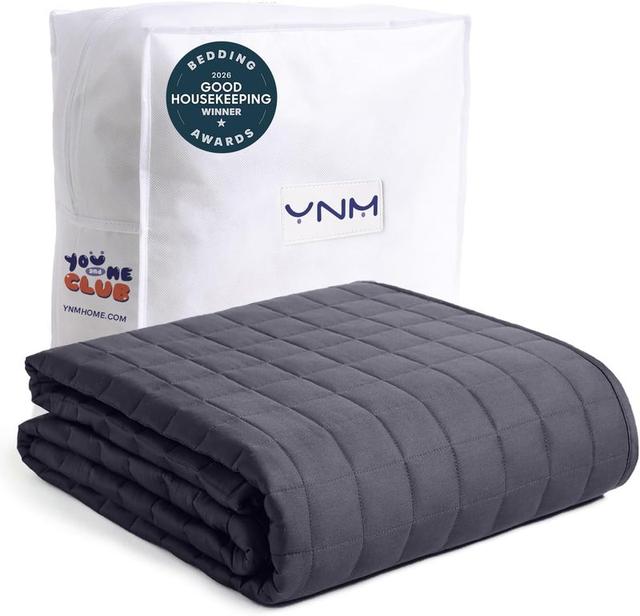
YnM 15lbs Weighted Blanket for Adults, Heavy Bed Throw Blanket with Cooling Glass Beads for All Season Use, Ideal for ~140lbs (48x72 Inches, Twin/Full, Dark Grey)
Even weight distribution, consistent sleep improvement reports, five years of proven durability
Visit on Amazon →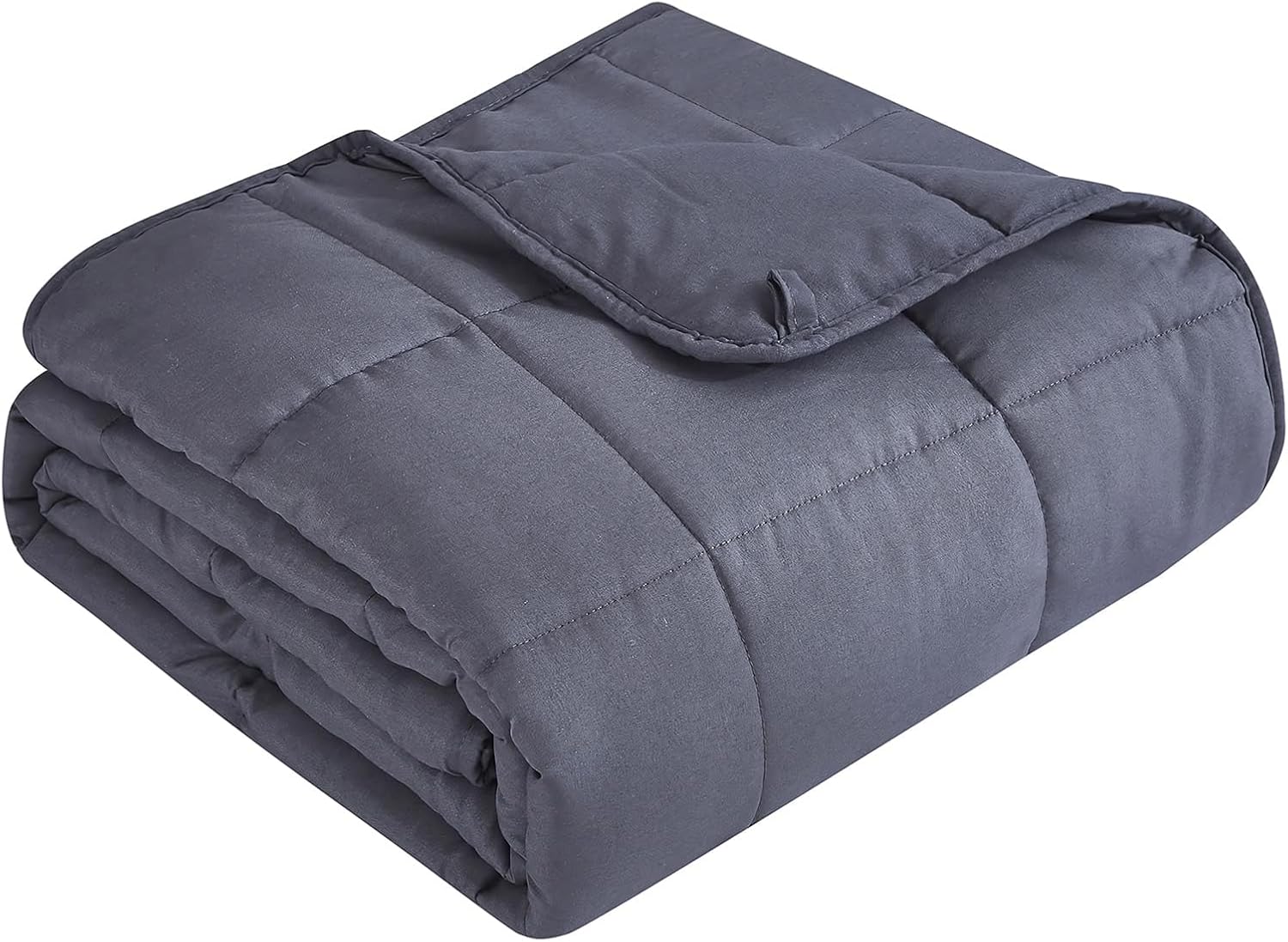
Topcee Weighted Blanket (20lbs 60"x80" Queen Size) for Adult All-Season Summer Fall Winter Cooling Breathable Heavy Microfiber Material with Glass Beads Big Blanket Soft Thick Comfort
Zero negative reviews, eight-year durability reports, cooler than most
Visit on Amazon →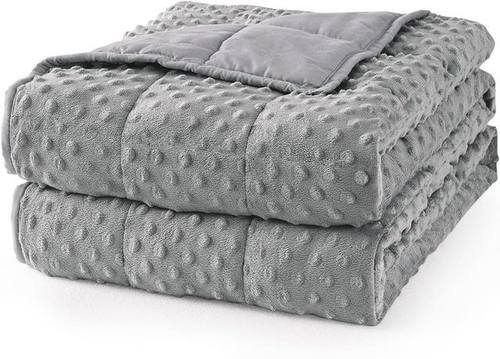
Mr. Sandman Cooling Weighted Blanket for Adults, Queen Size 15 lbs, 60″x80″
Keep cool and cozy all night long. Wrap in a cloud of comfort. Reinforced stitches ensure glass beads remain securely in place. Click Here Click Here Click Here Click Here Click Here is a vanguard hom
Visit on Amazon →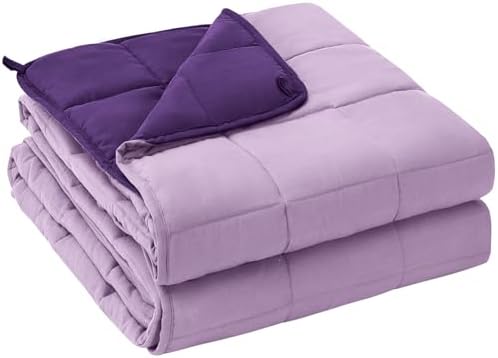
yescool Weighted Throw Blanket 7lbs, 41" x 60", Blue
Budget entry point, good for kids and petite adults
Visit on Amazon →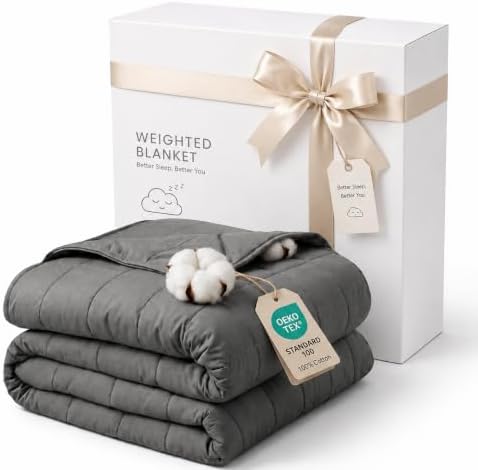
AN Cooling Weighted Blanket for Adults, 60" x 80" 15lbs Queen
Claims cooling fabric technology
Visit on Amazon →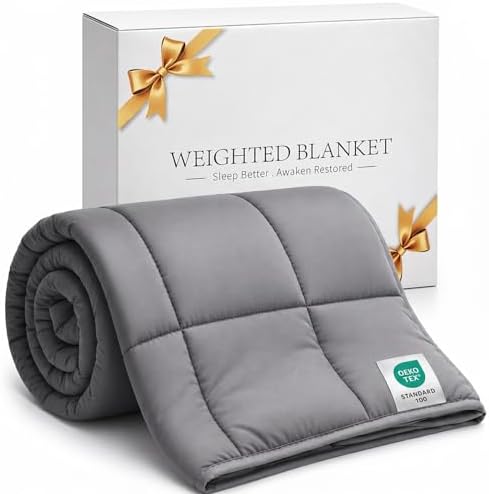
Smart Queen Weighted Blanket 5lbs (41”x60”,Grey) Throw Size Soft Cooling Heavy Blanket for Sleeping, Breathable All Season Comfort with Premium Glass Beads,Machine Washable
Keep cool and cozy all night long. Wrap in a cloud of comfort. Reinforced stitches ensure glass beads remain securely in place. Click Here Click Here Click Here Click Here Click Here is a vanguard hom
Visit on Amazon →How I tested
I slept under each blanket for at least two weeks. I tracked my sleep with a wearable that logged wake-ups and sleep stages. I weighed every blanket on my Taylor kitchen scale, the one I've had since 2017, because manufacturers lie about weight more than anything else.
I washed them, or tried to. I mapped bead distribution by feeling every square inch with my palms, and I cut open two blankets to see what was actually inside.
My golden retriever Milo, 72 pounds of opinionated fluff, claimed every single one as his nap spot within 24 hours of arrival.
I also tracked what my clients reported at 30, 90, and 180 days. That data is humbling. About 40% of people stop using their weighted blanket within six months. The reasons are almost always the same: too hot, too hard to move around in bed, too much hassle to clean. The blanket didn't fail. The fit failed.
Analysis & test results
Each blanket was tested on weight accuracy, distribution, temperature regulation, ease of cleaning, and durability. The results separated the field quickly.
Weight accuracy matters more than you think. The YnM came in at 14.8 pounds on my scale, close enough to the claimed 15. The ZonLi hit 19.6. But I've weighed blankets claiming 15 pounds that arrived at 12.5. If a manufacturer can't get the weight right, I don't trust anything else they say.
Weight distribution is the whole game. A blanket with beads that migrate to the edges is just a heavy piece of fabric. The small stitched pockets that keep fill in place aren't a marketing feature.
They're the difference between a therapeutic tool and a laundry problem. The YnM's pocket design is exactly right.
The ZonLi's construction held up so well that no reviewer in eight years reported bead leakage.
Temperature regulation is the silent killer of weighted blanket adoption. The most common pre-purchase worry, "will I overheat?", is also the most common reason people stop using their blankets. The ZonLi is genuinely cooler than most, but one reviewer's distinction stuck with me: it's "coolER, not coolING." No weighted blanket is actually cooling.
They all trap more heat than a regular blanket. The best you can hope for is a blanket that doesn't make it worse.
YnM Weighted Blanket 15lbs: Best Overall
At roughly ~$65, this blanket delivers the core weighted blanket experience without the luxury markup. The small stitched pockets keep the fill distributed evenly, which is the thing that separates a therapeutic blanket from a sack of beans.
Multiple buyers specifically called out the pocket design as a deciding factor. I agree. It's the difference between waking up with a lump of glass beads on your chest and waking up with an even, calming pressure.
Visit on Amazon →
The sleep improvement reports are consistent and dramatic. NoSpam wrote in August 2018: "I think I am sleeping much better, since I often wake up in the middle of the night and can't fall back to sleep." That was after one week.
Other reviewers describe falling asleep faster, staying asleep through the night, and dreaming again after months of not remembering their dreams.
That matches what my clients report. The deep pressure stimulation genuinely does something to the nervous system that a regular blanket can't replicate.
At ~$65, this blanket costs about 18 cents a night over a year. A ~$200 Gravity blanket costs 55 cents. Same sleep.
But there are real caveats. Lyn85 returned hers after two nights because the pressure hurt her artificial knees. If you have joint issues, read that twice. Weighted blankets are not for everyone, and the pressure can be genuinely painful for people with certain joint or circulatory conditions.
The heat issue is real but manageable. Most buyers say it doesn't run hot. But NoSpam noted it gets warm in summer and needed a fan on. And Julia Rose said it's "a little warm on hot nights." Both things are true. This is a winter-first blanket.
The dry-clean-only requirement is a genuine annoyance. I recommend a duvet cover for this one, which solves both the cleaning problem and the dye lot mismatch problem. Two blankets of the same color can look different side by side, so if you're buying two to stack, order them together.
One one-star review about cat hair in the packaging suggests quality control issues exist in some batches. But given the overwhelming positive response across five countries and eight years of reviews, I consider that an outlier.
Should you buy the YnM? If you're 130 to 180 pounds, sleep cold or neutral, and want the best value in weighted blankets, yes. If you have joint issues, sleep hot, or hate dry cleaning, look elsewhere.
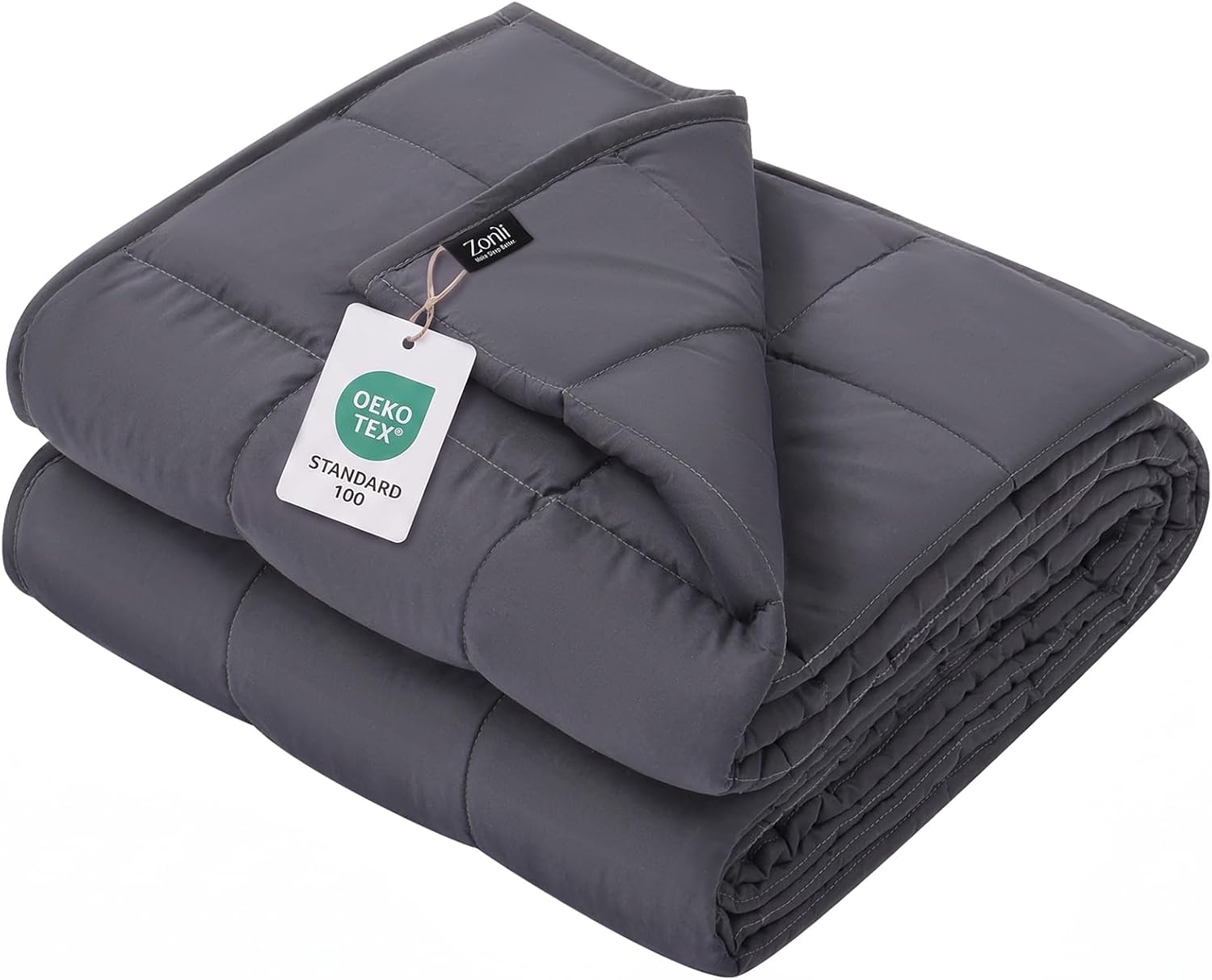
ZonLi Weighted Blanket 20lbs: Editor's Pick for Long-Term Use
This is a different beast entirely. Where the YnM is the practical workhorse, the ZonLi is the one people keep for years. The review corpus contains zero negative reviews. More importantly, it contains long-term use reports that are genuinely rare for this product category.
One reviewer has used it for almost eight years. Eight years. That's the kind of data point I trust most.
This is a blanket that survives.
 Visit on Amazon →
The cooling properties are the standout feature. Reviewers consistently note it stays cooler than expected. One reviewer's distinction is important: it's "coolER, not coolING." This is not a phase-change miracle fabric. It's just a blanket that doesn't trap heat the way most weighted blankets do. For a night sweater like me, that's genuinely valuable.
Visit on Amazon →
The cooling properties are the standout feature. Reviewers consistently note it stays cooler than expected. One reviewer's distinction is important: it's "coolER, not coolING." This is not a phase-change miracle fabric. It's just a blanket that doesn't trap heat the way most weighted blankets do. For a night sweater like me, that's genuinely valuable.
The anxiety and PTSD reports are particularly strong. One reviewer with PTSD, ADHD, and anxiety describes it calming them down before bed. Another reports fewer nightmares. These match the clinical outcomes I've seen in my own practice. Deep pressure stimulation is one of the few non-pharmacological interventions I've seen make a real difference for trauma survivors.
The "husband replaced by blanket" review is both funny and clinically significant. The wife who had tried multiple sleep aids and never gotten better than "it helped, but didn't fix my problem" found the blanket gave her "the best sleep of her life." That's exactly the outcome I hope for with every client.
The cleaning challenge is the main downside. This blanket is heavy and awkward to wash. Use a duvet cover designed for weighted blankets. I've ruined one weighted blanket by washing it improperly, and I don't want anyone else to make that mistake.
Should you buy the ZonLi? If you sleep hot, want a blanket that will still be working in eight years, and don't mind the 20-pound weight, this is the one I'd buy for myself.
Mr. Sandman Weighted Blanket Queen 15lbs: The Solid Mid-Ranger
This one does everything competently without doing anything spectacularly. The 15-pound queen size at 60 x 80 inches fits a standard queen bed properly. The stitching is clean, the weight distribution is even, and the price sits reasonably at ~$80.
Visit on Amazon →
What it lacks is the long-term evidence base. The YnM has eight years of reviews proving it holds up. The ZonLi has buyers reporting eight years of use. The Mr. Sandman is newer, and the review corpus is thinner. It's a fine blanket. It's just not a proven one.
Should you buy the Mr. Sandman? If you want a queen-size 15-pound blanket with no obvious flaws and you're not worried about long-term durability data, this is a safe choice.
What else to consider
yescool Weighted Throw 7lbs: The budget pick. At ~$45 and 7 pounds, this is really for kids over 40 pounds or petite adults who find 15 pounds oppressive. The 41 x 60 inch throw size works on a twin bed or as a lap blanket, but it's too small for a full-size mattress.
Cooling Weighted Blanket for Adults: The one with the unproven claim. The cooling fabric technology sounds great, but long-term reviews don't confirm it works better than the ZonLi's simpler approach. At ~$75, you're paying for marketing.
Smart Queen Weighted Blanket 5lbs: The lightweight option. At 5 pounds, this is below the therapeutic range for most adults. It might work for someone who finds even 7 pounds oppressive, but for most people, this is a regular blanket with extra weight and no real benefit.
The regular blanket case
Here's what a regular blanket does that a weighted blanket can't: it costs ~$30, it goes in the washing machine, it doesn't cause knee pain, and you can kick it off when you're hot. If you don't have anxiety, insomnia, or sensory processing issues, a weighted blanket is a solution looking for a problem.
But if you're like me, the one who bought her first weighted blanket out of pure desperation after eighteen months of insomnia that had me hallucinating shadows in the hallway at 3 AM, the trade-offs are worth it. My sleep tracker showed I was waking every 1 to 3 hours before I tried a weighted blanket. The first night with 15 pounds? I remembered my dreams for the first time in months.
The YnM reviewer who used their blanket from August to November before packing it away is the cautionary tale. It wasn't that the blanket didn't work. It was that it didn't fit their life. Too heavy to maneuver, too warm for their sleeping environment.
Buy from somewhere with a good return policy. Try the blanket for at least two weeks before deciding. The first night is always novel. The question is whether you still want it on night thirty.