Most people shopping for a weighted blanket start with a single number: the one on the label. They read that a blanket should be about 10 percent of body weight, pick the closest match, and click buy. Then it arrives, feels like a damp sandbag in July, and spends the rest of its life folded over the arm of a chair. The relationship between weighted blanket weight and fabric is what actually decides whether you still use the thing in week three. Weight gets you to the checkout page. The shell material, the stitching, and the way the glass beads sit inside the quilted pockets decide whether the blanket ends up on your bed or in a closet. This explainer covers all three, along with four specific options and the sleeper each one fits.
Related: How to Wash a Weighted Blanket Without Ruining the Fill →
Quick answer
Treat the 10 percent guideline as a starting point rather than a prescription. For most adults it lands between 12 and 20 pounds, and a 48 by 72 inch twin size is the most common footprint for one sleeper. Once the weight sits in a sensible range, two other factors matter more than the label. The first is shell fabric, because cotton and bamboo move air while some synthetics trap it. The second is bead containment, because tight grid stitching keeps glass beads from sliding into the corners. Washability is the third factor, and it is the one people ignore until the blanket needs cleaning. None of the four options below is universally right. Each fits a different sleeper, room, and laundry routine.
Four useful options
| Model | Best fit | What stands out |
|---|---|---|
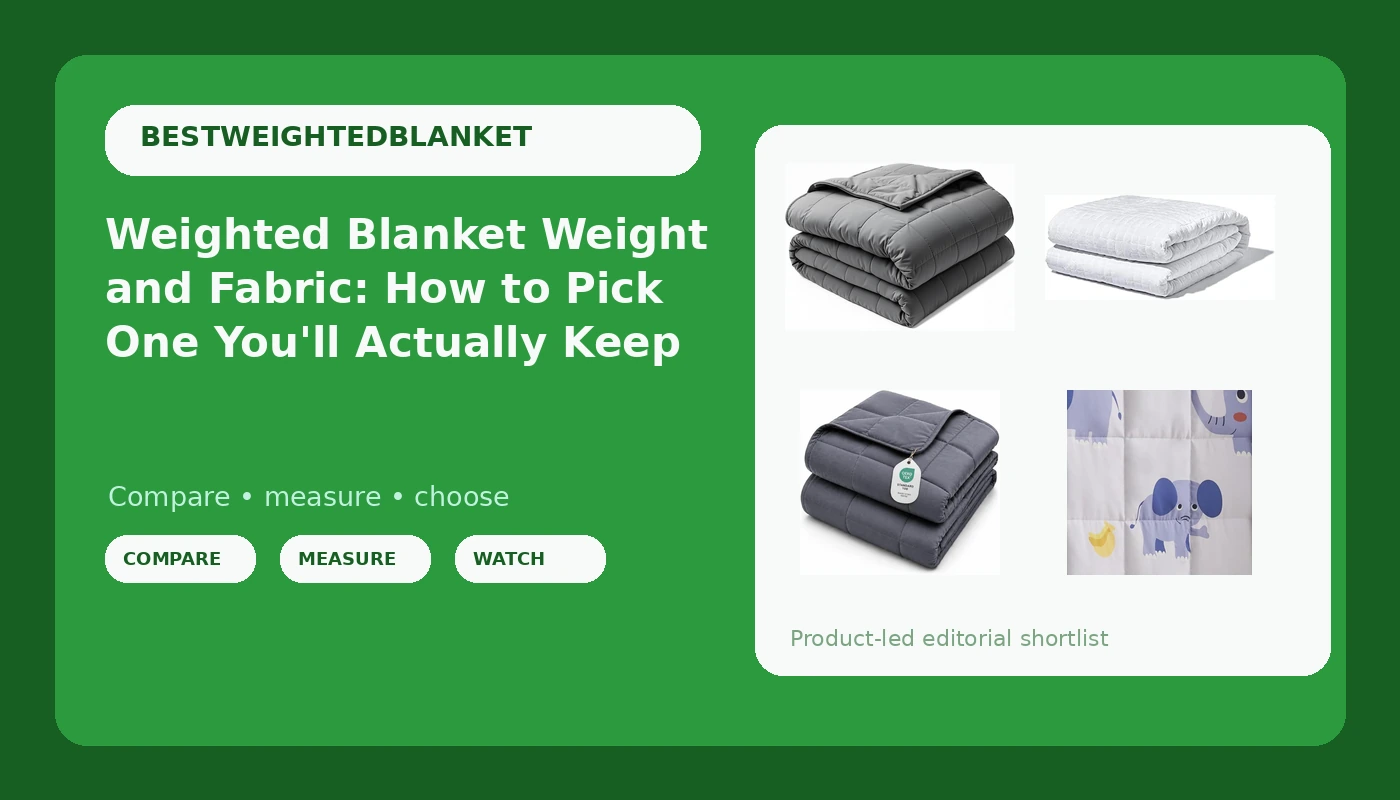
| Weighted Blanket 15 lbs for Adults, 48" x 72" Twin Size Cotton Weighted Blanket, Cooling Heavy Blanket with Glass Beads Standard Grid Stitching Soft Cozy Grey Blanket | Adults who want a cotton shell in a standard twin footprint | Cotton shell, glass bead fill, and standard grid stitching in a 15 lb, 48 by 72 inch build |
| Gravity Weighted Blankets for Adults, 15lbs Grey (48" x 72", Twin/Single) - Heavy Comfort Cotton Blanket with Glass Beads - Utra-Soft Premium Microfiber Duvet Cover - Machine Washable | Adults who want a removable cover they can machine wash | 15 lb cotton blanket paired with a premium microfiber duvet cover and machine washable construction |
| L'AGRATY Weighted Blanket for Adults 15lbs, 48"x72", Dark Grey Twin Full Size Heavy Throw Blanket, Cooling, Microfiber with Glass Beads, Big, Washable, All-Season | Adults who want a cooling, all-season microfiber shell | 15 lb, 48 by 72 inch microfiber build with glass beads, described as cooling, big, and washable |
| Weighted Blanket Kids 5lbs, 36"x48", Soft Space Small Cooling Heavy Blanket | Children who need a smaller blanket they can move on their own | 5 lb, 36 by 48 inch kids size in a soft, cooling fabric |
The cotton shell option: Weighted Blanket 15 lbs for Adults, 48" x 72" Twin Size Cotton Weighted Blanket, Cooling Heavy Blanket with Glass Beads Standard Grid Stitching Soft Cozy Grey Blanket
A cotton shell is the detail that separates a blanket you keep using from one you push off at 2 a.m. Cotton moves air, so the weight rests on you without the clammy feeling a dense synthetic can produce. The grid stitching matters just as much, because quilting the fill into squares keeps the glass beads from sagging into a lump at the foot of the bed. The trade-off is texture and drying time. Cotton is not as silky as microfiber and takes longer to tumble dry, so it needs a machine with enough capacity. At 15 pounds in a twin footprint, the weight sits squarely in the middle of the adult range.
The washable-cover option: Gravity Weighted Blankets for Adults, 15lbs Grey (48" x 72", Twin/Single) - Heavy Comfort Cotton Blanket with Glass Beads - Utra-Soft Premium Microfiber Duvet Cover - Machine Washable
The removable duvet cover is the practical argument for this one. The inner layer of most weighted blankets is the part you cannot easily launder, so a cover you can strip and wash changes the maintenance math entirely: the cover goes in weekly, the heavy inner layer goes in rarely. The listing describes the cover as premium microfiber, which feels smoother against skin than cotton but may run warmer. The trade-off is assembly. A cover has to be tied in at its corners and along the sides, and a cover tied loosely can shift overnight. Check how many tie points the listing shows before you commit.
The cooling microfiber option: L'AGRATY Weighted Blanket for Adults 15lbs, 48"x72", Dark Grey Twin Full Size Heavy Throw Blanket, Cooling, Microfiber with Glass Beads, Big, Washable, All-Season
This is the option for someone who runs warm or sleeps in a room without strong air conditioning. The shell is microfiber, which the listing describes as cooling, and the blanket is billed as all-season, meaning the manufacturer expects it to work in summer as well as winter. Microfiber is smoother and lighter than cotton and dries faster, which is genuinely useful if you wash bedding weekly. The catch with any synthetic shell is breathability, because microfiber traps more heat than a cotton weave, so a cooling claim is worth weighing against your own body temperature and how warm you keep the bedroom. Dark grey also shows lint and pet hair less than lighter shades.
The kids size option: Weighted Blanket Kids 5lbs, 36"x48", Soft Space Small Cooling Heavy Blanket
Children need a different calculation. The point of a 5 pound, 36 by 48 inch blanket is that it is light and small enough for a child to move without help, which is the threshold that matters most at this size. A blanket a child cannot push aside independently is the wrong blanket, no matter how calming it feels at bedtime. This one is described as soft and cooling with a space-themed design, and the smaller dimensions suit a child's bed. It is not a treatment for anything, and it is not appropriate for infants or toddlers who cannot reposition themselves.
Prices and availability may change. Product images, names, and retailer links are matched to verified listings. No current price, rating, stock status, or measured result is stated here without current evidence.
What the 10 percent guideline really means
The 10 percent rule spread because it is easy to remember, not because research settled on it. The underlying idea is proprioceptive input: gentle, even pressure across the body that some people find calming, similar in principle to a firm hug. That is a sensory explanation rather than a medical mechanism, and the evidence for weighted blankets as a sleep intervention is mixed. In practice, the guideline is most useful as a range. A 150 pound sleeper lands at 15 pounds, but the same person might sleep better under 12 or feel more settled under 18. Distribution matters too, because a 15 pound blanket that actually drapes across your torso feels different from one where half the weight hangs off the side of the mattress. Start near 10 percent, then adjust based on how the first week feels.
Why fabric and bead distribution decide the outcome
The weight is fixed at purchase. Almost everything that determines long-term satisfaction is decided by construction. Shell fabric controls temperature, because cotton and bamboo weaves let heat and moisture escape while tightly woven synthetics hold them in. That is why a blanket that feels wonderful in January can be unbearable in June. Stitch density controls bead movement, because glass beads are small and heavy, and in a blanket quilted into large chambers they migrate toward whatever edge hangs lowest. Grid stitching, where the fill is divided into many small squares, keeps beads closer to where they started. The care instructions control the endgame, since a blanket that must be spot cleaned tends to stop being used the first time something spills on it.
- Calculate 10 percent of your body weight, then treat that figure as the center of a range rather than a target.
- Measure your mattress and decide whether the blanket should cover one sleeper or two, since 48 by 72 inches is a single-person size.
- Read the shell material before the weight, and favor cotton or bamboo if you sleep warm or live somewhere humid.
- Look for a described quilting pattern such as grid stitching, which is what keeps glass beads from pooling at the edges.
- Check the care instructions and confirm the blanket, or its cover, fits the machine you actually own.
Practical guidance for the first month
- Give it several nights before you decide, because a weighted blanket feels strange at first and one uncomfortable night is not a verdict.
- Lay it over your fitted sheet rather than tucking it under the mattress, so the weight rests on your body instead of being pinned at the edges.
- Shake it out and smooth it flat once a week so the bead fill redistributes evenly across the quilting.
- Wash the cover whenever that is an option, and follow the label for the heavy inner layer.
- If it feels oppressive rather than calming, or you wake up overheated, size down or switch to a more breathable shell.
Which option should you choose?
Choose the Weighted Blanket 15 lbs for Adults, 48" x 72" Twin Size Cotton Weighted Blanket, Cooling Heavy Blanket with Glass Beads Standard Grid Stitching Soft Cozy Grey Blanket when you want a cotton shell, standard grid stitching, and a straightforward twin-size blanket for one adult sleeper. Choose the Gravity Weighted Blankets for Adults, 15lbs Grey (48" x 72", Twin/Single) - Heavy Comfort Cotton Blanket with Glass Beads - Utra-Soft Premium Microfiber Duvet Cover - Machine Washable when a removable, machine washable cover is the deciding factor and you want the heavy inner layer to stay out of the laundry. Choose the L'AGRATY Weighted Blanket for Adults 15lbs, 48"x72", Dark Grey Twin Full Size Heavy Throw Blanket, Cooling, Microfiber with Glass Beads, Big, Washable, All-Season when you sleep warm and want a microfiber shell in a twin to full footprint. Choose the Weighted Blanket Kids 5lbs, 36"x48", Soft Space Small Cooling Heavy Blanket when you are buying for a child who needs a smaller, lighter blanket they can move independently.
One honest caveat applies to all four. A weighted blanket is a sleep aid, not a treatment. Research on them is mixed, and some of the benefit people report is likely the ritual of a heavier, more deliberate bedtime rather than the pressure itself. They are also not appropriate for infants, toddlers, or anyone who cannot remove a blanket without assistance. If you are managing a sleep or anxiety condition, treat a blanket as one small part of a routine rather than a replacement for care.
The bottom line
Start with weight, but do not stop there. A blanket near 10 percent of body weight in a 48 by 72 inch twin size is a reasonable first guess for most adults, and a 5 pound, 36 by 48 inch size is the equivalent starting point for a child. From that point, the shell fabric and the stitching decide whether you keep using it: cotton breathes, tight grid quilting holds the beads in place, and washable construction is what keeps a blanket out of the closet. Of the four options here, the cotton grid-stitch blanket is the direct adult pick, the Gravity blanket suits anyone who wants a washable cover, the L'AGRATY is the cooling microfiber alternative, and the kids size is built for a smaller sleeper. Review the current listing details before you buy, and give whichever you choose a fair week before you judge it.