Related: Weighted Blanket Weight Chart: Pounds by Body Weight
A weighted blanket for adults is one of the few sleep purchases where the spec sheet tells you almost nothing. Two blankets can both say 15 pounds, 60 by 80 inches, and "cooling," and one becomes the thing you reach for every night while the other ends up folded at the bottom of a closet. I have watched that split play out in my own apartment and in the homes of clients I work with, and after five years and 14 blankets I can tell you the weight is rarely the reason.
I am an occupational therapist in Chicago. I work with people who have anxiety and sensory processing differences, and I recommend weighted blankets as part of a sleep routine, never as a treatment. The evidence on them is mixed, and I say that to every client before I say anything else. What the weight does for some people is provide proprioceptive input, a steady deep pressure that settles the nervous system enough to let sleep happen. That is a real effect for some sleepers and a nothing-burger for others.
So this is not a list of the heaviest blankets or the ones with the loudest marketing. It is four products I would actually put in front of someone, with the reasoning attached: a 12 lb bamboo twin for warm sleepers and first-timers, a 15 lb queen for maximum coverage, a 20 lb microfiber throw for heavier adults, and the detergent I use to keep all of them alive past the first wash.
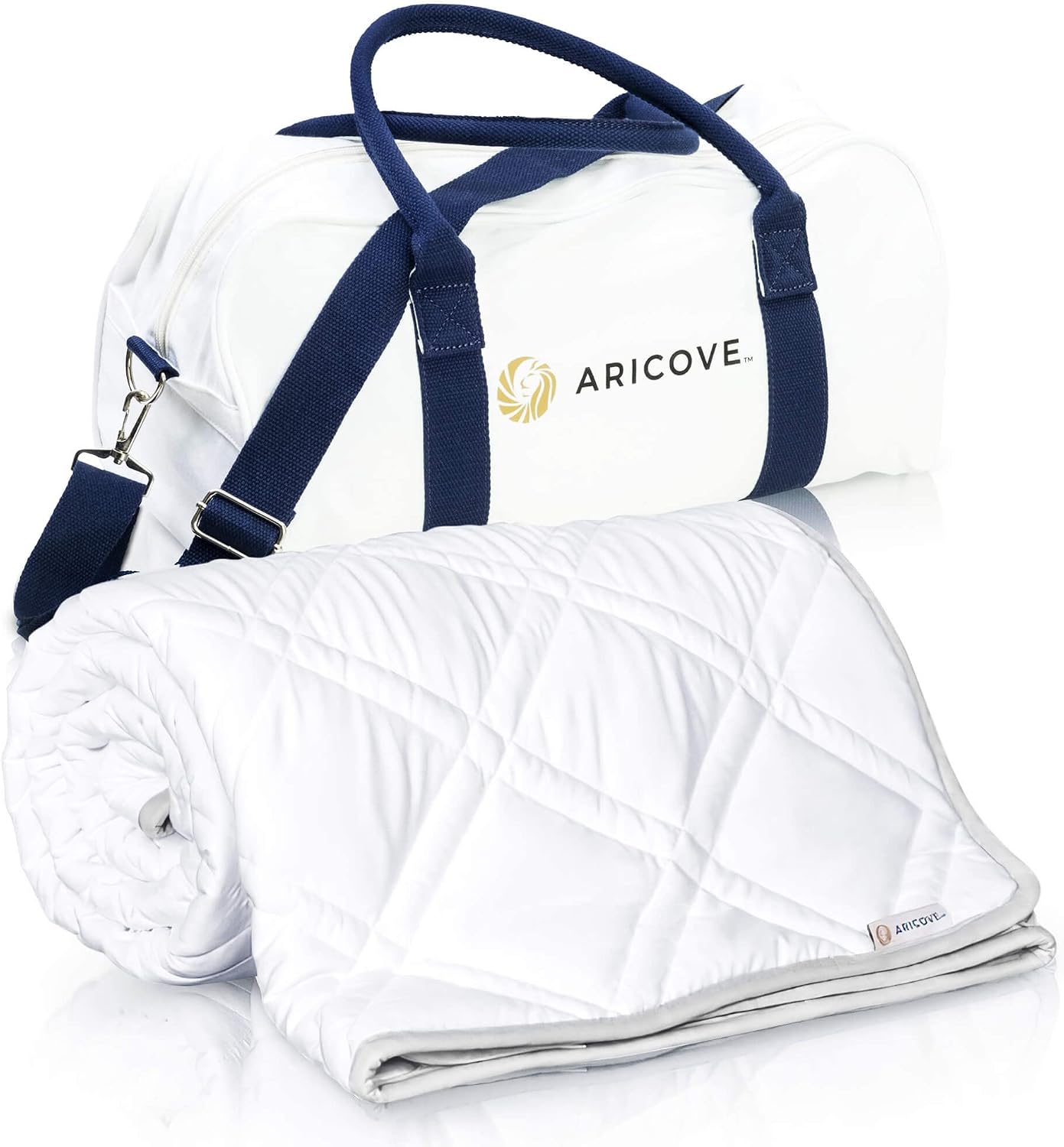
Best Overall: Aricove Cooling Weighted Blanket, 12 lbs
Twelve pounds, twin, 48 by 72 inches, silky bamboo viscose shell, white, machine washable.
I recommend this one first, and the weight is usually where people push back. Twelve pounds on a twin sits below the 10% guideline for most adults, which is exactly why it works for the sleepers who need it most. The 10% number is a starting point, not a prescription. I have watched a 200 pound man sleep beautifully under 12 pounds and a 130 pound woman feel buried under 15. If you have ever tried a heavy blanket and felt trapped rather than soothed, dropping down to 12 pounds is usually the fix, not giving up on the whole category.
Bamboo viscose is the part that keeps it on the bed. It is the coolest shell of the three blankets here, it drapes instead of sitting on you like a board, and it has enough slip that turning over does not turn into a wrestling match. In a Chicago July, that matters more than the weight does. A blanket that runs hot gets shoved to the foot of the bed by night three, and that is how most abandoned blankets start their decline.
The tradeoff is the white shell. It shows everything: hand cream, coffee, the cat. It is machine washable, which is the specification I care about most, so a visible smudge is an inconvenience rather than a death sentence. Wash it alone on a gentle cycle and follow the care tag for drying.
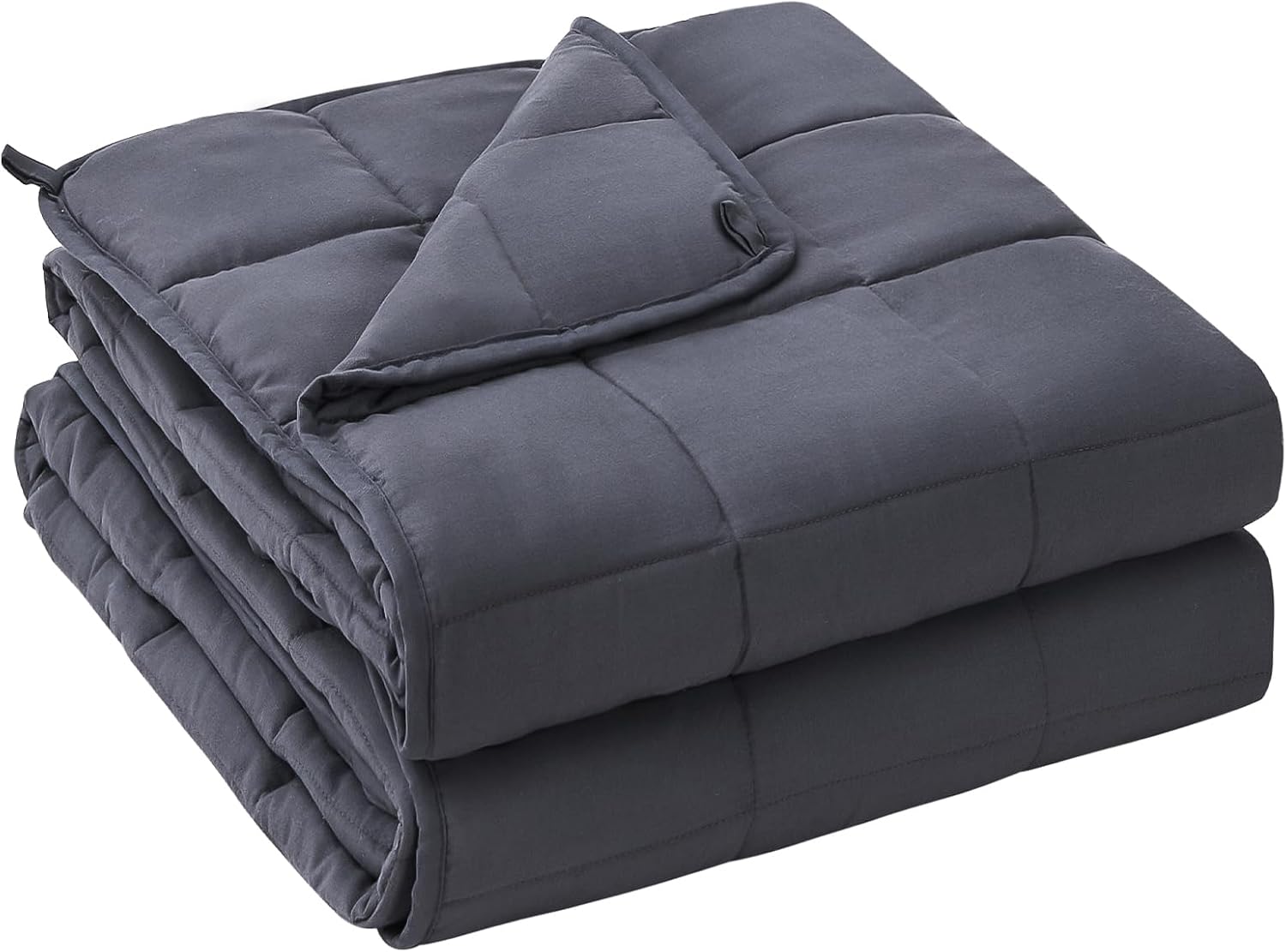
Best Value: yescool Weighted Blanket, 15 lbs, Queen
Fifteen pounds, queen, 60 by 80 inches, grey.
This is the coverage pick, and it is the value pick of the group. A queen size is the only blanket here that covers two adults or one adult who sprawls, and 15 pounds spread across 60 by 80 inches is a much lighter pressure per square inch than the same 15 pounds on a twin. That is not a marketing claim, it is arithmetic. The same weight over a bigger area presses less. If you want pressure you can feel, buy a smaller size, not a heavier one.
The listing does not spell out the shell material, so go in expecting a standard woven polyester. That means it sleeps warmer than the bamboo Aricove, and I would treat it as a cool-weather blanket rather than a year-round one. It is also the blanket I would hand to a couple who both want weight, because 15 pounds across a queen is mild enough that two people can share it without either one feeling pinned to the mattress.
For a queen at the low end of the price range, that is a fair set of tradeoffs. What you give up is breathability. What you get is size and a price that makes trying a weighted blanket feel like a low-stakes experiment instead of a commitment.
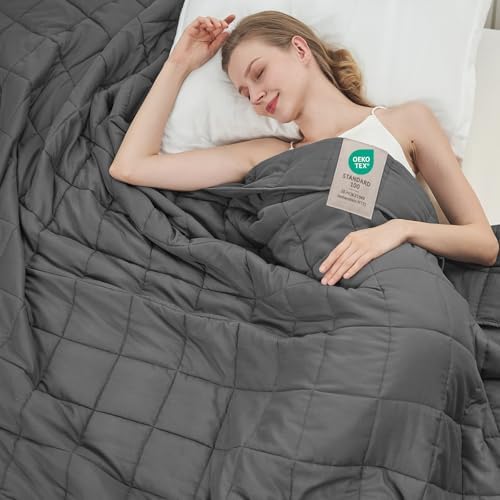
Best for Heavier Frames: 20 lb Cooling Weighted Blanket
Twenty pounds, 48 by 72 inches, microfiber shell, grey, listed for sleepers between 180 and 220 pounds.
This is the one for someone who has tried 15 pounds and wants more. It is the heaviest blanket in this group, and the size keeps that weight concentrated: 20 pounds on a 48 by 72 inch throw presses noticeably harder than 15 pounds on a queen. If you are chasing that deep, hugged feeling and lighter blankets have not delivered it, this is the logical next step.
The "cooling" in the name deserves a caveat. Microfiber is soft and plush, and it is also a synthetic, which means it holds heat. A cooling treatment on a microfiber shell is not the same thing as a bamboo or cotton shell that breathes on its own. If you sleep hot, this is a blanket for a cold bedroom, not a warm one, and pairing it with a duvet cover will only make that worse.
Bead distribution is where a heavier blanket lives or dies. At 20 pounds, pooled beads stop being a minor annoyance and start feeling like a sandbag on your sternum. Look at the quilting before you buy: small, evenly spaced squares hold weight in place, while long channels let it slide to the edges over a few months. This is the single most common failure I see in cheap weighted blankets, and it is why I tell people to spend in the middle of the market rather than at the bottom.
How I tested
I weigh every blanket on a kitchen scale before it goes on a bed, because a blanket sold as 15 pounds should be 15 pounds, and plenty of them are not. I hold each one up by two corners and let it hang to see where the weight falls, since a blanket that dumps everything into the middle is a sack of potatoes on your chest by 2 a.m.
Then I sleep under it for a month. I run a humidity sensor under the shell on warm nights to compare how much moisture builds up between fabrics, which is how I know that bamboo and cotton breathe and polyester does not. I wash each blanket at least once, sometimes twice, and check the seams, the corners, and whether beads have migrated after a cycle.
And then there is the abandonment test, which is the only one that really counts. On night 30, do I still want this on the bed, or am I relieved on the night I forget to put it on? In my experience with clients, that question predicts long-term use better than any spec on the listing.
Analysis and test results
Weight claims are mostly honest, and mostly irrelevant. What varies wildly is how the weight behaves. A well-quilted blanket keeps its beads in small pockets so the pressure stays even across your body. A poorly quilted one pools the same beads into the middle and edges within a month. The number on the label can be identical in both cases.
Shell fabric decides whether you keep using the thing. Cotton and bamboo viscose breathe, wick moisture, and feel cool against the skin. Polyester and microfiber shells run hot, and in a climate with real summers they turn a sleep aid into a reason to kick the covers off. My clients who abandon blankets almost always describe the same thing: they got too hot. Almost never do they say it was too heavy.
Stitch density is the quiet quality marker. Run your thumb along a seam and look at the corner stitching. If the quilting lines are widely spaced or the corners look rushed, the beads have room to travel. If the grid is small and tight, the blanket will still feel even in year three.
Washability is the outcome decider. A blanket you cannot wash is a blanket that ends up in a closet, and I have the client stories to prove it. Anything that requires a duvet cover to survive a washing machine is a product that has shifted the maintenance onto you, and most people will not keep up with it.
One more thing, and this is the rant portion of the article: the 10% rule is not gospel. It is a starting point for people who have no idea where to begin, and it fails as often as it works. Start there, then adjust up or down based on how you actually sleep. Heavier does not mean more therapeutic. It just means heavier.
The weighted blanket reference table
This is the table I keep when I am matching a person to a blanket. The weights and sizes are the listed specifications, not my scale readings, so treat the care column as the one to verify against the tag when it arrives.
| Blanket | Listed weight | Size | Shell | Best for |
|---|---|---|---|---|
 Visit on Amazon → Aricove Cooling Weighted Blanket |
12 lbs | 48 x 72 in (twin) | Bamboo viscose | Warm sleepers, first-timers, anyone who felt trapped under a heavier blanket |
 Visit on Amazon → Cooling weighted blanket, 20 lbs |
20 lbs | 48 x 72 in (twin and full) | Microfiber | Adults listed at 180 to 220 lbs, cold bedrooms |
 Visit on Amazon → yescool Weighted Blanket |
15 lbs | 60 x 80 in (queen) | Not specified in the listing | Two sleepers, or one who sprawls, cool-weather use |
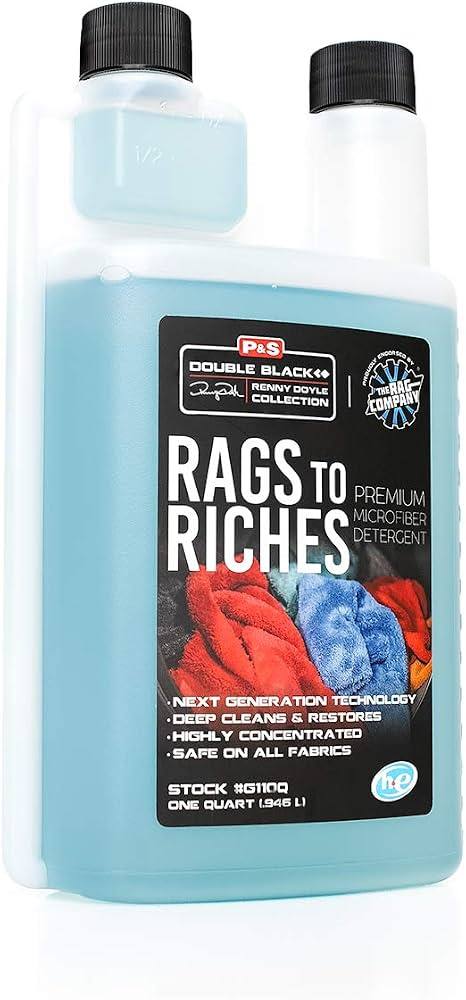 Visit on Amazon → Rags to Riches Microfiber Detergent |
Not a blanket | One bottle | Liquid detergent for microfiber | Keeping the shell clean without residue |
Washing a weighted blanket without wrecking it
The single fastest way to kill a weighted blanket is fabric softener. Softeners coat fibers, and on a tightly woven shell that coating traps heat and dulls the feel of the fabric. A detergent built for microfiber and technical textiles, like this one, rinses clean instead of leaving that film behind, which is why it lives next to my washing machine rather than in the laundry cabinet.
Beyond detergent: wash the blanket alone, because a wet weighted blanket is heavy enough to unbalance a drum. Use a gentle cycle and cold water. Skip the dryer if the tag allows, and if it does not, use low heat and pull it out while it is still slightly damp so the shell does not bake. Do not wring it. Do not dry clean a blanket with glass beads unless the manufacturer says so.
Should you buy the Aricove Cooling Weighted Blanket?
Yes, and it is the blanket I would buy first for most adults. It is the lightest and coolest option here, the bamboo viscose shell is genuinely pleasant against the skin, and it is machine washable, which means it has a real chance of surviving into year two. The white color is the one annoyance, and a wash fixes that.
If you have never owned a weighted blanket, or you owned one and gave up on it, this is the one to try. Twelve pounds is enough to feel, and light enough to stay on the bed through a warm night.
Should you buy the yescool 15 lb queen?
Yes, if coverage is your priority. It is the only queen here, so it is the one that works for two people or for one person who moves a lot. Just know what you are buying: a warmer shell and lighter pressure per square inch than the twin options. For cool-weather months and shared beds, it is the sensible choice.
Should you buy the 20 lb cooling blanket?
Yes, if you are a heavier adult, you have already tried 15 pounds, and you want more pressure than that gave you. The 48 by 72 size concentrates the weight instead of spreading it thin. Go in expecting a warm blanket despite the cooling label, and check the quilting pattern before you commit.
A last note on who should skip this
Weighted blankets are not for everyone, and I mean that literally. I do not recommend them for infants, for young children, or for anyone who cannot move the blanket off themselves without help. If you are pregnant, talk to your doctor before adding weight to your body at night. And if you have a medical condition that affects breathing or circulation, this is a conversation to have with a clinician, not a purchase to make from a listing.
For everyone else, the honest summary is this: a weighted blanket is a sleep aid, not a cure. It works for some people, does nothing for others, and the difference is usually the fabric and the weight, in that order. Get those two right and you will still be using it in October. Get them wrong and it will be in the closet by week two.