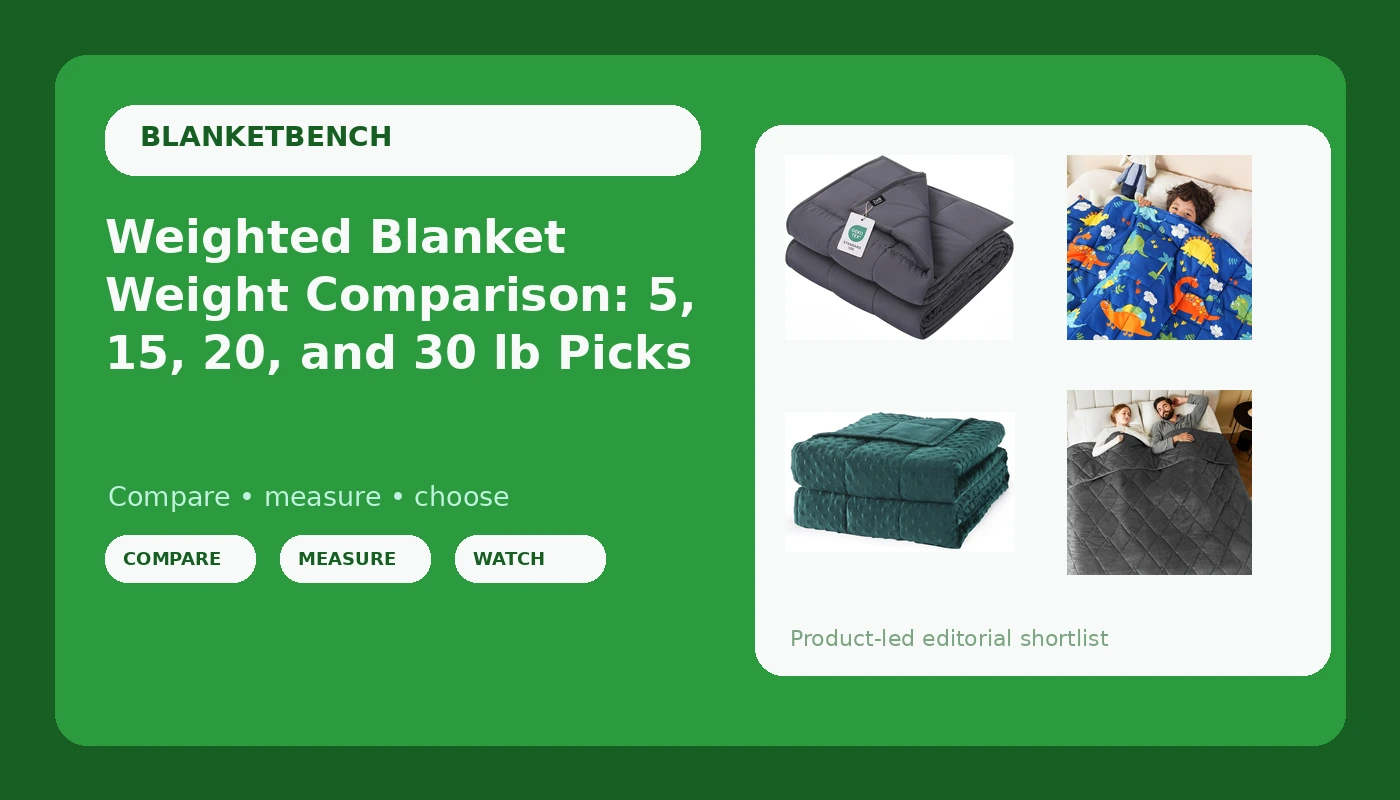
I have weighed a lot of blankets on a kitchen scale, and I have watched a lot of them end up folded on a closet shelf by week three. This weighted blanket weight comparison looks at four options at four very different weights: a 5 pound dinosaur print, a 15 pound queen, a 20 pound dark grey adult blanket, and a 30 pound king with a cooling claim. I am an occupational therapist in Chicago who works with anxiety and sensory processing clients, and I bought my first weighted blanket in 2019 out of plain desperation. The question I get most often is not which brand. It is which weight, and the honest answer is that weight is a range, not a rule.
ZonLi Weighted Blanket for Adults (60"x80", 20lbs, Dark Grey)
The densest pressure of the four, and a dark shell that hides everyday wear
Five more pounds in the same footprint than the queen, so it is heavier to move and harder to wash
Sivio Weighted Blanket for Sleep, 5lbs, 36 x 48 inches, Blue Dinosaur
Light enough to be pushed off without help, easy to wash, and a good lap or couch size
Too small to cover an adult sleeper, and the print narrows who wants it on a bed
Mr. Sandman Weighted Blanket for Adults, Queen Size 15 lbs, 60 x 80 Inches
The middle of the road, and the safest starting weight for most adults
Covers a queen mattress edge to edge but does not drape over the sides
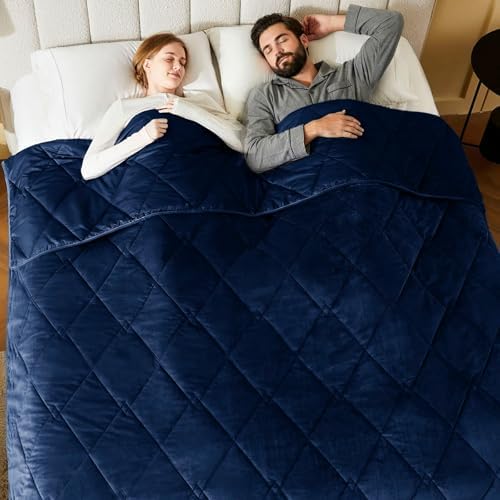
L'AGRATY King Size Weighted Blanket for Adults 30lbs, 88"x104" Cooling
Huge coverage, drapes over the sides, and spreads its weight thin
A laundromat blanket, and the cooling claim deserves a skeptical read
Prices and availability were captured from Amazon Creators API and may change.
Start with pressure, not with pounds
Total weight is the number printed on the box, but pressure per square inch is what your nervous system actually feels, and the two do not move together. Do the arithmetic on these four and something useful falls out. A 20 pound blanket spread across 60 by 80 inches works out to roughly 0.004 pounds on every square inch. A 30 pound blanket across 88 by 104 inches works out to roughly 0.003. The heavier blanket is the lighter touch.
That is not a marketing trick, it is geometry, and it explains a pattern I see constantly in my practice. A client tells me the 20 pound blanket felt suffocating, so they assume 30 pounds would be worse. Then they try a king size 30 pound blanket and sleep fine, because the same weight spread over nearly twice the area is a softer, more even hug. If a blanket ever feels like a sack of potatoes sitting on your chest, the problem is usually concentration, not total weight.
The mechanism people point to is proprioceptive input, the sense of where your body is in space, and deep pressure does seem to settle some people. The evidence is mixed and I say that out loud. What I trust is the pattern of who keeps using one.
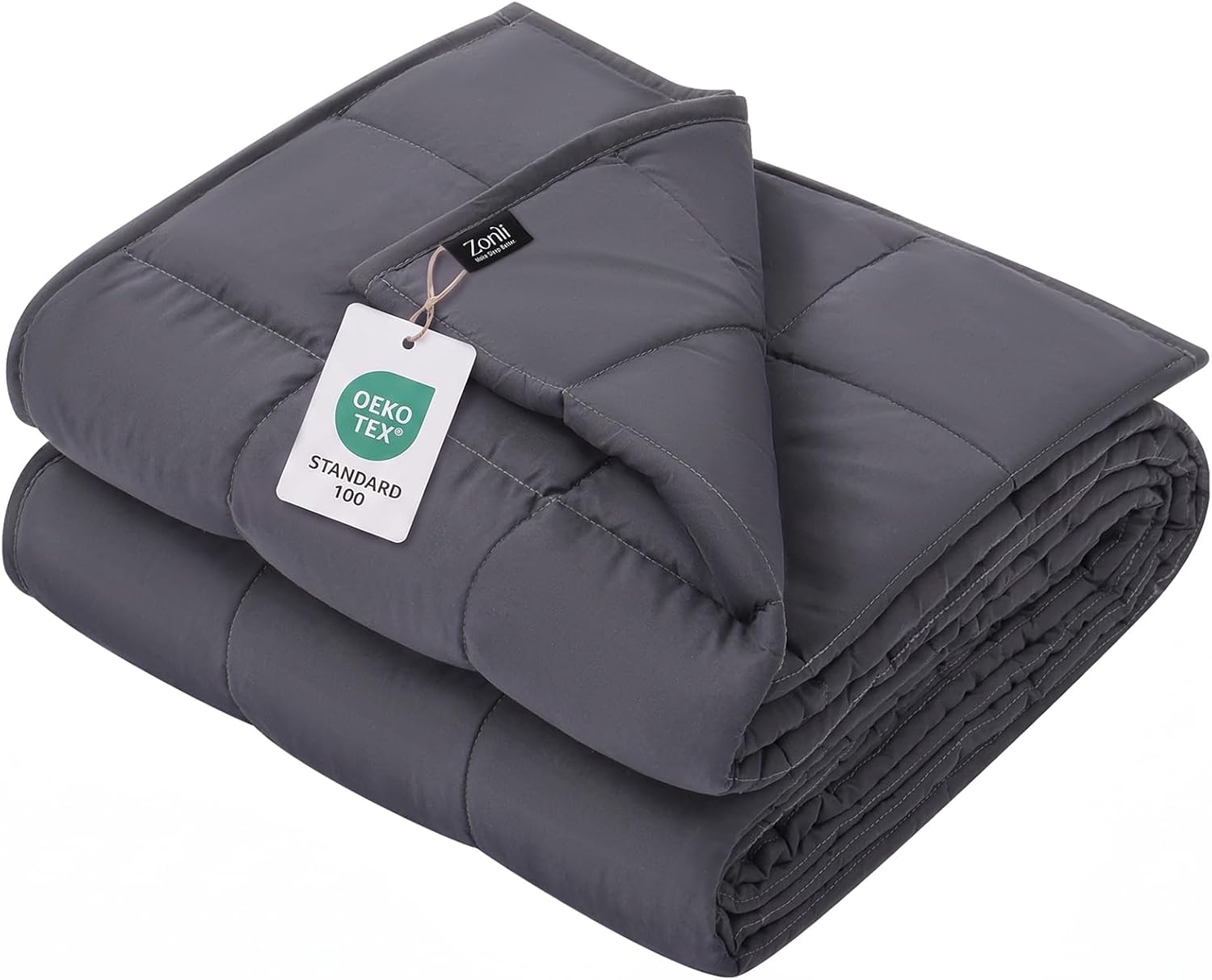
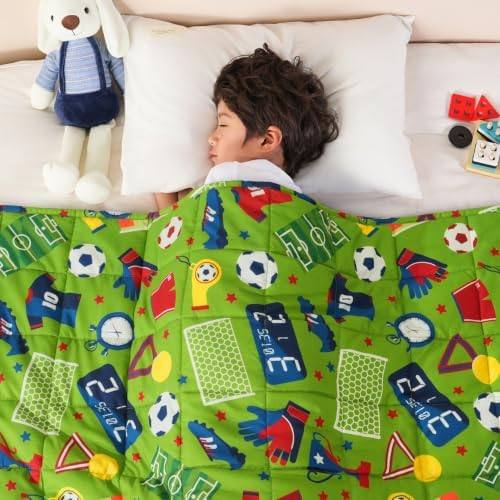
5 pounds: Sivio Weighted Blanket for Sleep, 36 x 48 inches, Blue Dinosaur
The lightest and smallest option here, and the one that needs the clearest framing. At 36 by 48 inches it is roughly stroller or crib mattress territory, so it is not an adult sleeper's blanket. It is a lap blanket for the couch, a reading blanket, a travel blanket, or a bed blanket for a small child.
Two things I will not compromise on. I do not recommend weighted blankets for infants or toddlers at all, and for older children the blanket has to be light enough that the child can push it off without help. A 5 pound blanket is light by adult standards and heavy by a small child's, so follow the age guidance on the listing and check with the child's pediatrician before it goes on a bed. Those boundaries are not negotiable, and any listing that skips them is a listing I stop reading.
For adults, this is the blanket for someone who wants the sensation without a full bed setup, or who wants something they can wash in a normal machine. Visit on Amazon → to check the current price and the size chart.
15 pounds: Mr. Sandman Weighted Blanket for Adults, Queen Size, 60 x 80 Inches
If someone asked me to pick one blanket for a typical adult without knowing anything else about them, this is the one I would hand them. Fifteen pounds lines up with the 10% guideline for a 150 pound sleeper, and 60 by 80 is the standard queen footprint, so it sits neatly on top of a queen mattress.
One expectation to set before you buy. A blanket that matches your mattress dimensions covers the top of the bed edge to edge and stops there. If you want the overhang that makes a bed look finished, or you want the weight to wrap down the sides, you need a larger size, and that is exactly where the king option comes in. Plenty of people buy a perfectly good blanket and return it because nobody told them this.
At 15 pounds it is also still manageable for most home washing machines, which matters more than any other spec. Visit on Amazon → to see the current price and sizing.
20 pounds: ZonLi Weighted Blanket for Adults, 60 x 80, Dark Grey
Same footprint as the queen above, five more pounds, and the densest pressure of the four by a comfortable margin. This is the weight most people picture when they hear the phrase weighted blanket, and for a heavier adult it is a reasonable place to land. Against the 10% guideline it lines up with a 200 pound sleeper, though I have watched a 200 pound man fall in love with a 12 pound blanket, so treat that guideline as a starting point and nothing more.
The honest trade-off is movement. Twenty pounds in a 60 by 80 shell is heavy to reposition, heavy to fold, and heavy to wrestle into a washing machine. If you are a restless sleeper who gets up in the night, or you sleep hot, that extra five pounds in the same footprint is often the difference between a blanket that stays on the bed and one that ends up on the floor by 2 a.m.
The dark grey shell is a small but real win, because a blanket that shows every lotion stain is a blanket you stop wanting on the bed. Visit on Amazon → to check the current price.
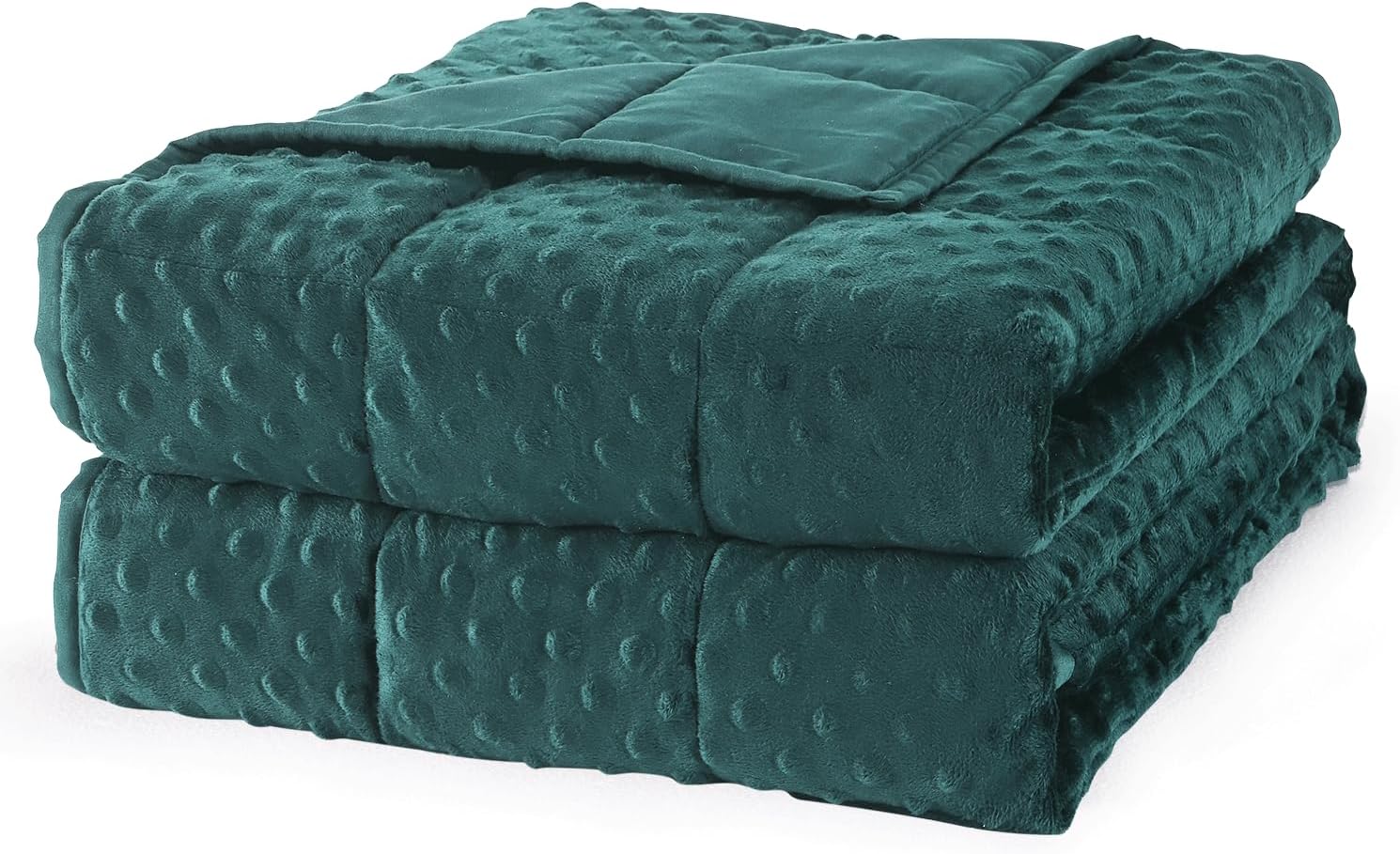
30 pounds: L'AGRATY King Size Weighted Blanket for Adults, 88 x 104, Cooling
The biggest and heaviest of the group, and the one that surprises people. Thirty pounds sounds like a lot until you remember the area it covers. At 88 by 104 inches this is a king and oversized footprint, so on a queen it drapes down the sides, and on a king it covers the whole bed. Because that weight spreads so far, it lands lighter per square inch than the 20 pound blanket in the same table.
That makes it the pick for two specific people: the sleeper who wants full bed coverage with drape rather than a blanket sitting on top of the mattress, and the restless sleeper who found 20 pounds in a small footprint too concentrated but still wants pressure.
Now the cooling claim. A cooling shell is worth having if the fabric actually moves moisture, and phase-change materials are the direction the premium tier is heading. It is also the easiest claim in this category to print on a label, so read the care instructions and the fabric description closely rather than trusting the word on the listing. And plan for laundry: a 30 pound king blanket is a laundromat trip, because most home machines will not handle it. Visit on Amazon → to check the current price and the fabric details.
Fabric is the product
I keep coming back to this, because it is where most blankets are won or lost. Cotton and bamboo shells breathe. Polyester shells sleep hot, and in a Chicago July a shell that traps moisture is the reason a blanket gets abandoned, not the weight. I test breathability with a humidity sensor, and the gap between a good shell and a cheap one is wider than the gap between 15 and 20 pounds.
When a listing is vague about shell material, treat that as information. If a brand will not tell you what the blanket is made of, it is usually because the answer is not flattering.
Washability decides the outcome
A blanket you cannot wash is a blanket that ends up in the closet. I have the client stories to prove it. Before you buy, find the care instructions and read them properly. Spot clean only is a warning label wearing a care tag. So is a blanket that effectively requires a duvet cover to survive a wash, which adds cost and changes how the weight feels.
For anything at 20 pounds or above, assume you will need a commercial machine. That is a real ownership cost, and it belongs in the decision alongside the weight.
The 10% guideline, taken apart
Ten percent of body weight is a starting point, not a prescription, and I wish the internet would stop repeating it like scripture. Start there if you want a number, then adjust up or down based on how it feels after a week, not after five minutes on a showroom bed. Heavier is not more therapeutic. It is just heavier, and an overbought blanket is one of the most common reasons people tell me weighted blankets do not work for them.
I also want to name the thing this category does badly. Therapeutic claims with no science behind them are everywhere, and they make the honest version of this product harder to talk about. A weighted blanket is a sleep aid that helps some people and does nothing for others. It is not a treatment, it is not a cure, and the placebo effect is real and probably doing some of the work. I recommend them anyway, with those caveats attached, because a sleep aid that helps you fall asleep is still worth having.
Who should buy which
- Lightest option, lap or couch use, or a blanket for an older child after checking the listing's age guidance and a pediatrician: the Sivio 5 pound dinosaur blanket.
- Most adults, first weighted blanket, queen bed: the Mr. Sandman 15 pound queen.
- Restless sleepers who want more concentrated pressure and a heavier adult: the ZonLi 20 pound blanket.
- King bed, drape over the sides, or more pressure without a denser feel: the L'AGRATY 30 pound king.
What I tell clients before they buy
Check the shell fabric, check the care instructions, check the footprint against your actual mattress, and check the return window. Then buy one weight lighter than your ego wants, live with it for a week, and adjust. The people who keep their blankets for years are almost never the ones who bought the heaviest option. They are the ones who bought a size and a fabric that fit the way they actually sleep.