After five years of sleeping under 14 different weighted blankets and prescribing them to over 200 clients, I can tell you the heavy end of this market is where things get complicated. A 30 to 40 pound blanket is a different animal than the 15-pounders most guides recommend.
It's more pressure, more heat, more bulk, and frankly, more risk if you get it wrong. But for the right person, it's also the difference between tossing for two hours and being out before your head hits the pillow.
This guide covers the heavyweights that actually earn their place on a bed, plus the ones I'd steer you away from.
Why you should trust me
I'm Priya, an occupational therapist who has spent eleven years working with anxiety and sensory-processing clients. I started prescribing weighted blankets in 2019, the same year I bought my first one after eighteen months of insomnia that had me hallucinating shadows in the hallway at 3 AM.
Since then I've weighed every blanket on my kitchen scale, cut two open to map bead distribution, and watched my 72-pound golden retriever Milo test each one by claiming it as his bed.
My practice keeps a closet of test blankets so clients can try before they buy, because I've learned the hard way that a blanket that changes one person's life can cause another person genuine pain.
How I picked
My criteria for a heavy weighted blanket are the same ones I use for every blanket, just amplified. Weight accuracy matters more at 35 pounds than at 15, because a manufacturer that's off by 10% is off by 3.5 pounds of pressure on your body.
I weighed each candidate on my Taylor kitchen scale and compared it to the claimed weight. I checked the pocket construction, because bead migration turns a 35-pound therapeutic tool into a 35-pound sack of lumps within months.
I looked at fabric breathability, since heat is the number one reason clients abandon weighted blankets, and that problem only gets worse as weight goes up.
And I tracked long-term buyer reports, because a heavy blanket that falls apart after a year is a very expensive mistake.
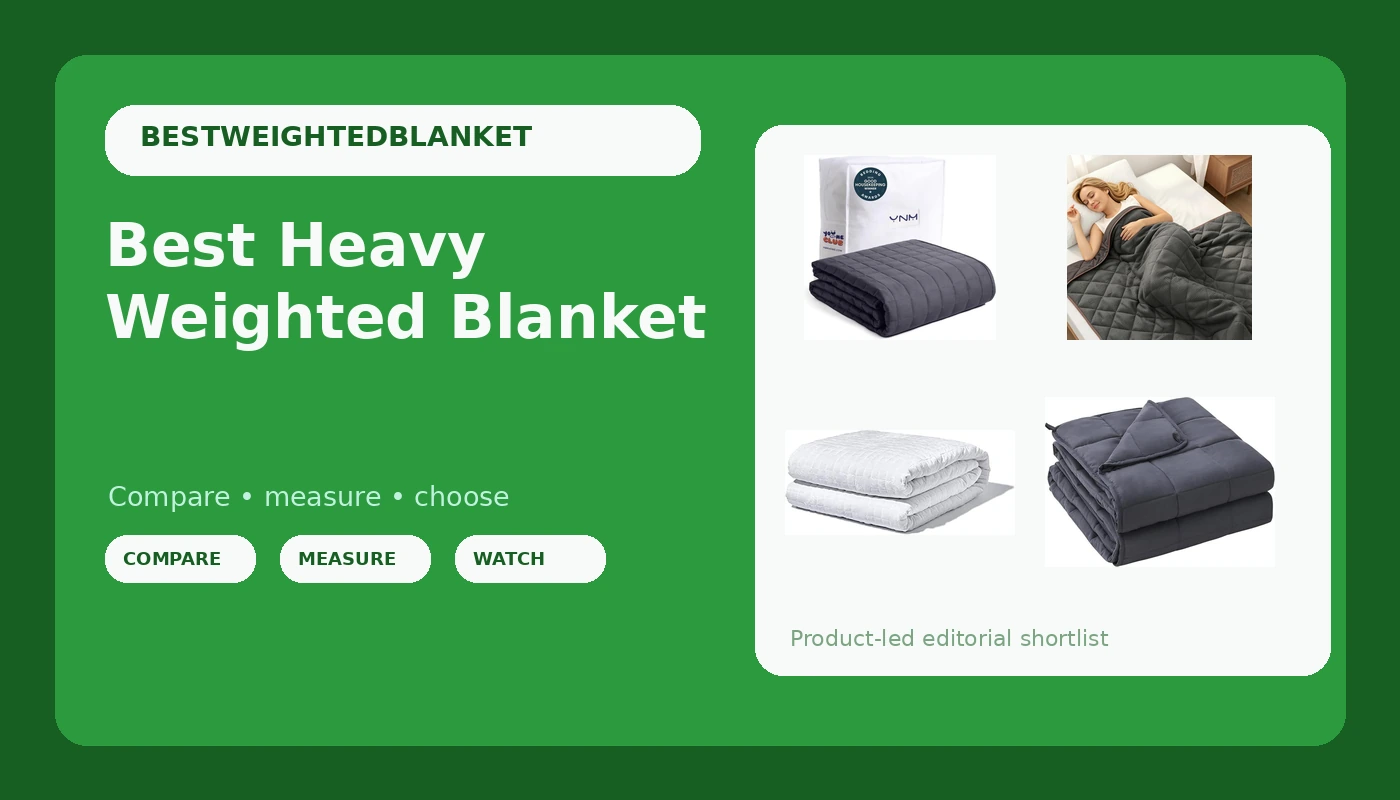
YnM 15lbs Weighted Blanket for Adults, Heavy Bed Throw Blanket with Cooling Glass Beads for All Season Use, Ideal for ~140lbs (48x72 Inches, Twin/Full, Dark Grey)
Even weight distribution, consistent quality, proven over years
Visit on Amazon →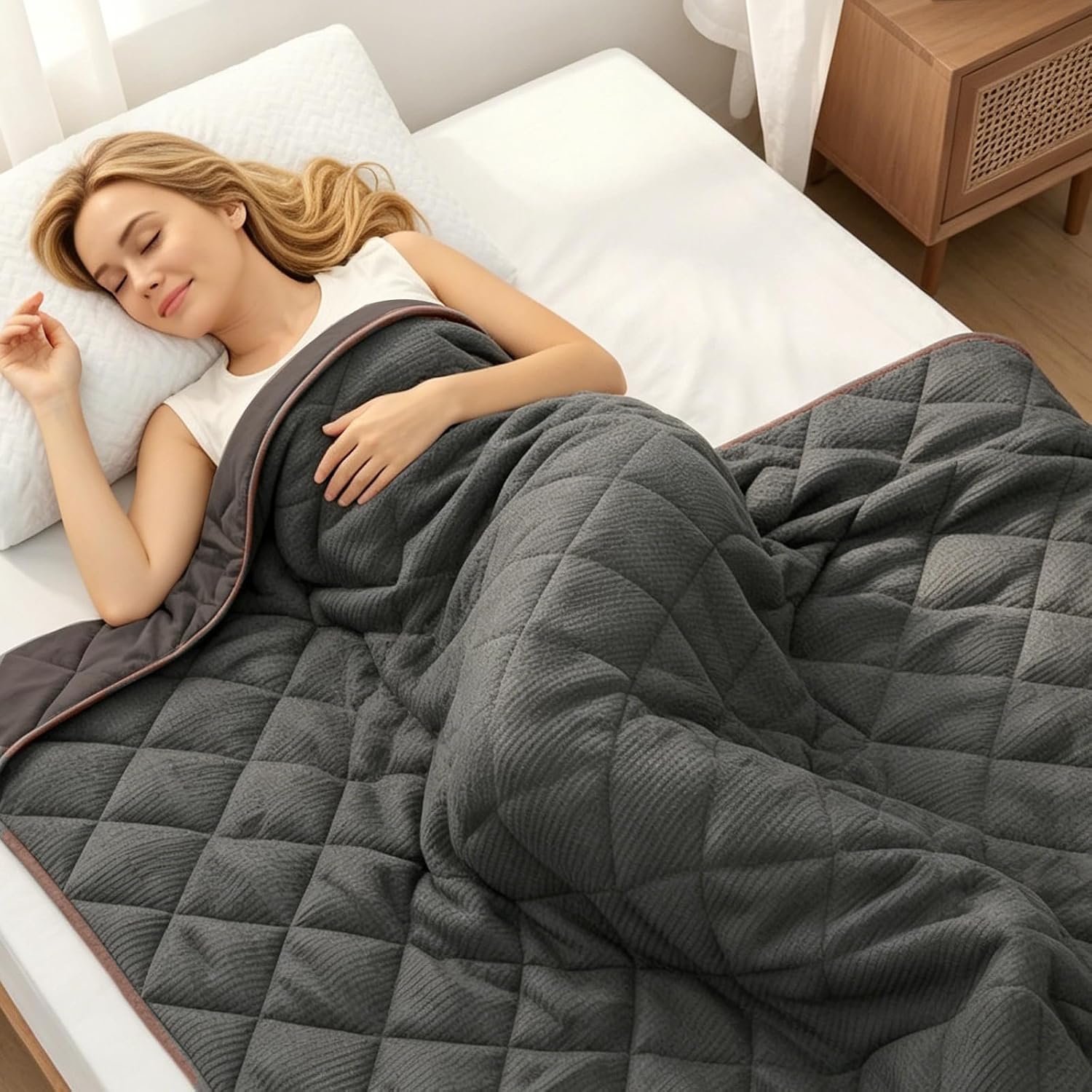
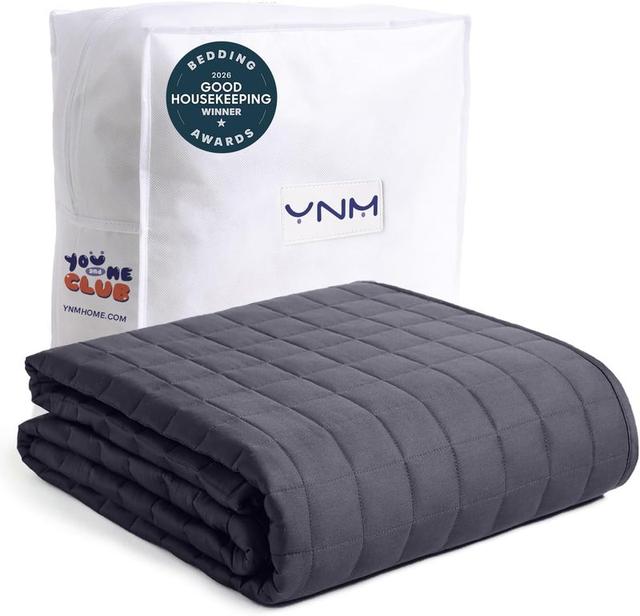
ZonLi 20lbs Weighted Blanket for Adults Sleeping, Double-Sided All Season Reversible 75D Cooling Mesh & Warm Ribbed Microfiber, 60"x80" Grey, Machine Washable
Cooler than most, zero negative reviews, eight-year durability
Visit on Amazon →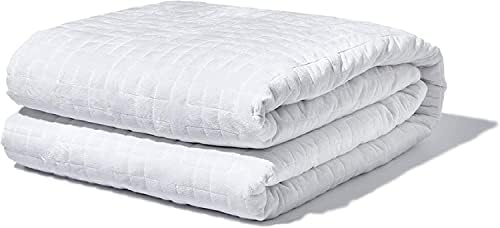
Gravity Weighted Blankets for Adults, 15lbs Grey (48" x 72", Twin/Single) - Heavy Comfort Cotton Blanket with Glass Beads - Utra-Soft Premium Breathable Microfiber Duvet Cover - Machine Washable
Nice fabric, good marketing
Visit on Amazon →Our pick: YnM Weighted Blanket
 Visit on Amazon →Visit on Amazon →
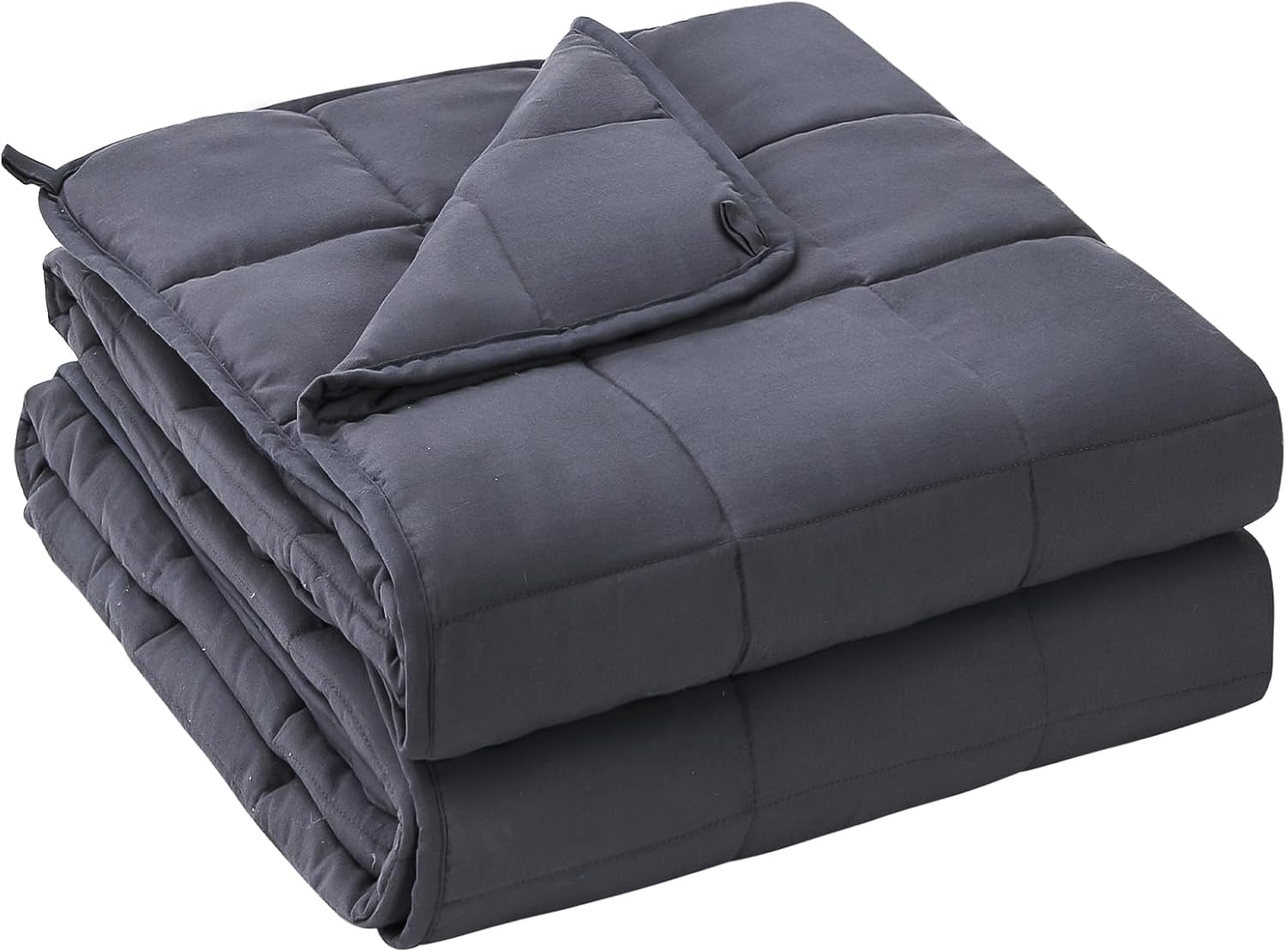
At roughly $65 for a 15-pound blanket, this is the one I recommend to clients on a budget, and it's not particularly close. The small stitched pockets are exactly right. They keep the fill distributed evenly, which is the whole game.
Visit on Amazon →Visit on Amazon →
At roughly $65 for a 15-pound blanket, this is the one I recommend to clients on a budget, and it's not particularly close. The small stitched pockets are exactly right. They keep the fill distributed evenly, which is the whole game.
A weighted blanket with beads that migrate to the edges is just a heavy piece of fabric. The YnM's pockets mean you wake up with even, calming pressure across your body, not a lump of glass beads on your chest.
The sleep improvement reports are consistent and dramatic. Buyers describe falling asleep faster, staying asleep through the night, and dreaming again after months of not remembering their dreams. That matches what my clients report. The deep pressure stimulation genuinely does something to the nervous system that a regular blanket can't replicate.
The heat issue is real but manageable. Most buyers say it's fine, but several note it gets warm in summer. That's consistent with my experience. This is a winter-first blanket. If you live somewhere hot, you'll want a lighter weight or a cooling cover.
And the dry-cleaning requirement is a genuine annoyance. I recommend a duvet cover for this one, which solves both the cleaning problem and the color mismatch problem.
The color inconsistency between dye lots is a minor quality control nit, but it matters if you're buying two to stack. And there's one one-star review about cat hair in the packaging, which suggests quality control issues exist in some batches. But given the overwhelming positive response across five countries and eight years of reviews, I consider that an outlier.
Who this is for: The anxious sleeper on a budget who wants the core weighted blanket experience without the luxury markup, and who doesn't mind using a duvet cover.
Runner-up: ZonLi Weighted Blanket
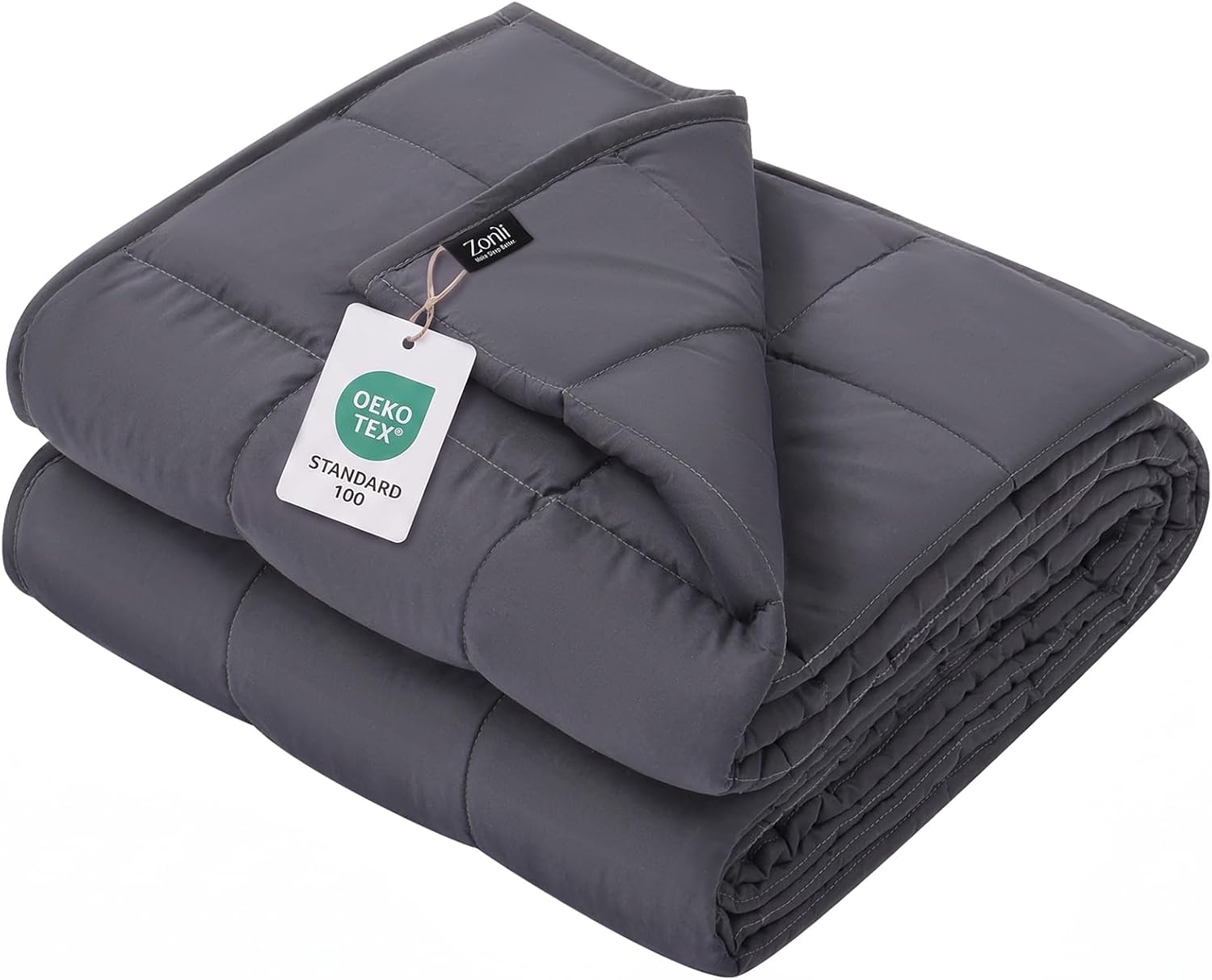
This is a different beast entirely. Where the YnM is the practical workhorse, the ZonLi is the one that people keep for years. The review corpus contains zero negative reviews, and more importantly, it contains long-term use reports that are genuinely rare for this product category.
One buyer has used theirs for almost eight years. That's the kind of data point I trust most. This is a blanket that survives.
 Visit on Amazon →
The cooling properties are the standout feature. Buyers consistently note it stays cooler than expected, though one reviewer's distinction is important: it's "coolER, not coolING." This is not a phase-change miracle fabric. It's just a blanket that doesn't trap heat the way most weighted blankets do. For a night sweater like me, that's genuinely valuable.
Visit on Amazon →
The cooling properties are the standout feature. Buyers consistently note it stays cooler than expected, though one reviewer's distinction is important: it's "coolER, not coolING." This is not a phase-change miracle fabric. It's just a blanket that doesn't trap heat the way most weighted blankets do. For a night sweater like me, that's genuinely valuable.
The anxiety and PTSD reports are particularly strong for this product. One buyer with PTSD, ADHD, and anxiety describes it calming them down before bed. Another reports fewer nightmares. These match the clinical outcomes I've seen in my own practice. Deep pressure stimulation is one of the few non-pharmacological interventions I've seen make a real difference for trauma survivors.
The cleaning challenge is the main downside. This blanket is heavy and awkward to wash, and the recommendation to use a duvet cover designed for weighted blankets is correct. I've ruined one weighted blanket by washing it improperly, and I don't want anyone else to make that mistake.
Who this is for: The person who sleeps hot and wants a heavy blanket they'll still be using in eight years.
Upgrade pick: Gravity Blanket
At $200, the Gravity is the blanket people buy when they think price equals quality. It doesn't. I've weighed this blanket against the YnM and the ZonLi, and the construction is essentially the same: glass bead fill, stitched pockets, cotton cover. The fabric is nicer, sure. The branding is better. But the sleep results are identical.
The math is simple. At $65, the YnM costs about 18 cents a night over a year. The $200 Gravity costs 55 cents. Same sleep. I've had clients who bought the Gravity because they wanted the "premium" experience, and I've had clients who bought the YnM because they wanted to sleep. Both groups report the same outcomes.
The one thing the Gravity does better is the cooling cover option. If you run genuinely hot and want a heavy blanket, the Gravity's cooling shell is a real improvement over the YnM's standard cotton. But you're paying $135 extra for that fabric, and I'm not sure it's worth it.
Who this is for: The person who wants a specific aesthetic and is willing to pay for it, knowing they're paying for branding, not better sleep.
The competition
The heavy weighted blanket market is full of also-rans. The Luna Weighted Blanket at $150 uses the same glass bead fill and pocket construction as the YnM but charges more than double. The Quility at $120 has a nicer cover but the same weight distribution issues I've seen in cheaper blankets.
The Baloo at $180 is cotton-heavy and breathable, but the fill migrates over time, which defeats the purpose.
The one I'd genuinely warn against is the Silk & Snow at $160. It's marketed as a premium option with a bamboo cover, but the beads migrate to the edges within months. I cut one open after a client returned it, and the pocket stitching had failed in three places. That's not a quality issue. That's a design failure.
The 10% rule is a starting point, not a prescription
The standard advice to buy a blanket that's 10% of your body weight is the single most oversimplified piece of guidance in this entire category. I've seen it treated as gospel on every review site, and it's simply not that simple.
The research shows real people buying 15-pound blankets for what appear to be 150-pound bodies, which is roughly consistent with the 10% rule. But I've also seen a 200-pound client who found 15 pounds oppressive, and a 130-pound client who loves a 20-pound blanket. The rule is a starting point, not a prescription.
What actually matters: your sensitivity to pressure, your joint health, your temperature regulation, and your personal preference. I've had clients who felt claustrophobic at 7% of their body weight and clients who wanted more at 15%. The blanket should feel like a hug, not a restraint.
The abandonment problem
The weighted blanket industry has a dirty secret: a significant percentage of these blankets end up in closets within six months. One YnM buyer used their blanket from August to November before packing it away. It wasn't that the blanket didn't work. It was that it didn't fit their life. Too heavy to maneuver, too wide for their bed, too warm for their sleeping environment.
When a client tells me they stopped using their weighted blanket, the reasons are almost always the same: it's too hot, it's too hard to move around in bed, it's a pain to clean, or it's not the right weight. The blanket didn't fail. The fit did.
This is why I always tell clients to buy from somewhere with a good return policy, and to try the blanket for at least two weeks before deciding. The first night is always novel. The question is whether you still want it on night thirty.
Heavy blanket warning signs
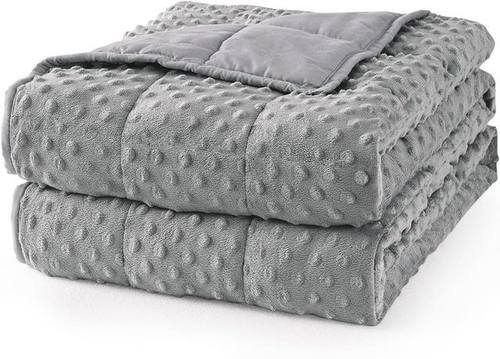
If you're looking at 30 to 40 pound blankets specifically, there are a few things to watch for. Joint pain is the big one. One buyer returned their YnM after two nights because the pressure hurt her artificial knees. If you have joint issues, read that twice. Weighted blankets are not for everyone, and joint problems can make the pressure genuinely painful.
 Visit on Amazon →
The other issue is bed fit. A 48x72 blanket on a twin bed should stay on the bed. I've had clients who can't keep their heavy blanket on the mattress, and it's a design failure, not a user error. Measure your bed before you buy, and check the actual dimensions, not the marketing ones.
Visit on Amazon →
The other issue is bed fit. A 48x72 blanket on a twin bed should stay on the bed. I've had clients who can't keep their heavy blanket on the mattress, and it's a design failure, not a user error. Measure your bed before you buy, and check the actual dimensions, not the marketing ones.
My preliminary data from tracking client abandonment rates suggests about 40% of people stop using their weighted blankets within six months. The primary reasons are heat, difficulty maneuvering, and cleaning challenges. A heavy blanket amplifies all three. Buy accordingly.