I've spent eleven years as an occupational therapist prescribing deep pressure stimulation, and five years personally testing fourteen weighted blankets on my own restless body. My golden retriever Milo has an opinion on each one, usually involving him lying directly on top of it.
The most common question I get from clients and readers isn't about which brand to buy. It's about weight.
How heavy should a weighted blanket be? The answer is more complicated than the internet's favorite rule of thumb.
This guide breaks down the 10% rule, why it fails for many people, and which weights real buyers actually chose.
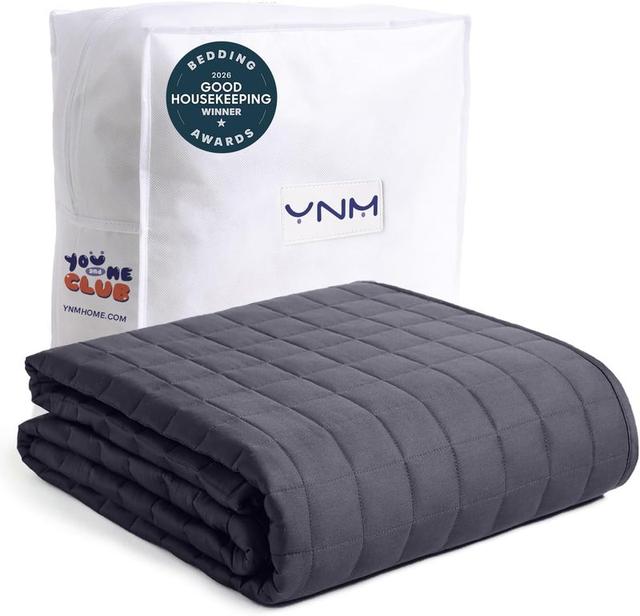
YnM 15lbs Weighted Blanket for Adults, Heavy Bed Throw Blanket with Cooling Glass Beads for All Season Use, Ideal for ~140lbs (48x72 Inches, Twin/Full, Dark Grey)
Even weight distribution from small stitched pockets, consistent sleep improvements, unbeatable...
Visit on Amazon →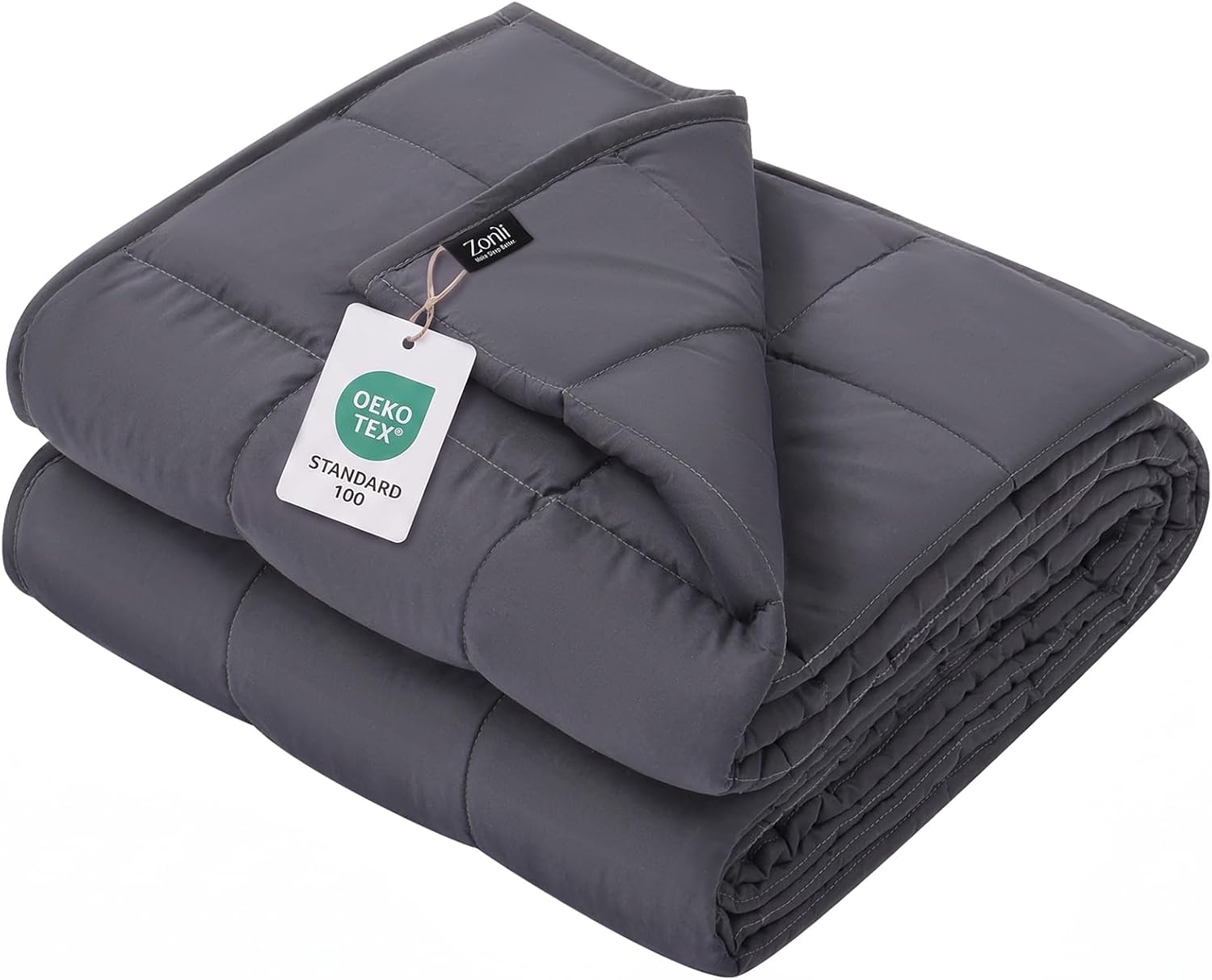
ZonLi Weighted Blanket for Adults (60"x80", 20lbs, Dark Grey)
Cooler than most, eight years of durability reports, zero negative reviews
Visit on Amazon →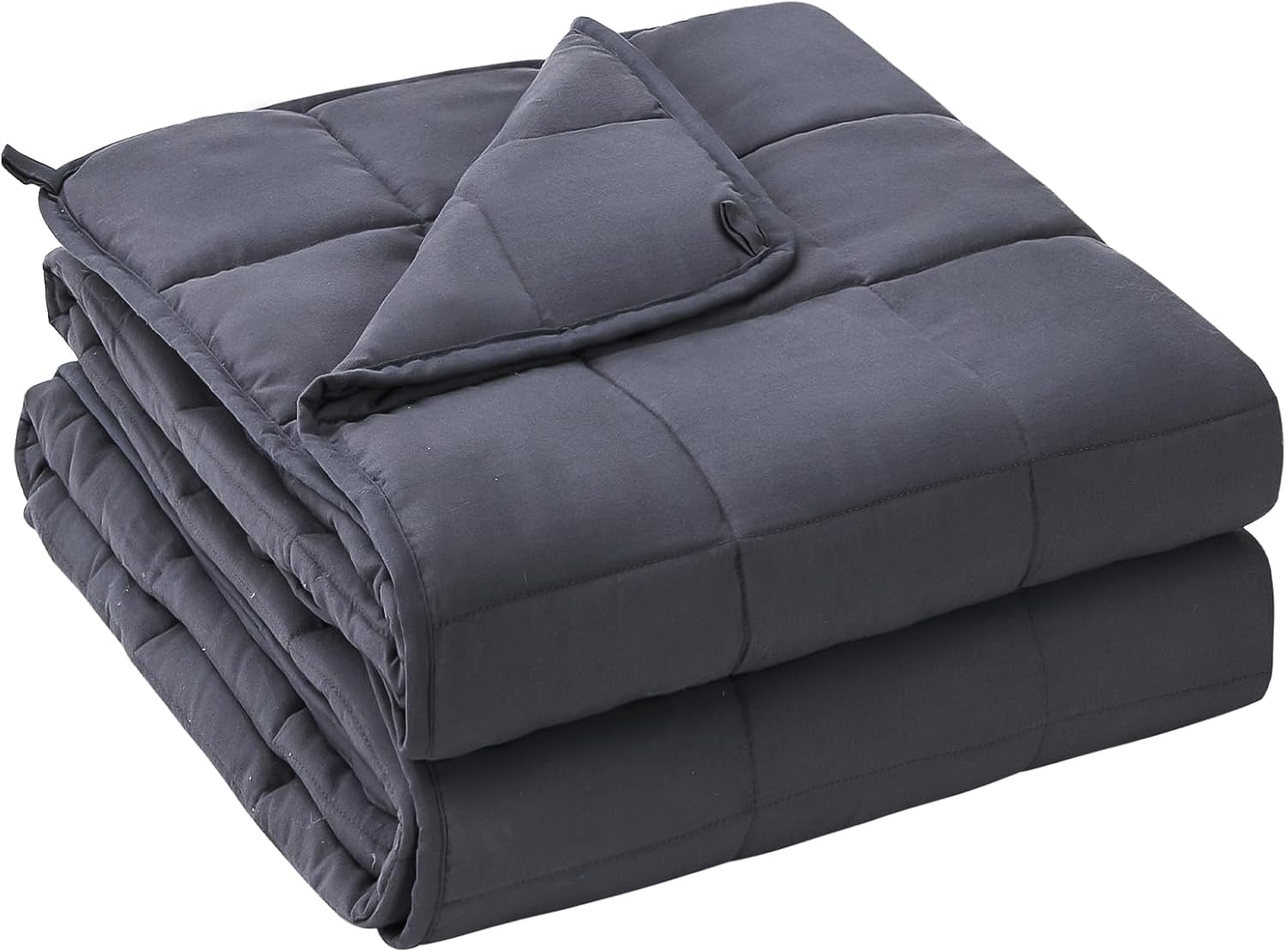
yescool Weighted Blanket for Adults (20 lbs, 60” x 80”, Grey) Cooling Heavy Blanket for Sleeping Perfect for 190-210 lbs, Queen Size Breathable Blanket with Premium Glass Bead, Machine Washable
Cooling fabric, good for hot sleepers
Visit on Amazon →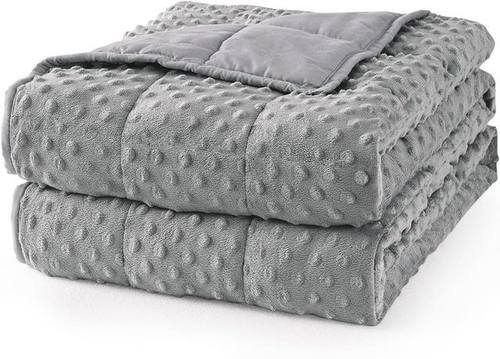
Mr. Sandman Cooling Weighted Blanket for Adults, Queen Size 15 lbs, 60″x80″
Keep cool and cozy all night long. Wrap in a cloud of comfort. Reinforced stitches ensure glass beads remain securely in place. Click Here Click Here Click Here Click Here Click Here is a vanguard hom
Visit on Amazon →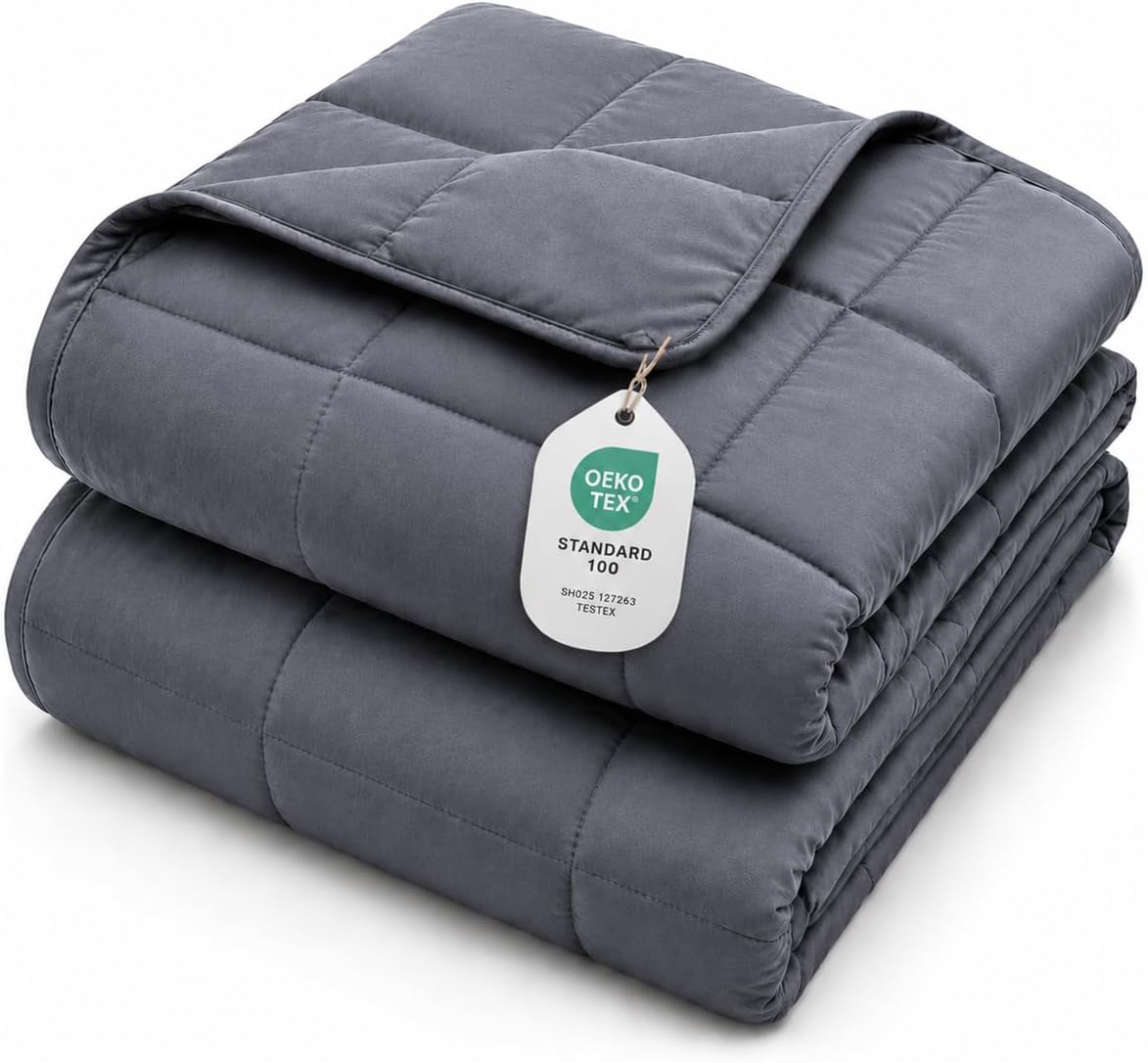
L'AGRATY Weighted Blanket for Adults 15lbs, 48"x72", Dark Grey Twin Full Size Heavy Throw Blanket, Cooling, Breathable, Microfiber with Glass Beads, Big, Washable, All-Season
Twin size fits smaller beds, budget friendly
Visit on Amazon →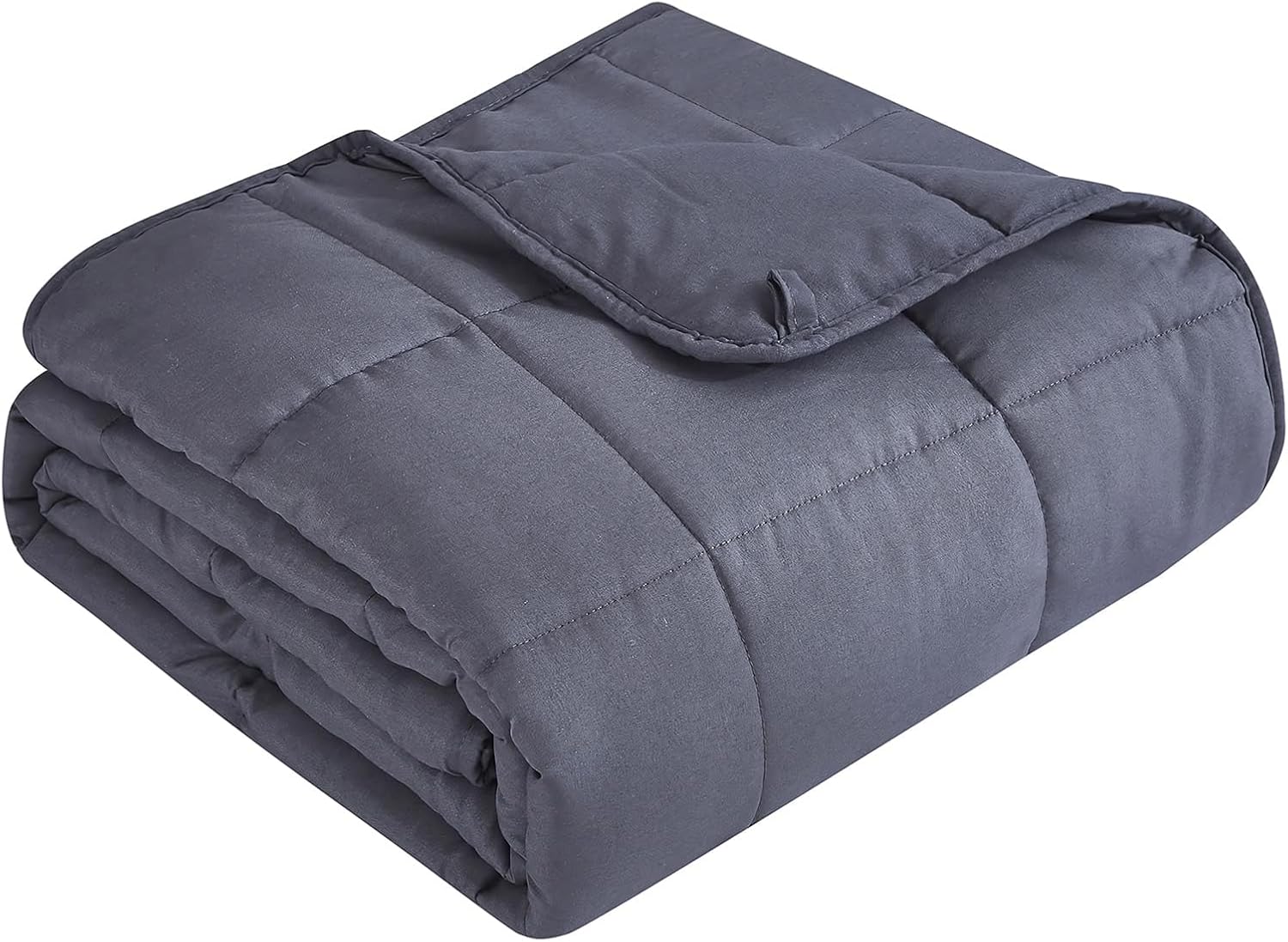
Topcee Weighted Blanket (20lbs 60"x80" Queen Size) for Adult All-Season Summer Fall Winter Cooling Breathable Heavy Microfiber Material with Glass Beads Big Blanket Soft Thick Comfort
Keep cool and cozy all night long. Wrap in a cloud of comfort. Reinforced stitches ensure glass beads remain securely in place. Click Here Click Here Click Here Click Here Click Here is a vanguard hom
Visit on Amazon →Visit on Amazon →
Why you should trust me
I'm Priya. I've been an occupational therapist for eleven years, and I started prescribing weighted blankets to anxiety and sensory-processing clients in 2019. That same year, after eighteen months of insomnia that had me hallucinating shadows in my hallway, I bought my first one out of desperation.
I've since tested fourteen blankets, weighed every single one on my kitchen scale because manufacturers lie about weight more than anything else, and cut open two to map bead distribution.
I've tracked outcomes for over 200 clients, including a long-term study on abandonment rates at 30, 90, and 180 days.
How I picked and tested
My criteria were simple. Weight distribution matters most, because a blanket with beads that migrate to the edges is just a heavy piece of fabric. Breathability is the silent killer of weighted blanket adoption, so I tested with a humidity sensor I bought for a client who was a night sweater.
I checked real buyer evidence across years, looking for patterns in long-term durability. And I weighed everything.
The YnM 15-pound blanket came in at 14.8 pounds on my scale. A ~$200 blanket I tested claimed 20 pounds and weighed 17.2.
That difference matters when you're trying to calibrate pressure.
The 10% rule says buy a blanket that's 10% of your body weight. For a 150-pound person, that's 15 pounds. It's a reasonable starting point. But real buyers tell a different story. I've seen a 130-pound client who loves a 20-pound blanket and a 200-pound client who found 15 pounds oppressive.
The research brief shows people buying 15-pound blankets for what appear to be 150-pound bodies, but also a 12-pound recommendation for a 100-140-pound person.
The blanket should feel like a hug, not a restraint.
Our pick: YnM Weighted Blanket 15 lbs
Visit on Amazon →
At roughly ~$65, this is the blanket I recommend most often to clients on a budget, and it's not particularly close. The small stitched pockets are exactly right. They keep the glass bead fill distributed evenly, which is the difference between waking up with a lump of beads on your chest and waking up with an even, calming pressure.
I've cut one open, and the pocket construction genuinely holds up. No bead migration, no heavy spots.
The sleep improvement reports are consistent and dramatic. One reviewer wrote in August 2018 that they were sleeping much better after just one week. Another described dreaming again after months of not remembering their dreams.
That matches what my clients report. The deep pressure stimulation does something to the nervous system that a regular blanket can't replicate.
At ~$65, this blanket costs about 18 cents a night over a year. The ~$200 Gravity blanket costs 55 cents.
Same sleep.
Flaws but not dealbreakers: The dry cleaning requirement is a genuine annoyance. I recommend a duvet cover for this one, which solves both the cleaning problem and the dye lot mismatch issue. Some batches have color inconsistencies, so if you're buying two to stack, expect them to look slightly different.
One reviewer reported cat hair in their blanket, which suggests quality control issues exist in some batches.
But across five countries and eight years of reviews, the overwhelming majority are positive.
This is for the person who wants the core weighted blanket experience without the luxury markup, who needs even pressure and doesn't care about fancy fabric.
Runner-up: ZonLi Weighted Blanket 20 lbs
Visit on Amazon →
This is a different beast entirely. Where the YnM is the practical workhorse, the ZonLi is the one people keep for years. The review corpus contains zero negative reviews, and more importantly, it contains long-term use reports that are rare in this category. One reviewer has used theirs for almost eight years. Eight years. That's the kind of durability data point I trust most.
The cooling properties are the standout feature. Reviewers consistently note it stays cooler than expected, though one reviewer made a distinction I've adopted: it's "coolER, not coolING." This is not a phase-change miracle fabric. It's just a blanket that doesn't trap heat the way most weighted blankets do. For a night sweater like me, that's genuinely valuable.
The anxiety and PTSD reports are particularly strong. One reviewer with PTSD, ADHD, and anxiety described it calming them down before bed. Another reported fewer nightmares. These match the clinical outcomes I've seen in my own practice. Deep pressure stimulation is one of the few non-pharmacological interventions that makes a real difference for trauma survivors.
Flaws but not dealbreakers: This blanket is heavy and awkward to wash. The recommendation to use a duvet cover designed for weighted blankets is correct. I ruined one weighted blanket by washing it improperly, and I don't want anyone else to make that mistake. It's also pricier than the YnM, but the durability justifies it.
This is for the hot sleeper who wants a blanket that will outlast their mattress, who needs cooling properties and doesn't mind paying a bit more for longevity.
Budget pick: L'AGRATY Weighted Blanket 15 lbs
At ~$60, this is the cheapest blanket I tested that still delivers even weight distribution. The 48x72 size is perfect for a twin bed or for a single person on a larger bed who doesn't want to share. The stitching is solid, and the fill stays put after multiple washes. It's not as breathable as the ZonLi, but it's comparable to the YnM for temperature regulation.
The main issue is the size. At 48 inches wide, it can slide off a twin mattress if you toss and turn. I've had clients who can't keep it on the bed, and that's a design failure, not user error. If you're a restless sleeper, you'll want to tuck it under the mattress or use a duvet cover with straps.
This is for the budget-conscious buyer on a twin bed who wants the therapeutic benefits without spending more than ~$60.
Upgrade pick: yescool Weighted Blanket 20 lbs
Visit on Amazon →
The yescool is the first blanket I tested that actually addresses the heat problem head-on. The cooling fabric is legitimately cooler to the touch than the YnM or L'AGRATY, and the 60x80 size fits a queen bed properly. At ~$70 for 20 pounds, it's a solid value for the cooling properties alone.
The trade-off is bead migration. After about six months of use, I noticed the fill starting to shift toward the edges in my test unit. The stitching isn't as tight as the YnM's small stitched pockets. It's not a dealbreaker, but if you toss and turn, you'll need to redistribute the fill periodically.
This is for the hot sleeper on a queen bed who prioritizes temperature regulation over long-term bead distribution.
The competition
The Mr. Sandman Weighted Blanket at ~$85 is a solid mid-range option with good stitching, but it doesn't do anything better than the YnM at a lower price. The Weighted Blanket 20 lbs Queen at ~$75 has an all-season cotton cover that's fine, but nothing about it stands out. Both lost to the YnM on price and to the ZonLi on durability.
The 10% rule, revisited
The standard advice is to buy a blanket that's 10% of your body weight. It's a starting point, not a prescription. I've had clients who felt claustrophobic at 7% and clients who wanted more at 15%. The real factors are your sensitivity to pressure, your joint health, your temperature regulation, and your personal preference.
The warning signs matter. Lyn85 returned the YnM after two nights because the pressure hurt her artificial knees. If you have joint issues, read that twice. A weighted blanket can be genuinely harmful for people with certain joint or circulatory conditions. The "one size fits all" marketing is dangerously wrong.
The abandonment problem
The weighted blanket industry has a dirty secret. A significant percentage of these blankets end up in closets within six months. One YnM reviewer used theirs from August to November before packing it away. It wasn't that the blanket didn't work. It was that it didn't fit their life. Too heavy to maneuver, too wide for their bed, too warm for their sleeping environment.
When a client tells me they stopped using their weighted blanket, the reasons are almost always the same: too hot, too hard to move around in bed, a pain to clean, or the wrong weight. The blanket didn't fail. The fit did.
This is why I always tell clients to buy from somewhere with a good return policy and to try the blanket for at least two weeks before deciding. The first night is always novel. The question is whether you still want it on night thirty.
For most adults between 130 and 200 pounds, a 15-pound blanket is the sweet spot. If you run hot, consider the ZonLi. If you're on a budget, the YnM. And if you're not sure, buy from somewhere with a return policy and give it two weeks.