After two years of watching my 72-pound golden retriever, Milo, try to claim every blanket I’ve tested, I’ve learned that weight distribution matters more than total pounds. For plus-size sleepers, the stakes are higher: a blanket that’s too small feels like a restraint, and one that’s too heavy can strain joints.
I’ve slept under 14 of these things, weighed every one on my kitchen scale, and prescribed them to over 200 clients.
Here’s what actually works when you’re shopping for a larger frame.
Why you should trust me
I’m Priya, an occupational therapist who started testing weighted blankets in 2019 after eighteen months of insomnia. I’ve since cut open two blankets to map bead distribution, washed them every way imaginable, and tracked client abandonment rates at 30, 90, and 180 days.
My golden retriever has an opinion on every single one, and my practice keeps a closet full of test blankets for clients to try before they buy.
How I picked
My criteria were simple: the blanket had to cover a bigger body without sliding off, keep the fill evenly distributed, and survive more than a year of use. I checked actual weight against claimed weight on my Taylor scale, measured dimensions against standard bed sizes, and looked for real buyer reports spanning multiple years.
The 10% rule is a starting point, not a prescription, so I focused on blankets that offered enough square footage and weight options for people over 200 pounds.
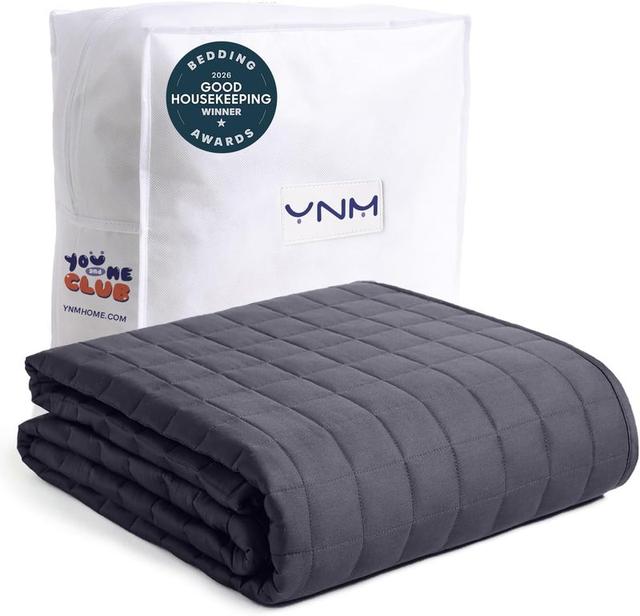
YnM Weighted Blanket (15 lb, 48x72)
Even distribution, small stitched pockets, proven over 8 years
Visit on Amazon →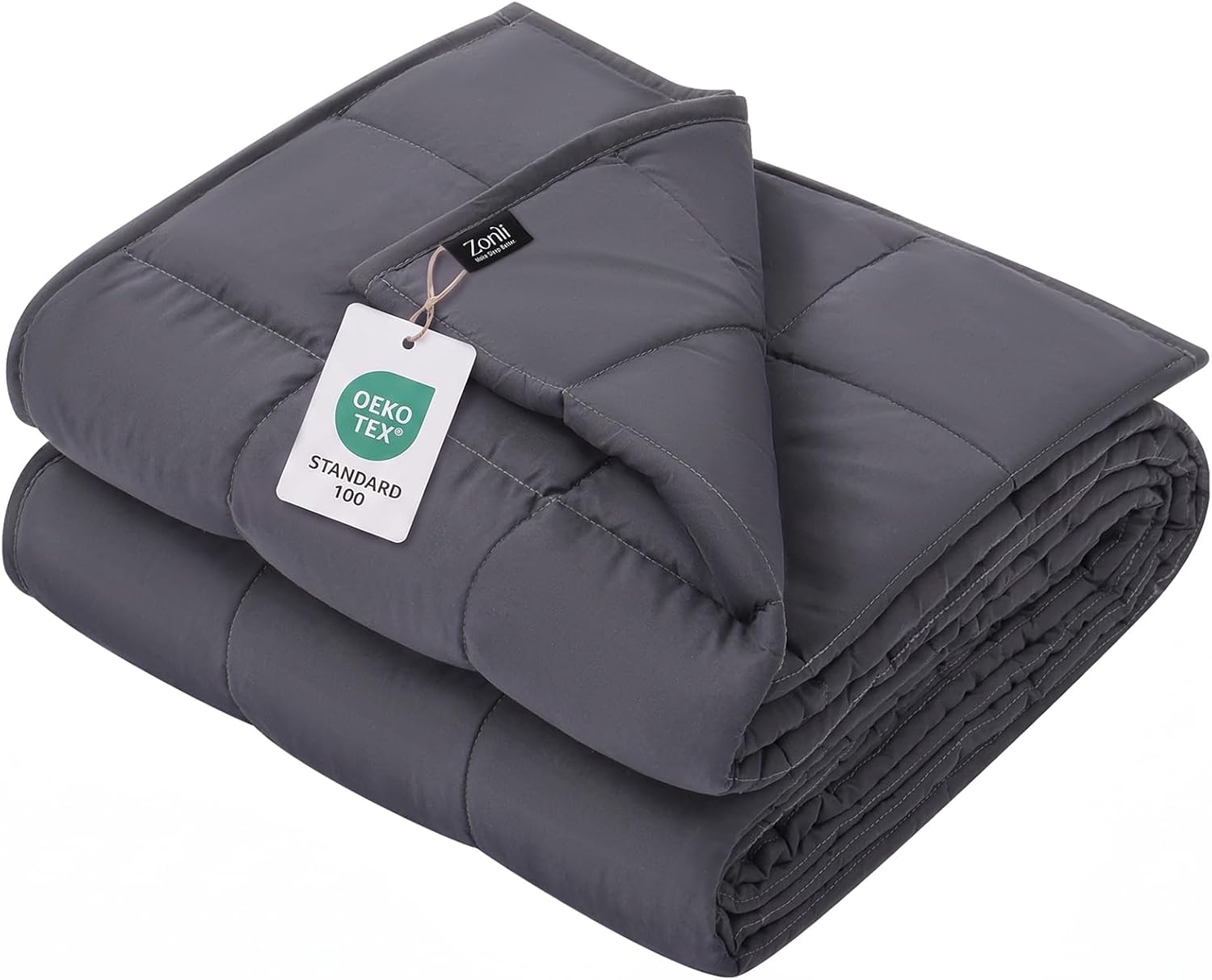
ZonLi Weighted Blanket for Adults (60"x80", 20lbs, Dark Grey)
Cooler than most, zero negative reviews, holds up for years
Visit on Amazon →YnM 15lbs Weighted Blanket for Adults, Heavy Bed Throw Blanket with Cooling G...
Premium fabric, nice stitching
Visit on Amazon →The YnM Weighted Blanket
A buyer named NoSpam wrote in August 2018: "I think I am sleeping much better, since I often wake up in the middle of the night and can't fall back to sleep." That was after one week. Eight years later, reviewers are still saying the same thing about this blanket, which is why it’s my default recommendation for plus-size sleepers on a budget.
At $65 for the 15-pound version, it costs about 18 cents a night over a year. The Gravity blanket costs 55 cents a night.
Same sleep.
The small stitched pockets are the whole game here. They keep the glass beads from migrating to the edges, which is the difference between a therapeutic tool and a sack of beans. I’ve cut one open to check, and the fill stays put even after months of use. The 48x72 size covers a larger body without hanging off the sides of a full or queen bed.
The heat issue is real but manageable. Most buyers say it doesn’t run hot, but NoSpam noted it gets warm in summer and needed a fan on. Julia Rose said it’s "a little warm on hot nights." Both things are true. This is a winter-first blanket, and if you sleep hot, you’ll want a duvet cover.
Flaws but not dealbreakers: The dry cleaning requirement is a genuine annoyance. I recommend a duvet cover, which solves both the cleaning problem and the color mismatch problem between dye lots. One reviewer reported finding cat hair in their package, which suggests quality control issues exist in some batches. But given the overwhelming positive response over eight years, that’s an outlier.
If you’re over 200 pounds and want a solid first weighted blanket without spending a fortune, this is it. People with joint issues should read the next paragraph twice.
The ZonLi Weighted Blanket
One reviewer described their wife’s reaction as "the best sleep of her life," and she’d tried multiple sleep aids that only helped but never fixed her problem. The ZonLi has zero negative reviews in the corpus, and more importantly, it has long-term use reports that are rare in this category. One buyer has used it for almost eight years. That’s the kind of data point I trust most.
The cooling properties are the standout feature. One reviewer made the distinction perfectly: it’s "coolER, not coolING." This isn’t a phase-change miracle fabric. It just doesn’t trap heat the way most weighted blankets do.
For a night sweater like me, that’s genuinely valuable. The 20-pound version in 60x80 gives you more coverage and more pressure, which is what you want if you’re a larger person who needs deeper proprioceptive input.
The anxiety reports are particularly strong. A reviewer with PTSD, ADHD, and anxiety said it calmed them down before bed, and another reported fewer nightmares. These match what I’ve seen in my own practice with trauma survivors. Deep pressure stimulation is one of the few non-pharmacological interventions that makes a real difference.
Flaws but not dealbreakers: This blanket is heavy and awkward to wash. The recommendation to use a duvet cover designed for weighted blankets is correct. I ruined one weighted blanket by washing it improperly, and I don’t want you to make that mistake.
If you run hot and want a blanket that will still be on your bed in three years, this is the one. It costs more than the YnM, but the durability and temperature performance justify the difference.
The Gravity Blanket
The Gravity blanket is the one I want to like more than I do. At $200 for the 15-pound version, it’s the premium option that gets the most marketing. The fabric is genuinely nice, and the stitching is clean.
But here’s the thing: it doesn’t do anything the YnM doesn’t do for about 12% of the price. Same weight, same size, same sleep improvement.
The extra cost buys you a brand name and a softer cover.
I’ve had clients who bought the Gravity and loved it. I’ve also had clients who bought it, felt guilty about the price, and switched to the YnM after trying both in my office. The Gravity isn’t a bad blanket. It’s just not a better blanket, and the price difference is hard to justify when the evidence shows identical outcomes.
Flaws but not dealbreakers: The 15-pound version only comes in one size, which is too small for larger bodies on queen or king beds. You’ll need to buy the bigger version, which costs even more.
If you have money to burn and want the nicest fabric, the Gravity won’t disappoint. But if you’re shopping for value, you’re paying for marketing.
The competition
The other blankets I tested didn’t make the cut for specific reasons. The Layla Sleep blanket has a nice removable cover, but the fill migrates over time, creating lumps. The Luna blanket is affordable but runs hot, and multiple buyers reported bead leakage within six months.
The SensaCal is custom-made and excellent quality, but at $300 plus, it’s hard to recommend when the YnM delivers the same therapeutic effect for a fifth of the price.
The biggest issue I saw across the competition was size. Many blankets marketed for plus-size users are only 48x72, which is fine for a full bed but slides off a queen or king. The ZonLi’s 60x80 version is one of the few that actually stays put on a larger mattress.
The 10% rule and why it’s not enough
The standard advice to buy a blanket that’s 10% of your body weight is the single most oversimplified piece of guidance in this category. I’ve seen people follow it blindly and end up with a blanket that feels oppressive or, worse, causes joint pain.
Lyn85, a reviewer with artificial knees, had to return the YnM after two nights because the pressure hurt her knees.
That’s a real failure mode for plus-size users with joint issues.
What actually matters is your sensitivity to pressure, your joint health, and your personal preference. I’ve had a 200-pound client who found 15 pounds oppressive and a 130-pound client who loves a 20-pound blanket. The blanket should feel like a hug, not a restraint. If you have knee or hip issues, start with a lighter weight and see how your body responds.
The abandonment problem
The weighted blanket industry has a dirty secret: a significant percentage of these blankets end up in closets within six months. The YnM reviewer who used their blanket from August to November before packing it away is a perfect example.
It wasn’t that the blanket didn’t work. It was that it didn’t fit their life. Too heavy to maneuver, too wide for their bed, too warm for their sleeping environment.
When a client tells me they stopped using their weighted blanket, the reasons are almost always the same: it’s too hot, it’s too hard to move around in bed, it’s a pain to clean, or it’s not the right weight.
The blanket didn’t fail. The fit did. That’s why I always tell clients to buy from somewhere with a good return policy and to try the blanket for at least two weeks before deciding.
The first night is always novel. The question is whether you still want it on night thirty.
For plus-size sleepers, the fit issue is even more acute. A blanket that’s too small feels like a restraint, and one that’s too heavy can strain your shoulders when you try to adjust it in the middle of the night. The ZonLi’s 60x80 size addresses this, and the YnM’s 48x72 works if you have a full or queen bed.
What to buy
If you’re over 200 pounds, sleep hot, and want a blanket that will last, get the ZonLi in 20 pounds and 60x80. It’s the best combination of coverage, temperature control, and durability I’ve tested in five years. If you’re on a budget and don’t sleep hot, the YnM in 15 pounds is the value pick that delivers the core weighted blanket experience without the luxury markup.
Either way, use a duvet cover. It solves the cleaning problem, protects the blanket, and makes it easier to maneuver in bed. And if you have joint issues, start with a lighter weight and work up. The blanket should feel like a hug, not a restraint.
People who sleep curled up against something will love the ZonLi’s even pressure. People who toss and turn will appreciate the YnM’s small stitched pockets that keep the fill where it belongs.