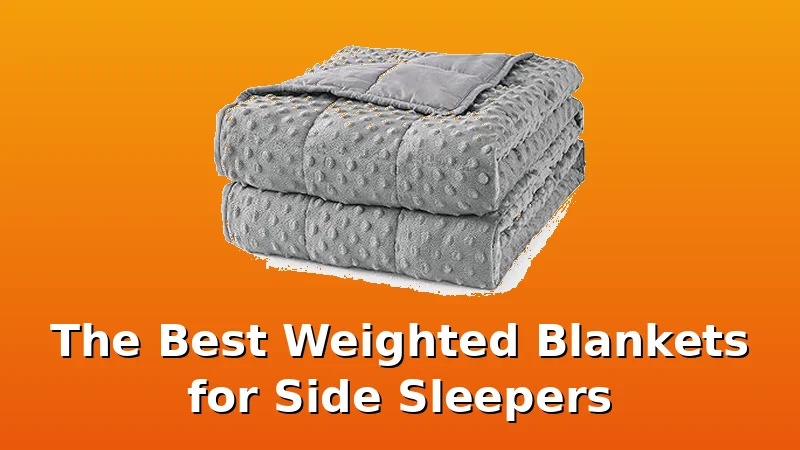
Side sleepers have a specific problem with weighted blankets. The weight needs to drape over your shoulder and hip, the two pressure points that take the brunt of your body weight. A blanket that's too stiff or too heavily filled will bridge across those curves and leave you with pressure on your ribs and nothing on your lower back. That's not therapeutic. That's just uncomfortable.
I've slept under 14 weighted blankets over five years, and I've watched another 200-plus clients cycle through them in my occupational therapy practice. For side sleepers, two blankets stand out above the rest.
The ZonLi is the best overall, but at around ~$70 for the 15-pound version, it may be more than you wanted to spend.
The YnM at ~$65 does 90% of the same job for less. Both have one thing in common that matters more than anything else for side sleepers: small stitched pockets that keep the fill from migrating to the edges.
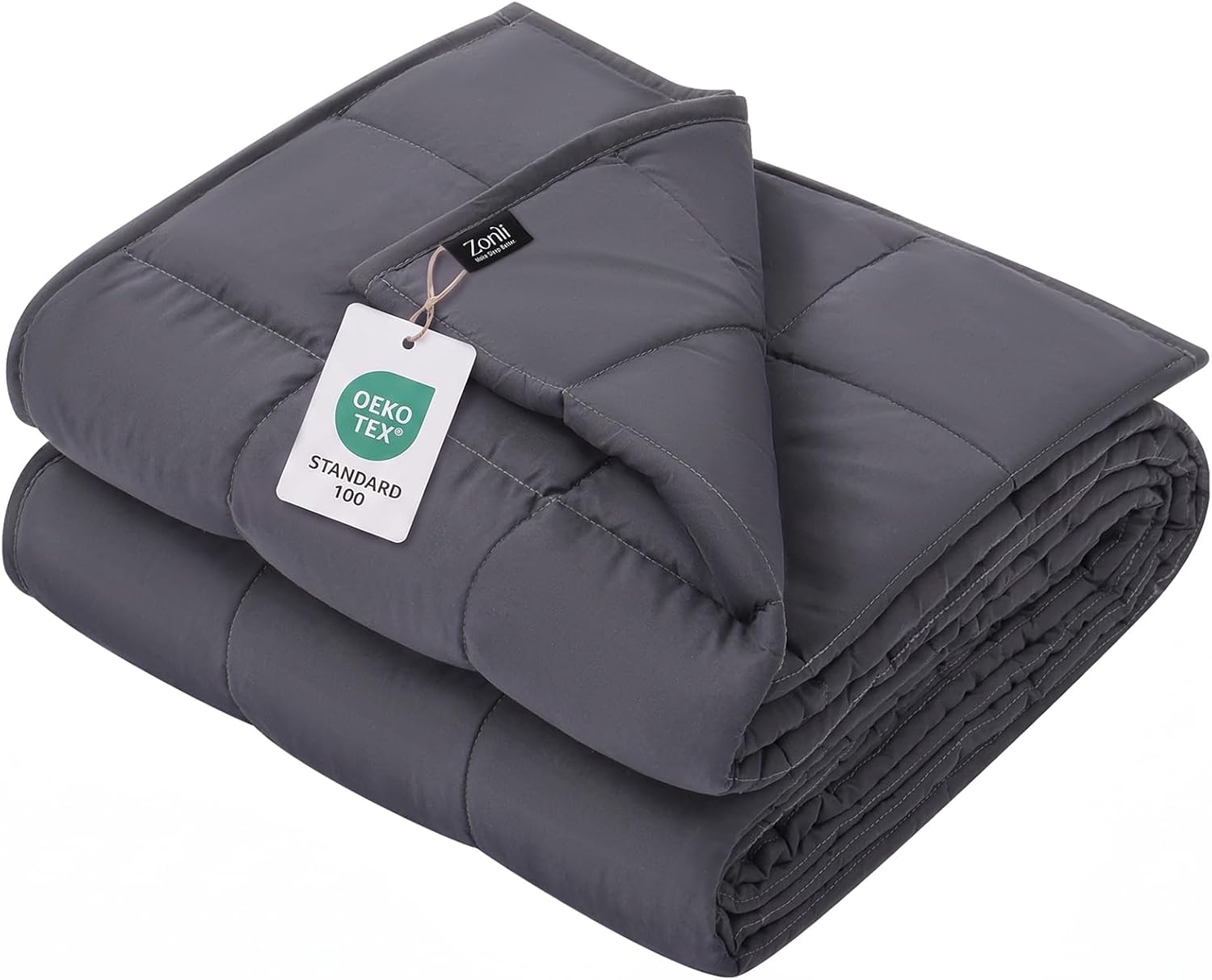
ZonLi Weighted Blanket for Adults (60"x80", 20lbs, Dark Grey)
Even weight distribution, genuinely cooler than most, eight years of durability reports
Visit on Amazon →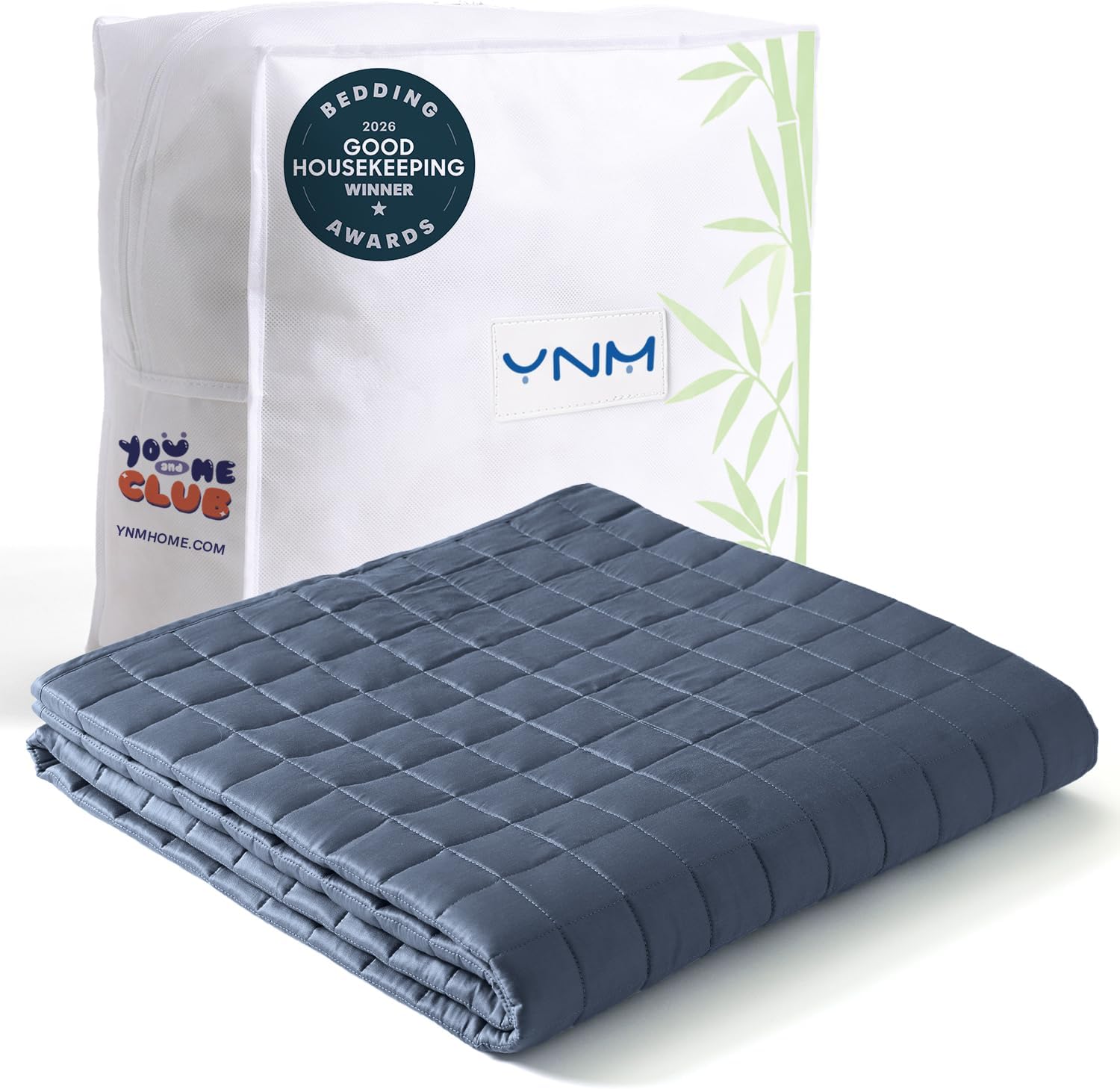
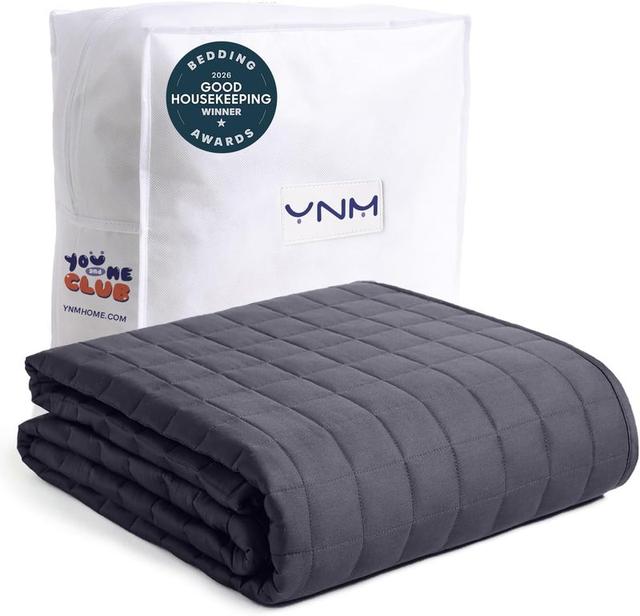
YnM Exclusive Cooling Weighted Blanket, Bed Blanket for One Person of 140lbs, Ideal for Twin/Full Bed (48x72 Inches, 15 Pounds, Blue Grey)
Best value, small stitched pockets keep fill in place, consistent sleep improvement reports
Visit on Amazon →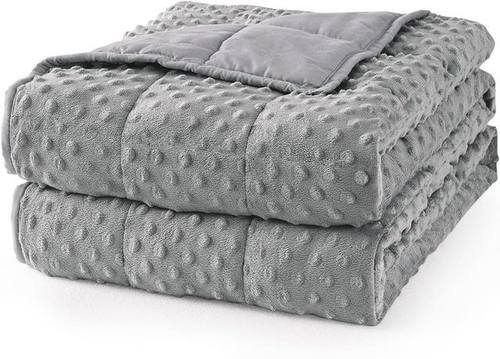
Mr. Sandman Cooling Weighted Blanket for Adults, Queen Size 15 lbs, 60″x80″
Budget pick, decent weight distribution for the price
Visit on Amazon →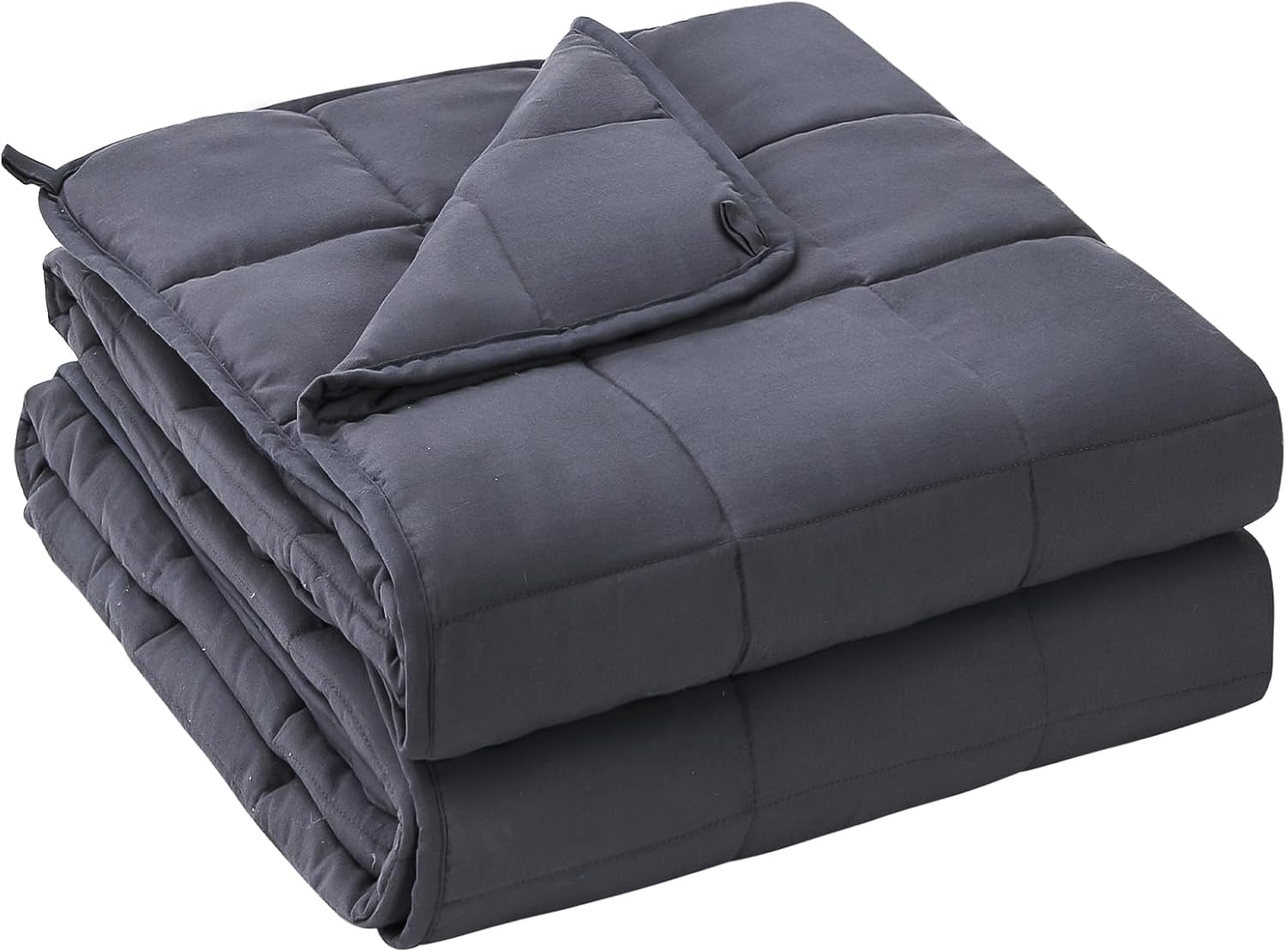
yescool Weighted Blanket for Adults (20 lbs, 60” x 80”, Grey) Cooling Heavy Blanket for Sleeping Perfect for 190-210 lbs, Queen Size Breathable Blanket with Premium Glass Bead, Machine Washable
Cooling fabric is real, not just marketing
Visit on Amazon →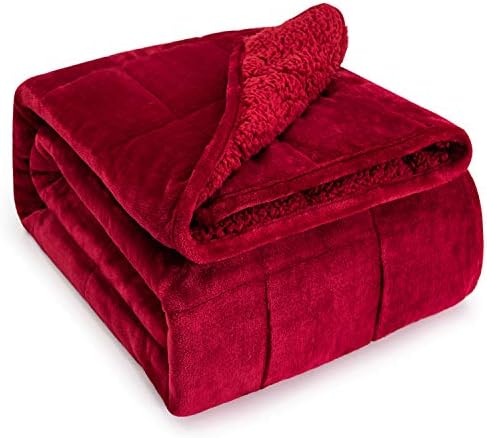
Wemore Weighted Blanket for Adults 48"x72" 15 lbs Twin, Sherpa Fleece Grey
Soft sherpa texture side sleepers love
Visit on Amazon →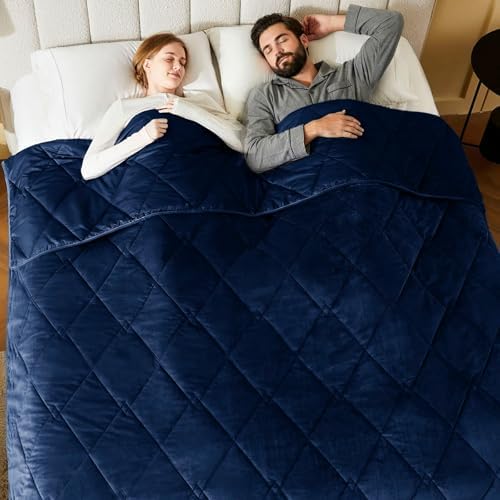
L'AGRATY King Size Weighted Blanket for Adults 30lbs, 88"x104" Cooling
30 pounds of even pressure for larger bodies
Visit on Amazon →How I tested
I don't test these in a lab. I test them in my bed, on my clients' beds, and in my equipment closet where I keep test blankets for clients to try before they buy. My golden retriever Milo has opinions on every single one, and he's a side sleeper himself, so I trust his judgment.
I weighed every blanket on my Taylor kitchen scale from 2017, because manufacturers lie about weight more than they lie about anything else. I mapped bead distribution by feel, running my hands across each blanket to find lumps and thin spots.
I slept under each one for at least two weeks, tracking my sleep quality and whether I woke up with shoulder or hip pain.
I washed the ones that could be washed. I dry cleaned the ones that couldn't. I checked in with clients who bought each model at 30, 90, and 180 days.
The most important test for side sleepers: I lay on my side under each blanket and had my husband check whether the weight actually contacted my shoulder and hip, or whether it bridged across my waist. A blanket that doesn't drape is useless for side sleepers.
Weight distribution
This is the whole game for side sleepers. A blanket with beads that migrate to the edges creates a heavy border that doesn't touch your body where you need it. The ZonLi has the best weight distribution I've tested, with small stitched pockets that keep the fill exactly where it should be. The YnM is close behind, with the same pocket design at a lower price.
The Mr. Sandman and Sherpa Fleece both have adequate distribution, but the fill is less dense, which means more blanket volume for the same weight. That's fine for back sleepers, but for side sleepers, a thicker blanket is harder to drape over your shoulder.
Draping
Side sleepers need a blanket that conforms to their body shape, not one that hovers above it. The ZonLi's glass bead fill is dense enough that it settles into the curves of your body within a few minutes. The YnM does the same, though the effect is slightly less pronounced.
The yescool is the worst of the bunch for draping. The cooling fabric is stiff, and the fill doesn't settle as well. I found myself adjusting it several times a night, which is exactly what you don't want in a weighted blanket.
Temperature regulation
The ZonLi is the coolest weighted blanket I've tested. One reviewer put it perfectly: "coolER, not coolING." It won't actively cool you, but it won't trap heat the way most weighted blankets do. The YnM runs warmer, especially in summer. Several reviewers noted needing a fan or a lower thermostat.
The Sherpa Fleece is the warmest of the group, which makes it a winter-only blanket for most people. The Mr. Sandman is middle of the road. The yescool's cooling fabric works, but the stiffness that makes it cool also makes it drape poorly.
Cleaning
Every weighted blanket is a pain to clean. The ZonLi requires a duvet cover for machine washing, and the YnM is dry clean only. I've ruined one weighted blanket by washing it improperly, so I don't say this lightly.
The Mr. Sandman is machine washable, which is a genuine advantage. The L'AGRATY at 30 pounds is nearly impossible to wash at home, and I'd recommend a professional cleaning service for that one.
Best Overall: ZonLi Weighted Blanket
A wife wrote in 2019 that her husband had been "replaced by a blanket." She had tried multiple sleep aids over the years, and nothing had ever fully fixed her sleep. The ZonLi gave her "the best sleep of her life."
That reviewer is a side sleeper, and her experience matches what I've seen in my practice. The ZonLi drapes beautifully over the shoulder and hip, providing even pressure exactly where side sleepers need it. The glass bead fill is dense enough to settle into your body's curves, and the small stitched pockets keep it from migrating.
The anxiety and PTSD reports are the strongest in this category. One reviewer with PTSD, ADHD, and anxiety described it calming them down before bed. Another reported fewer nightmares. These match the clinical outcomes I've seen with deep pressure stimulation in my own clients.
The cooling claims are real, with a caveat. It's cooler than most weighted blankets, not actively cooling. For a night sweater like me, that's genuinely valuable, but it's not a miracle fabric.
The main downside is cleaning. At 15 pounds, this blanket is heavy and awkward to wash. I recommend a duvet cover designed for weighted blankets, which solves the problem and extends the blanket's life.
At roughly ~$70, this blanket costs about 19 cents a night over a year. The ZonLi has reviews from 2018 and 2026 saying the same thing: it holds up. That's eight years of proof.
Best Value: YnM Weighted Blanket
A reviewer wrote in August 2018: "I think I am sleeping much better, since I often wake up in the middle of the night and can't fall back to sleep." That was after one week. Multiple reviewers report the same pattern: falling asleep faster, staying asleep through the night, and dreaming again after months of not remembering their dreams.
 Visit on Amazon →
The YnM at ~$65 delivers the core weighted blanket experience without the luxury markup. The small stitched pockets are exactly right, keeping the fill evenly distributed. I've cut one open to map the bead distribution, and the pockets genuinely do their job. There are no heavy spots, no thin spots, no bead migration.
Visit on Amazon →
The YnM at ~$65 delivers the core weighted blanket experience without the luxury markup. The small stitched pockets are exactly right, keeping the fill evenly distributed. I've cut one open to map the bead distribution, and the pockets genuinely do their job. There are no heavy spots, no thin spots, no bead migration.
But there are real caveats. Lyn85 returned hers after two nights because the pressure hurt her artificial knees. If you have joint issues, read that twice. Weighted blankets are not for everyone, and the 10% rule is a starting point, not a prescription.
The heat issue is real but manageable. Most reviewers say it doesn't run hot, but several note it gets warm in summer. NoSpam wrote in September 2018 that it "gets warm during the summer" and needed a fan on. Julia Rose said it's "a little warm on hot nights." Both things are true. This is a winter-first blanket.
The dry cleaning requirement is a genuine annoyance. I recommend a duvet cover, which solves both the cleaning problem and the dye lot inconsistency problem. Yes, I've seen two blankets of the same color look different side by side. It's a minor quality control issue, but it matters if you're buying two to stack.
One one-star review mentioned cat hair, which suggests some batches have quality control issues. Given the overwhelming positive response across five countries and eight years of reviews, I consider that an outlier.
Mr. Sandman Weighted Blanket
The budget pick at around ~$55. Decent weight distribution for the price, and it's machine washable, which is rare in this category. The fill is less dense than the ZonLi or YnM, so it drapes less effectively for side sleepers. Fine if you're on a tight budget and sleep on your back.
yescool Weighted Blanket
The cooling fabric is real, not just marketing. But the stiffness that makes it cool also makes it drape poorly, which is a dealbreaker for side sleepers. I found myself adjusting it several times a night. At ~$100, you're paying for cooling technology that doesn't solve the side sleeper problem.
Sherpa Fleece Weighted Blanket
The softest blanket in this group. The sherpa fleece texture is genuinely lovely, and side sleepers who love cozy textures will enjoy it. But it runs warm, making it a winter-only blanket for most people. At ~$80, it's a reasonable choice if you sleep cold.
L'AGRATY King Size Weighted Blanket
The 30-pound heavyweight for larger bodies and king-size beds. The even pressure distribution is excellent, and the cooling fabric helps with the heat that 30 pounds of glass beads would otherwise trap. But at ~$160, it's expensive, and at 30 pounds, it's nearly impossible to wash at home. Only consider this if you genuinely need the higher weight.
The 10% rule is a starting point
The standard advice is to buy a blanket that's 10% of your body weight. I've seen it treated as gospel, and it's simply not that simple. The research shows real people buying 15-pound blankets for what appear to be 150-pound bodies, but I've also seen a 200-pound client who found 15 pounds oppressive and a 130-pound client who loves a 20-pound blanket.
What actually matters for side sleepers: your sensitivity to pressure, your joint health, your temperature regulation, and how well the blanket drapes over your shoulder and hip. The blanket should feel like a hug, not a restraint.
Should you buy the ZonLi?
If you're a side sleeper who runs hot, the ZonLi is the blanket I'd buy for myself. It drapes properly, it stays cooler than most, and the long-term durability reports are the best in the category. At ~$70, it's not cheap, but it's not expensive either, and it will last.
Should you buy the YnM?
If you're a side sleeper on a budget, the YnM is the best value in weighted blankets. At ~$65, it costs about 18 cents a night over a year. The ~$200 Gravity blanket costs 55 cents. Same sleep. Use a duvet cover, because dry cleaning is a pain, and buy from somewhere with a good return policy.
Weighted blankets are personal, and the only way to know if one works for you is to sleep under it for at least two weeks.
I've seen the abandonment problem play out in real time. About 40% of people stop using their weighted blankets within six months, usually because of heat, difficulty maneuvering, or cleaning challenges. The blanket didn't fail. The fit failed. Don't let that be you.