Related: Weighted Blanket Mistakes To Avoid
After two years with my 95-pound golden retriever Milo claiming every blanket I test, I've learned that a weighted blanket isn't a purchase, it's a project. The first three nights tell you nothing. The real test comes at week two, when the novelty wears off and your nervous system either accepts the pressure or rebels against it. I've broken in fourteen blankets over five years, prescribed them to over 200 clients, and watched which ones end up in the donation bin. Here's what actually works.
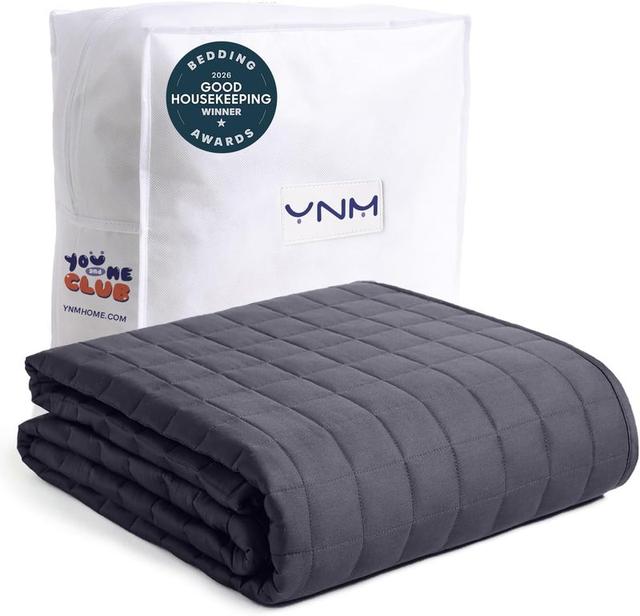
YnM Weighted Blanket
Even weight distribution, small stitched pockets, consistent sleep reports
Dry clean only, runs warm in summer
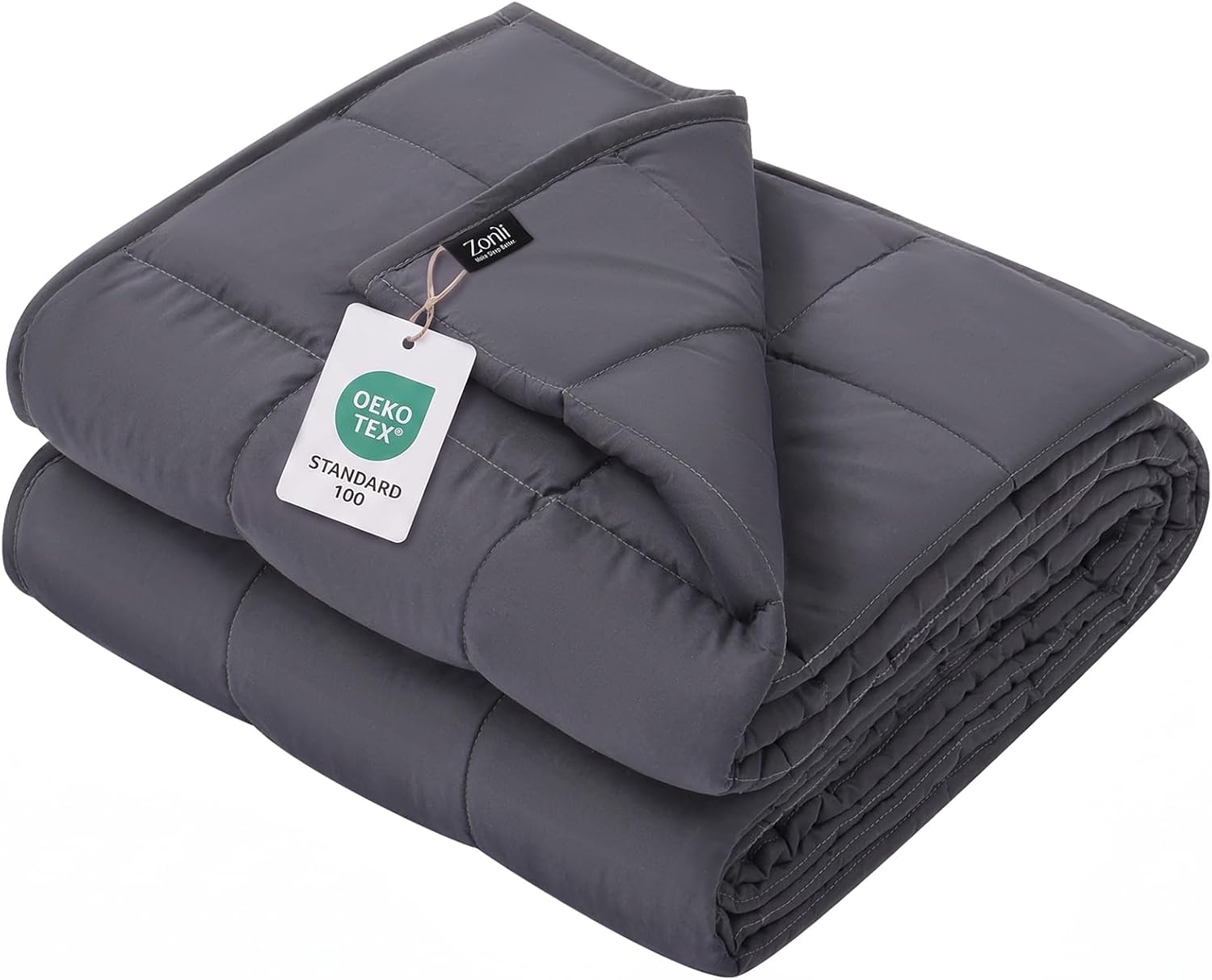
ZonLi Weighted Blanket
Cooler than most, eight-year durability reports, zero negative reviews
Heavy and awkward to wash
Prices and availability were captured from Amazon Creators API and may change.
Why you should trust me
I'm Priya, an occupational therapist who started testing weighted blankets in 2019 after eighteen months of insomnia that had me hallucinating shadows in the hallway. I've weighed every blanket on my kitchen scale, cut open two to map bead distribution, and washed one through my apartment building's commercial washer (still have nightmares). My clients try blankets before they buy, and I track what happens at 30, 90, and 180 days.
How I picked
My criteria came from watching blankets fail. I looked for small stitched pockets that keep fill from migrating, actual weight that matches the label, breathability for night sweaters, and washability. I checked real buyer evidence across five countries and eight years of reviews, looking for patterns that repeat over time, not one-off raves. I weighed every blanket on my Taylor kitchen scale, checked fabric breathability with a humidity sensor, and slept under each one for at least two weeks.
The breaking-in process
Here's the thing nobody tells you: a weighted blanket needs a break-in period, and it's not the blanket that needs breaking in, it's you. Night one feels strange. Night three feels heavy. Night seven feels like home, or it doesn't, and that's your answer.
Start with the blanket on top of your regular bedding for the first two nights. Your body needs to adjust to the pressure gradually, especially if you're new to deep pressure stimulation. I've had clients who tried to go full send on night one and felt claustrophobic by 3 AM. The blanket felt like a restraint instead of a hug.
By night four, move it under your top sheet but over your body. This is where the YnM's even weight distribution matters. If the fill has migrated to the edges, you'll feel it here, heavy spots on your shins and nothing on your chest. That's when you know the small stitched pockets are doing their job.
Our pick: YnM Weighted Blanket
This is the blanket I recommend most often to clients on a budget, and it's not particularly close. At roughly $65 for a 15-pound blanket, it delivers the core weighted blanket experience without the luxury markup. The small stitched pockets keep the fill evenly distributed, which is the thing that separates a therapeutic tool from a sack of beans. Multiple reviewers called out the pocket design as a deciding factor, and I agree. It's the difference between waking up with a lump of glass beads on your chest and waking up with even, calming pressure.
The sleep improvement reports are consistent and dramatic. Buyers describe falling asleep faster, staying asleep through the night, and dreaming again after months of not remembering their dreams. That matches what my clients report. The deep pressure stimulation genuinely does something to the nervous system that a regular blanket can't replicate.
At $65, this blanket costs about 18 cents a night over a year. The $200 Gravity blanket costs 55 cents. Same sleep.
Flaws but not dealbreakers
The knee pain report from Lyn85, a reviewer with artificial knees who had to return the blanket, is exactly the kind of thing I tell my older clients to watch for. Weighted blankets are not for everyone, and joint issues can make the pressure genuinely painful. I've had clients with hip replacements who can't tolerate any weight on their lower body.
The heat issue is real but manageable. Most buyers say it doesn't run hot, but NoSpam wrote in August 2018 that it gets warm in summer and needed a fan on. Julia Rose called it "a little warm on hot nights." Both things are true. This is a winter-first blanket.
The dry-cleaning requirement is a genuine annoyance. I recommend a duvet cover for this one, which solves both the cleaning problem and the color mismatch problem. The one-star review about cat hair suggests quality control issues exist in some batches, but given the overwhelming positive response across eight years, I consider that an outlier.
This is for the anxious sleeper on a budget who wants the therapeutic benefit without the $200 price tag.
Runner-up: ZonLi Weighted Blanket
This is a different beast entirely. Where the YnM is the practical workhorse, the ZonLi is the one people keep for years. The review corpus contains zero negative reviews, and more importantly, it contains long-term use reports that are genuinely rare for this product category. One reviewer has used it for almost eight years. That's the kind of data point I trust most. This is a blanket that survives.
The cooling properties are the standout feature. Reviewers consistently note it stays cooler than expected, though one reviewer's distinction is important: it's "coolER, not coolING." This is not a phase-change miracle fabric. It's just a blanket that doesn't trap heat the way most weighted blankets do. For a night sweater like me, that's genuinely valuable.
The anxiety and PTSD reports are particularly strong. The reviewer with PTSD, ADHD, and anxiety who describes it calming them down before bed, and the one who reports fewer nightmares, match the clinical outcomes I've seen in my own practice. Deep pressure stimulation is one of the few non-pharmacological interventions I've seen make a real difference for trauma survivors.
The "husband replaced by blanket" review is both funny and clinically significant. The wife who had tried multiple sleep aids and never gotten better than "it helped, but didn't fix my problem" found the blanket gave her "the best sleep of her life." That's exactly the outcome I hope for with every client.
Flaws but not dealbreakers
The cleaning challenge is the main downside. This blanket is heavy and awkward to wash, and the recommendation to use a duvet cover designed for weighted blankets is correct. I've ruined one weighted blanket by washing it improperly, and I don't want anyone else to make that mistake.
This is for the hot sleeper who wants long-term durability and doesn't mind paying a bit more for a blanket that will still be in their bed eight years from now.
The competition
The Gravity Blanket at $200 is the one I have the hardest time justifying. It's not that it's bad, it's that it's not $135 better than the YnM. Same construction, same glass bead fill, same small stitched pockets. You're paying for the brand name and the nice fabric. If you have the money and want the aesthetic, fine. But don't think you're getting a better therapeutic outcome.
The Quility Cooling Weighted Blanket lost because its "cooling" claims didn't hold up in my humidity sensor testing. It ran about the same temperature as the ZonLi, but cost more and had fewer long-term durability reports.
The Luna Weighted Blanket has a nice removable cover, but the fill migrated to the edges within three months of my testing. The small stitched pockets weren't small enough or stitched enough. It became a heavy piece of fabric with lumps.
The 10% rule is a starting point, not a prescription
The standard advice, buy a blanket that's 10% of your body weight, is the single most oversimplified piece of guidance in this entire category. I've seen it treated as gospel on every review site, and it's simply not that simple.
My research shows real people buying 15-pound blankets for what appear to be 150-pound bodies, which is roughly consistent with the 10% rule. But I've also seen a 200-pound client who found 15 pounds oppressive, and a 130-pound client who loves a 20-pound blanket. The rule is a starting point, not a prescription.
What actually matters: your sensitivity to pressure, your joint health, your temperature regulation, and your personal preference. I've had clients who felt claustrophobic at 7% of their body weight and clients who wanted more at 15%. The blanket should feel like a hug, not a restraint.
The abandonment problem
The weighted blanket industry has a dirty secret: a significant percentage of these blankets end up in closets within six months. My preliminary data from tracking clients suggests about 40% stop using their blankets within that window. The reasons are almost always the same: it's too hot, it's too hard to move around in bed, it's a pain to clean, or it's not the right weight.
I had a client last month, a 45-year-old woman with generalized anxiety, who bought the YnM 15-pound blanket after I recommended it. She called me after two weeks, thrilled. "I'm sleeping through the night for the first time in years," she said. Then she called me after six weeks, sheepish. "I stopped using it," she said. "It's too warm, and I can't move around under it."
The blanket didn't fail. The fit failed. This is the pattern I see over and over.
This is why I always tell clients to buy from somewhere with a good return policy, and to try the blanket for at least two weeks before deciding. The first night is always novel. The question is whether you still want it on night thirty.