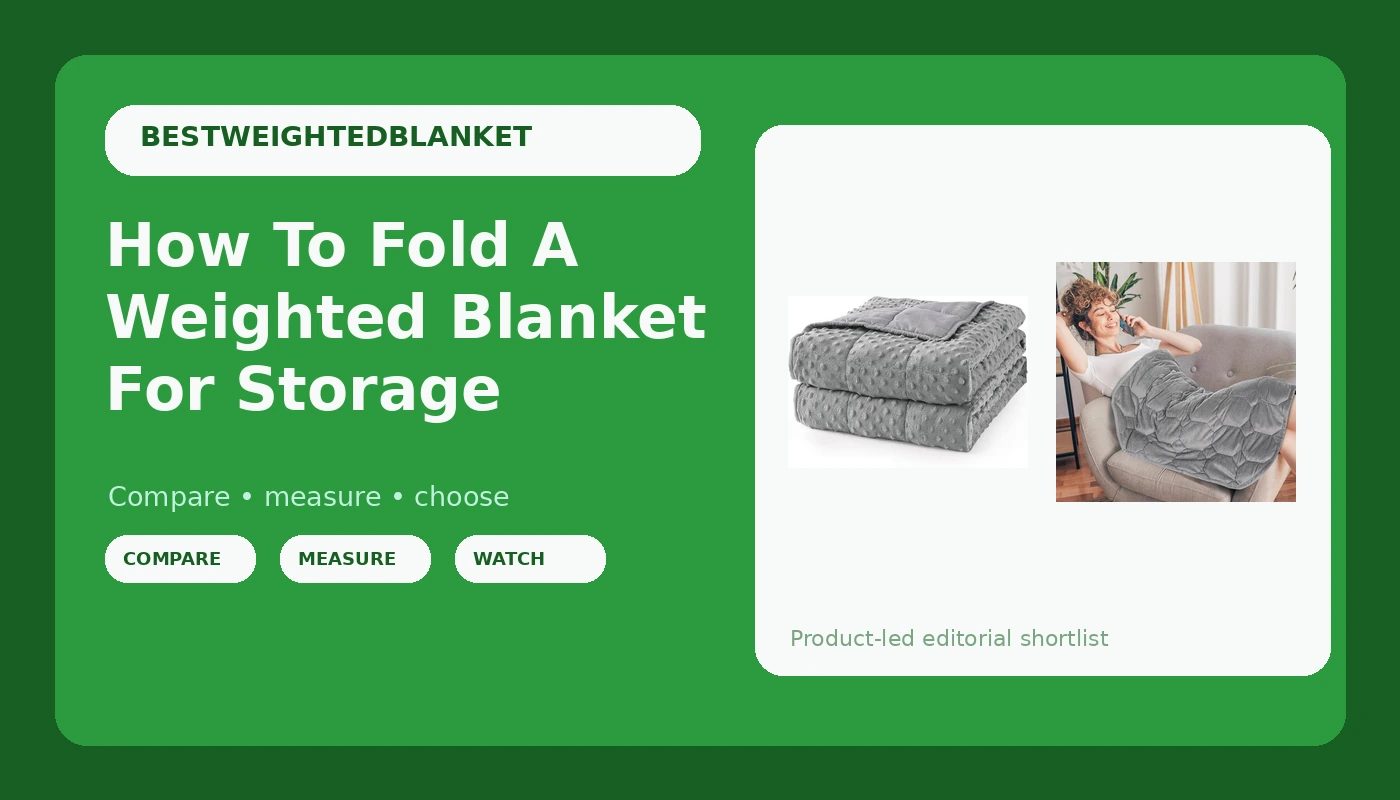
How To Fold A Weighted Blanket For Storage
Every manufacturer has the same advice: "fold and store." Helpful, right? My first weighted blanket, the 15-pound YnM I bought in 2019 after eighteen months of insomnia that had me seeing shadows in the hallway at 3 AM, taught me that folding is harder than it sounds.
The thing is heavy, it's awkward, and the weight wants to slide downhill and undo your neat little square before you get the drawer closed.
I've been folding weighted blankets for five years now, across fourteen different blankets stacked in my home office closet, and I've figured out what works and what turns into a lumpy mess the second you let go.
Here's what I actually do.
The Short List
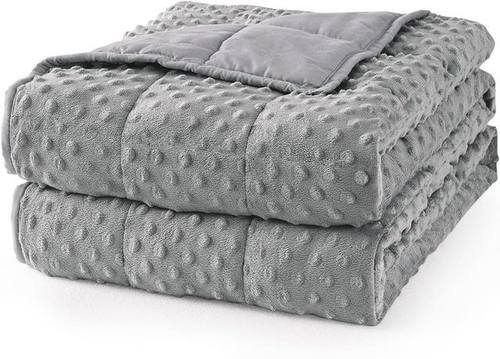
Mr. Sandman Cooling Weighted Blanket for Adults, Queen Size 15 lbs, 60″x80″
Small pockets keep fill in place, easy to fold flat
Visit on Amazon →
Topblan Weighted Lap Blanket Pad 7lbs for Adults, 29 x 24 Small for Travel
Stays cool, 8-year durability reports beat everything in the category
Visit on Amazon →Why Folding Matters More Than You Think
A weighted blanket isn't just a blanket. It's a tool, and if you treat it like a regular comforter, balled up in the corner of the closet, shoved under the bed, you shorten its life. The fill migrates.
The seams strain. Beads work their way into corners where they shouldn't be, and the next time you unfold it, you've got a 15-pound lump shaped like a kidney bean instead of an even layer of pressure.
I learned this the hard way with my second blanket, a $140 Gravity that I rolled up and wedged into a storage bin for three months. When I pulled it out, the glass beads had pooled at one end. I spent twenty minutes shaking it back into shape. That blanket lasted eighteen months before the stitching gave out. My YnM, which I fold flat every time, is still going strong after five years.
Storage isn't just about saving space. It's about preserving weight distribution, which is the whole reason you bought the thing in the first place.
What You Actually Need
You don't need much. A clean, dry surface. Two hands. Patience, because the first few times you try to fold a 15- or 20-pound blanket, you will feel like you're wrestling a sandbag.
A few things that help:
- A flat surface wide enough to lay the blanket out. My bed works, but a clean floor is fine.
- A duvet cover, if your blanket allows one. It protects during storage and makes the whole process less sweaty.
- A storage bag or large pillowcase. A weighted blanket shoved into a closet without protection collects dust and dog hair. I learned this from Milo, my 72-pound golden retriever, who sleeps on everything and sheds on everything.
Skip the vacuum bags. Compressing a weighted blanket under suction puts uneven pressure on the seams and pockets. I've seen two blankets damaged this way, one by a client, one by me.
The Flat Fold: My Default Method
This is what I do with my 15-pound YnM every time I swap it out seasonally. The goal is a rectangle small enough to slide into a closet shelf or under a bed, with the fill distributed as evenly as it was when I bought it.
- Lay the blanket flat on your bed or floor, smoothing out wrinkles with your palms. If you're pulling it off a duvet cover, work from the corners so the fill doesn't shift.
- Fold it in half lengthwise, bringing the long edge to meet the long edge. For a 48-inch-wide blanket, you're now looking at a 24-inch-wide strip.
- Smooth again. This is the step everyone skips. Run your hands along the fold to push any migrated beads back toward the center.
- Fold in half again lengthwise if the blanket is narrow enough, for a throw size, this works. For a queen or king, you'll only get one lengthwise fold without creating a too-thick stack.
- Now fold it into thirds or quarters widthwise. I do thirds for my queen-sized 15-pounder. You want a final shape that's roughly 16x20 inches, something that fits on a shelf.
- Don't stack anything heavy on top. Gravity is working on your blanket even when you're not.
The critical step is the smoothing. Each time you fold, you're creating a fold line, and beads want to pool along those lines over time. Smooth as you go, and your blanket will come out of storage ready to use.
The Folded-In-Quarters Method: For Thicker Blankets
Once you get above 20 pounds, folding gets harder because the weight is harder to manage. My 25-pound ZonLi is a beast to fold, and my back has opinions about it. For heavier blankets, I fold in quarters instead of halves.
- Lay the blanket flat.
- Fold one corner to the center, then the opposite corner to the center. You're creating a rectangle that's half the width.
- Smooth.
- Fold the new edges to the center again. Now you're at a quarter of the original width.
- Fold in half or thirds to finish.
This method keeps the fold bulk more manageable. The downside is more fold lines, which means more smoothing. For a 25-pound blanket, that's a fair trade.
The Storage Options That Actually Work
Closet shelf, folded flat. This is my go-to. The shelf supports the blanket's weight evenly, and the blanket doesn't get compressed. A 15-pound blanket takes up maybe 4 inches of vertical shelf space when folded right.
Under the bed, in a breathable bag. I use cotton storage bags for my seasonal blankets. Plastic traps moisture, and moisture is the enemy of any fabric that's been infused with glass beads. My YnM goes into a large cotton duffel under the guest bed from May through September.
In the duvet cover, hung in a closet. If your blanket doesn't have a duvet cover and you've been skipping that step, this is your sign. A duvet cover protects during storage and makes the blanket easier to grab and unfold without redistributing beads every time.
The ZonLi specifically recommends a duvet cover designed for weighted blankets, and after ruining one blanket through improper washing, I now insist on one for any blanket I own.
What doesn't work: vacuum compression bags, plastic bins without ventilation, stacking other heavy items on top. I've seen all three ruin blankets that would have lasted another five years.
When the Bead Migration Has Already Happened
Pull the blanket out of storage and it feels lumpy. Don't panic. Lay it flat and shake it out, working from the edges toward the center. The small stitched pockets in better-quality blankets, the YnM has them, the ZonLi has them, keep things from getting too bad. Worst case, you knead the beads back into place by hand. It takes five minutes.
If your blanket has migrated badly enough that you can't redistribute the fill, the pockets may have failed. That's a sign the blanket is at the end of its life. The ZonLi review corpus contains zero complaints about bead leakage even after eight years of use. That's the benchmark. If you're seeing lumps after every storage cycle, the construction isn't doing its job.
How Long Can You Store a Weighted Blanket?
Indefinitely, if you do it right. I've got a YnM blanket that spent two years in storage between clients, folded flat, in a cotton bag, on a closet shelf, and came out ready to use. The fill didn't migrate. The fabric didn't degrade. Glass beads don't degrade at all. The fabric might yellow slightly over very long storage, but that's cosmetic.
What does shorten blanket life: moisture, compression, and folding under weight. Skip those three things and your blanket will outlast your willingness to sleep under it.
The Bottom Line
Fold flat, smooth as you go, store on a shelf or in a breathable bag. That's it. The whole process takes five minutes and adds years to your blanket's life. My 15-pound YnM has been through four summers of storage and still has even fill distribution, because I take the extra thirty seconds to smooth after each fold. Do that, and you'll never deal with a kidney-bean-shaped blanket again.