I bought my first weighted blanket in 2019 because I had gone months without a full night of sleep and I was willing to try anything that did not come with a prescription. Six years and fourteen blankets later, I work as an occupational therapist with clients who deal with anxiety and sensory-processing differences, and I still keep a kitchen scale on the counter for the same reason I kept it back then: the number on the label is a marketing decision, and the number on the scale is a fact. This 15 lb weighted blanket comparison puts four blankets in the same weight class side by side, because that is where the real differences show up. Weight is the easy part to compare. Shell fabric, stitch density, bead distribution, and whether the thing survives a washing machine are what decide whether it ends up on your bed or in the back of a closet by February.
The blanket I would buy first is the Bare Home Cotton Weighted Blanket, because a cotton shell is the single best predictor of whether you will still be using a weighted blanket next summer. The YnM is the budget entry in this group and the one I would hand to someone who wants to find out whether proprioceptive input helps them at all before spending more. The two Wemore blankets are fabric-first purchases: one is for cold sleepers, one is for a queen bed. None of these is a cure for anything, and I will get to that at the end.
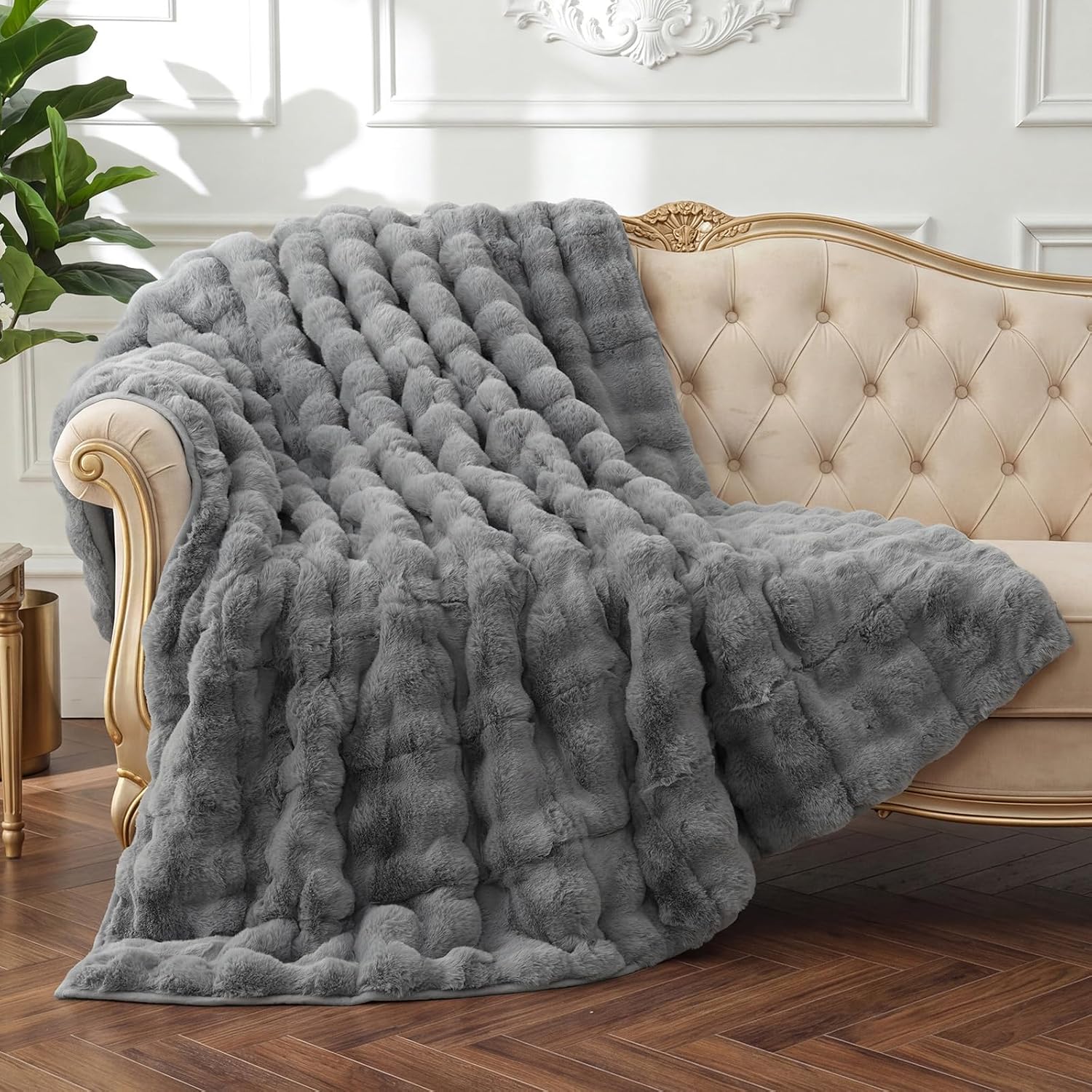
Wemore Fluffy Weighted Blanket, 60" x 80", 15 lbs Queen
Queen footprint actually covers a bed, and the plush surface is soft from the first night
Plush fabric traps heat and is the hardest of the four to launder at home
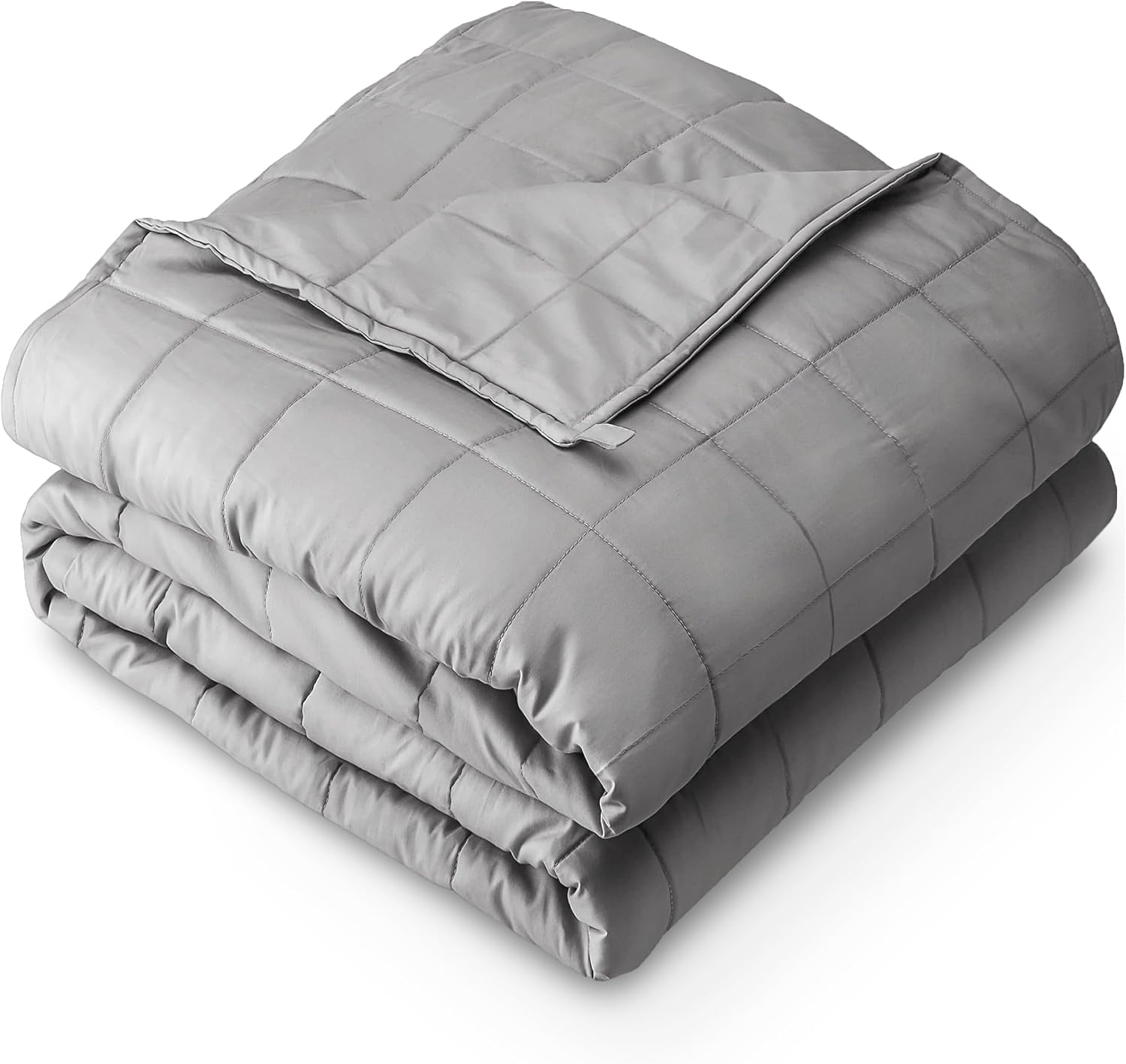
Bare Home Cotton Weighted Blanket, 48" x 72", 15 lbs
Cotton shell breathes, care is simple, the best year-round pick here
The 48" x 72" size is a personal blanket, not a shared one
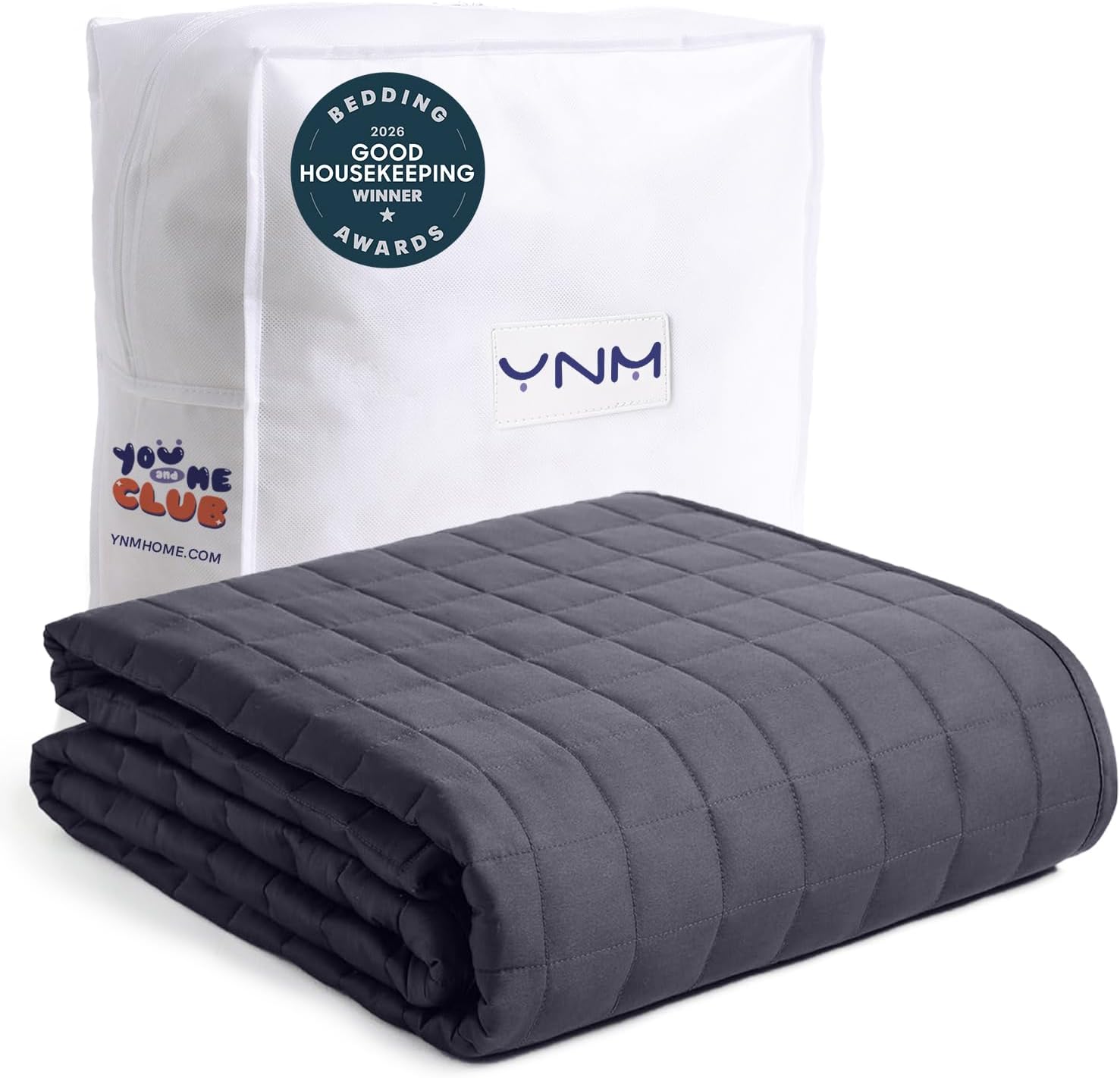
YnM 15 lbs Weighted Blanket, 60" x 80", Dark Grey
Budget entry, queen size, glass bead fill described as cooling
Polyester shell is the weak point once the bedroom warms up
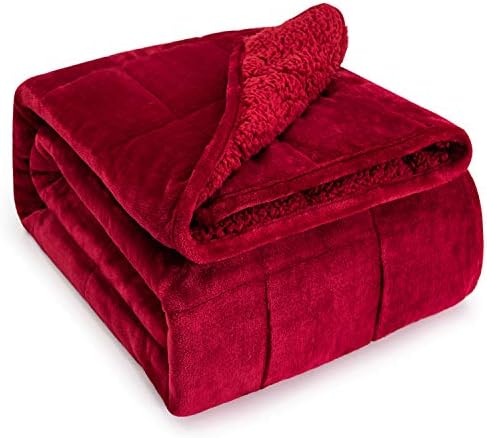
Wemore Weighted Blanket, 48" x 72", 15 lbs Twin, Sherpa Fleece
Sherpa fleece is the warmest surface in this group, ideal for a cold bedroom
Fleece plus 15 pounds is a winter blanket, and it is bulky to wash
Prices and availability were captured from Amazon Creators API and may change.
How I compare four blankets in the same weight class
Every blanket that comes into my apartment gets the same treatment. It goes on the kitchen scale, because claimed weight and actual weight are two different numbers and I have never met a blanket where they matched to the ounce. I run a humidity sensor against the shell fabric to see how quickly it releases moisture, which predicts summer comfort far better than any thread count on a listing. I check the quilting grid by hand, pressing along the seams to find the pockets where beads have room to travel, and I look hard at the corners, because that is where stitching fails first. Then I sleep under it for as long as it takes to stop noticing it. Noticing the blanket is the entire problem.
What follows is a comparison of four blankets in the same weight class, not a lab report on each one. Where I have not lived under a specific blanket, I say so and reason from the materials and construction the listing describes. That is a deliberate choice. I would rather tell you what cotton does in a Chicago July than pretend I have a spreadsheet of numbers I do not have.
Weight is a range, not a rule
The 10% guideline gets repeated like scripture: take 10% of your body weight and buy that. It is a starting point, not a prescription. I have watched a 200-pound man sleep beautifully under 12 pounds and a 130-pound client feel smothered by 15. The blanket does not know your body weight. It knows how much pressure your nervous system finds calming, and that varies enormously from person to person.
All four blankets here are listed at 15 pounds, which is the most common adult weight and a sensible middle ground for someone in the 130 to 160 pound range. The YnM listing is unusually specific about this, naming one person of about 140 pounds and a queen bed as the intended setup. I appreciate that honesty. Most listings just say "adult" and let you guess.
Size and weight interact in a way people miss. Fifteen pounds spread across 60 by 80 inches is a lighter-feeling blanket than fifteen pounds across 48 by 72, because the pressure is distributed over more surface area. If you are on the fence between sizes and you want more of that even, settling pressure, the larger footprint is usually the better call, not the heavier blanket.
Shell fabric is the product
I have said this for years and I will keep saying it: the fabric is the product. A glass bead fill in a shell that makes you sweat is a blanket you abandon by week two, and abandonment is the outcome I care most about, because a blanket in a closet helps nobody.
Cotton is the shell I recommend most, and the Bare Home blanket is the cotton entry in this group. Cotton moves moisture and lets air through, which means it works in July and it works in January. It is also the easiest of these fabrics to wash and dry without drama. If you want one blanket that does not require you to think about the season, this is the material logic you want.
Sherpa fleece is the opposite trade. The Wemore Twin is sherpa on the surface, and sherpa is warm, soft, and genuinely lovely in a cold bedroom. It is also a heat trap. In an apartment with radiators, a fleece shell turns 15 pounds into a sauna by the second hour, and that is the point where people start kicking it off in their sleep. Buy it if you sleep cold, or if you keep the thermostat low. Do not buy it because it looked cozy in a photo.
Plush is the third family, and the Wemore Fluffy Queen is the plush entry. Plush has the softest hand-feel here and the most surface area to collect lint, pet hair, and pilling over a winter of use. It is a comfort-first blanket.
Then there is the YnM, which describes glass beads as cooling. Beads do not cool a room and they do not refrigerate anything. What they do is hold weight in a dense, fine-grained way that feels smoother than plastic pellets, and glass is genuinely a good fill material. But the cooling story lives or dies with the shell, and that shell is polyester. Polyester is the fabric I associate most with blankets that get folded away in June. It is a real trade for the price, and I want you to make it knowingly.
Bead distribution and stitch density
A weighted blanket is only as good as its quilting. The fill sits in pockets created by the stitching grid, and the size of those pockets determines whether the weight stays where it is put. Small, tight grids keep beads from migrating. Wide, loose grids let them slide toward the edges overnight, which is how you end up with a heavy ring around the border and a thin patch over your chest.
You can evaluate this before you buy, sort of. Look at the listing photos for the quilting pattern and count the compartments. Then, when the blanket arrives, run your hands along a seam line from the middle to the corner. You should feel roughly even resistance the whole way. If the middle feels thin and the corners feel like sandbags, you have a distribution problem, and no amount of weight will fix it.
Stitch density is the other half. Corners and edge seams take the most stress, especially when a 15-pound blanket gets dragged off a bed every morning. Reinforced binding at the edges is worth more than any feature on a marketing bullet list. This is also the failure I hear about most from clients who have owned a cheap blanket for a year: not that the beads escaped, but that the seam let go and the fill went everywhere.
Washability decides the outcome
Here is my least popular opinion, backed by a closet full of evidence: washability decides whether you keep using a weighted blanket. Not the weight, not the brand, not the fabric technology. Whether you can put it in a machine without a project.
Cotton wins this category. A cotton shell is the most forgiving of the four here, and it does not demand a duvet cover to survive a wash cycle. Fleece and plush are heavier, bulkier, and slower to dry, and a 15-pound blanket that is still damp in the middle two days later is a mildew risk. If you own a fleece or plush blanket, check the care instructions on the listing before you buy and consider whether your machine can handle the load at all. A lot of apartment building machines cannot.
My pet peeve is blankets that only survive with a duvet cover. A cover is an extra purchase, an extra thing to launder, and an extra step between you and sleep. If a blanket needs one, that should be on the label in large type, not buried in a review.
Size matters more than most listings admit
The 48 by 72 inch blankets here, the Bare Home cotton and the Wemore sherpa, are personal-size blankets. They cover one adult from shoulders to feet, which is exactly what a weighted blanket is supposed to do. Weighted blankets are not designed to be shared, and a 48 by 72 on a queen bed will leave one side of the mattress bare.
The 60 by 80 inch blankets, the Wemore Fluffy and the YnM, cover a queen or full mattress more convincingly. If you sleep alone on a queen and you want the blanket to look like part of the bedding rather than a throw, go with the larger size. If you want to be able to carry it to the couch for a nap, the smaller one is easier to live with. That is a lifestyle question, not a quality question.
Who should buy which
- Best overall for most people: the Bare Home Cotton Weighted Blanket. Cotton shell, straightforward care, works in every season. Visit on Amazon
- Best budget entry: the YnM 15 lbs Weighted Blanket. Queen size, glass bead fill, the lowest listed price of the group. Visit on Amazon
- Best for a cold bedroom: the Wemore Sherpa Fleece Twin. Warm surface, personal size, winter-first. Visit on Amazon
- Best for a queen bed and a soft hand-feel: the Wemore Fluffy Queen. Plush surface, full bed coverage. Visit on Amazon
If you are a 150-pound anxious sleeper reading this and you want one answer: start with the cotton Bare Home. It is the blanket in this group least likely to be abandoned, and abandonment is the metric I actually track.
The trade-offs I will not paper over
I recommend weighted blankets to clients, and I do it knowing the evidence is mixed and the placebo effect is real. Pressure does something measurable for some people, and the proprioceptive input many of them describe is genuine. But I have also watched clients buy a blanket, use it for two weeks, and go back to the sleep habits that were actually keeping them awake. A blanket is a sleep aid, not a treatment. It is one item in sleep hygiene, alongside a consistent schedule and a dark, cool room.
I do not make claims about treating ADHD or autism. I work with those populations, and the blanket is not the therapy. I also do not recommend weighted blankets for infants or during pregnancy, because the safety questions there are not settled and the stakes are too high to guess. If you are buying for a child, buy something light enough that the child can move it off without help.
And ignore the word "therapeutic" on any listing. It is a marketing word with no standard behind it. The specs that matter are weight, size, shell fabric, quilting grid, and care instructions. Everything else is decoration.
What I'm watching next
The market is splitting in a way I predicted a couple of years ago: medical-adjacent blankets that are certified, washable, and evidence-minded on one side, and wellness-lifestyle blankets with fashion fabrics and premium prices on the other. The next tier will be fabric technology. Phase-change cooling shells are already showing up, and if one of them actually delivers breathability without a duvet cover, it will change what I recommend for summer sleepers.
The other thing I am watching is trial and rental programs. Abandonment is the industry's real problem, and a blanket you can send back after three weeks is a better answer than a blanket you cannot. When that becomes normal, I will update this comparison. Until then, buy the cotton one and put it on your bed tonight.