Most people shopping for a weighted blanket start with the same question, and it is almost always a number: how heavy should it be? The answer matters, but it is not the whole decision. A weighted blanket weight guide that stops at the 10 percent rule leaves out the two things that actually decide whether the blanket stays on your bed or ends up folded in a closet by week three. The first is the shell fabric, because a heavy blanket that traps heat is a blanket you will kick off at 2 a.m. in July. The second is bead distribution, because weight that pools in the middle of a blanket feels less like comfort and more like a sack of potatoes resting on your chest. Weight sets the ceiling. Fabric and construction decide whether you ever use the thing.
Related: Weighted Blanket Fabric Guide: Cotton, Bamboo, and Polyester →
Quick answer
Weight is a starting point, not a prescription. A common starting point is roughly 10 percent of body weight, then adjust up or down based on how it feels. A 5 pound throw suits a light sleeper, a smaller adult, or anyone who wants a couch blanket rather than deep pressure. A 10 pound blanket is a common size for older children and lighter adults. A 40 pound king is at the extreme end and is a deliberate choice, not an upgrade. Before you commit, check three things: whether you can move the blanket yourself, whether the shell fabric breathes, and whether you can wash it.
Four weights, four jobs
| Model | Best fit | What stands out |
|---|---|---|
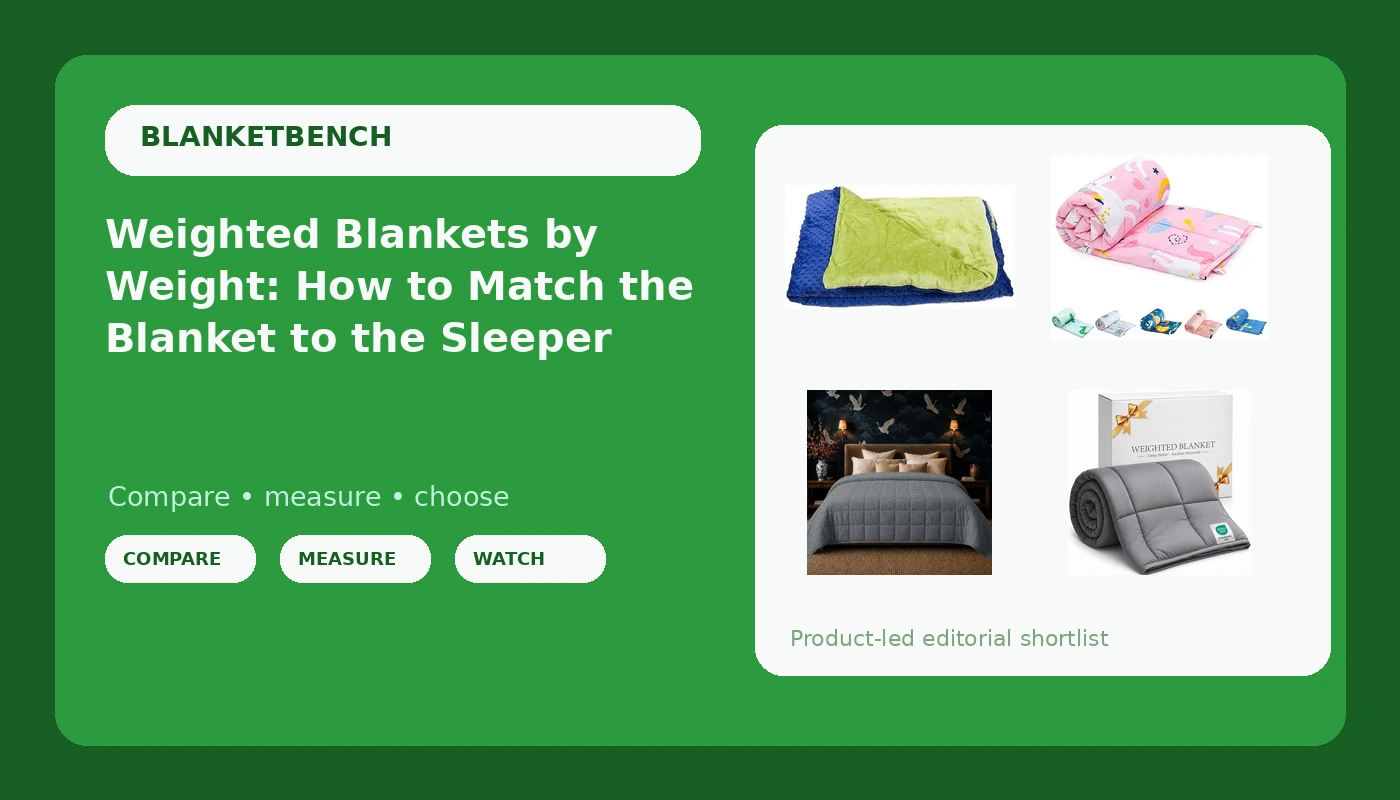
| Smart Queen Weighted Blanket 5lbs (41”x60”,Grey) Throw Size Soft Cooling Heavy Blanket for Sleeping, Breathable All Season Comfort with Premium Glass Beads,Machine Washable | A single adult who wants a light throw or a first weighted blanket | 5 pound throw footprint with glass bead fill and a machine washable shell |
| Harkla Kids Weighted Blanket - 10lb Cooling Weighted Blanket for Kids - Washable Minky Cover with Glass Beads - Rayon Made from Bamboo - Designed for Sensory Support (70-90lb) - Blue | A child in the 70 to 90 pound range who needs a washable, sensory-friendly blanket | 10 pound build with a washable Minky cover over rayon made from bamboo, glass bead fill |
| Sivio Cotton Weighted Blanket for Sleeping, 36"x48" 5 lbs | A smaller sleeper or anyone who wants a compact lap blanket with a cotton shell | Compact 36 by 48 inch cotton blanket at 5 pounds |
| HomeSmart Weighted Blanket King Size 40lb, Ultra Soft Fabric, Heavy Blanket | Adults who want deep pressure across a full king bed and can manage the weight | 40 pounds in a king size with an ultra soft fabric shell |
The lightest option: Smart Queen Weighted Blanket 5lbs (41”x60”,Grey) Throw Size Soft Cooling Heavy Blanket for Sleeping, Breathable All Season Comfort with Premium Glass Beads,Machine Washable
The trade-off with a 5 pound blanket is obvious once you say it out loud: it does not deliver deep pressure to a 190 pound adult. What it does deliver is a low-risk way to find out whether you like the sensation of distributed weight at all. If you have never slept under a weighted blanket, buying a heavy one first is how you end up with an expensive object at the foot of the bed. A throw also has a second life that a king size blanket does not. It works on the couch, over your legs at a desk, or on a recliner, which means it keeps earning its place even if you decide you want something heavier for sleeping. The 41 by 60 inch size fits one adult torso and legs, not two people and not a full mattress.
The kid-sized sensory option: Harkla Kids Weighted Blanket - 10lb Cooling Weighted Blanket for Kids - Washable Minky Cover with Glass Beads - Rayon Made from Bamboo - Designed for Sensory Support (70-90lb) - Blue
Two boundaries matter here. The first is safety: a child should be able to move the blanket off independently. If a child cannot push it aside on their own, it is too heavy regardless of what any percentage says. That is a hard line, and it is the reason I will not recommend weighted blankets for infants or toddlers, and why they are not appropriate during pregnancy. The second is honesty about what the product is. A weighted blanket provides proprioceptive input, which is the deep-pressure feedback your joints and muscles register. Many people find that calming. That is not the same as treating a condition. A blanket is not therapy for ADHD or autism, and no product listing should convince you otherwise. If a child in your household is working with an occupational therapist, bring the blanket decision into that conversation.
The compact cotton option: Sivio Cotton Weighted Blanket for Sleeping, 36"x48" 5 lbs
Cotton is the fabric I reach for first when someone runs warm. It moves air, it does not have the slick, heat-trapping feel of a polyester shell, and it gets softer with washing rather than pilling. The trade-off with a 36 by 48 inch blanket is coverage. This is a lap or lower-body blanket, not a full-body one, and a 5 pound blanket spread across a small area feels denser than the same 5 pounds spread across a throw. That is worth knowing: if you want the sensation concentrated, a smaller blanket at the same weight can feel like more. If you want to be covered from shoulders to feet, it will not do that.
The heavy end of the range: HomeSmart Weighted Blanket King Size 40lb, Ultra Soft Fabric, Heavy Blanket
Here is where the 10 percent guideline earns its keep as a warning rather than a rule. For most adults, 40 pounds is well above the starting range, and heavier does not mean more therapeutic. It means heavier. A blanket this size is genuinely difficult to reposition, it takes real effort to fold, and laundering something that heavy is a project rather than a chore, so check the care instructions before you commit. It also changes how you sleep next to someone: on a shared bed, both people are under it. If you are considering this end of the range, the honest question is not whether you can sleep under 40 pounds. It is whether you will still want to on a Tuesday in September.
Prices and availability may change. Product images, names, and retailer links must be matched by verified ASIN. Do not state a current price, rating, stock status, or measured result without current evidence.
Why the 10 percent guideline is a starting point, not a rule
The 10 percent figure gets repeated so often that people treat it as a specification, like a tire pressure. It is not. It is a midpoint that gives you somewhere to begin, and plenty of people land above or below it and sleep fine. The research on weighted blankets is genuinely mixed. Some studies show improvements in sleep and anxiety measures, but sample sizes tend to be small, and the placebo effect is real and probably doing some of the work. That does not make the blankets useless. It means the honest framing is: this is a sleep aid that helps some people, and you will not know which group you are in until you try one.
What the guideline is actually useful for is preventing overbuying. Heavier feels more serious, and "more serious" reads as more effective, so people gravitate upward. The result is a lot of 25 pound blankets sold to 140 pound sleepers who cannot roll over. If you are between two weights, choose the lighter one first. You can always add weight later, and a blanket you can move is a blanket you will keep using.
Fabric, bead distribution, and stitch density
Shell fabric is the single most underrated variable in this category. Cotton and rayon made from bamboo breathe. A tightly woven synthetic shell traps heat, and a trapped-heat blanket is the most common reason I hear for abandonment. If you sleep warm, or if you live somewhere with real summers, treat the shell as a primary filter rather than an afterthought.
Bead distribution is the second filter. Glass beads are dense and quiet, which is why they dominate this category, but the quality question is how they are held in place. Quilted channels or a grid of stitched compartments keep beads from migrating. A blanket with sparse stitching will pool its weight toward the middle or the edges over time, and once that happens it never recovers. Stitch density is also the weak point on cheap blankets: popped seams at the corners are usually where the failure starts.
- Weigh the person, not the bed. Start at roughly 10 percent of body weight, then adjust based on comfort rather than the number.
- Pick the fabric before the weight. Cotton or rayon made from bamboo for warm sleepers, and check whether the shell is removable and washable.
- Look at the stitching. Quilted compartments or a grid pattern hold beads in place; sparse stitching lets weight migrate.
- Confirm the size against the use. A throw covers one person, a king covers a bed and everyone in it.
- Test your exit. You should be able to push the blanket off without help. If a child cannot, it is too heavy.
Practical guidance
- Start lighter than you think you need. The most common regret in this category is buying too heavy, not too light.
- Wash before you judge. A blanket that survives its first wash without seam failure is a blanket that will last.
- Give it two weeks. Sensory adaptation takes a few nights, and so does figuring out whether you run hot under it.
- Keep a lighter option for summer. A 5 pound throw and a heavier blanket can coexist in one household.
- Check the return window. This is a try-it purchase, and the return policy matters more than the marketing copy.
- Do not use a weighted blanket with an infant or toddler, and skip it during pregnancy.
Which option should you choose?
Choose the Smart Queen Weighted Blanket 5lbs (41”x60”,Grey) Throw Size Soft Cooling Heavy Blanket for Sleeping, Breathable All Season Comfort with Premium Glass Beads,Machine Washable when you want a light, low-commitment throw for one person, or a first weighted blanket to test whether you like the sensation. Choose the Harkla Kids Weighted Blanket - 10lb Cooling Weighted Blanket for Kids - Washable Minky Cover with Glass Beads - Rayon Made from Bamboo - Designed for Sensory Support (70-90lb) - Blue when you are buying for a child in the 70 to 90 pound range who can move the blanket independently and needs something washable. Choose the Sivio Cotton Weighted Blanket for Sleeping, 36"x48" 5 lbs when you want a compact cotton-shell blanket for your lap or lower body and you sleep warm. Choose the HomeSmart Weighted Blanket King Size 40lb, Ultra Soft Fabric, Heavy Blanket when you want deep pressure across a full king bed, you have slept under heavy blankets before, and you have thought about how you will wash it.
The caveat that applies to all four: the evidence for weighted blankets as a sleep intervention is mixed, and some of the benefit people report is likely placebo. That is not a reason to avoid them. It is a reason to buy with a return window and treat the first two weeks as a trial rather than a verdict.
The bottom line
Match the weight to the person, then match the fabric to the room they sleep in. The 10 percent guideline gets you into the right neighborhood, but the blanket you keep is the one you can move, that breathes, and that survives a wash cycle. Start lighter than you think you need, give it two weeks, and treat the number on the label as the beginning of the decision rather than the whole of it.